
Why does the name sound ancient?
A name can express an ideal without proving a direct technical inheritance. Ancient wrestling belongs to the background of the Olympic movement, but it cannot tell you which grip a modern Greco-Roman referee will permit. Read the name as a historical association, then look separately at how the modern discipline was organized.
This distinction is useful beyond trivia. A child watching wrestling should not have to choose between respecting its past and noticing that sports change. Ask what the athletes are allowed to do and what they are trying to prevent. Those questions reveal the living sport more clearly than imagining every current technique preserved intact from an ancient stadium.
The French connection: a rule travels with the wrestlers
UWW traces an important step to French showman Jean Exbroyat in 1848: his troupe used a rule excluding holds below the waist. The style spread through Europe under names including French, classical and Greco-Roman wrestling. That is a more concrete origin than the apparent age of the name.
The traveling-show setting also asks us to read historical language carefully. A professional wrestler appearing before a paying audience belongs to a particular sporting and commercial world. The label alone does not explain the agreement for a contest, how opponents were selected or how a claimed title was recognized. When comparing stories, look for the actual event and conditions, not just a dramatic nickname.
Athens 1896: an Olympic beginning, not today's tournament
The IOC's historical archive records Carl Schumann winning the wrestling competition at Athens 1896 as well as three gymnastics events. His example interrupts an easy assumption: the first Olympic champions did not necessarily follow the highly specialized pathway a young athlete sees today.
That does not mean a modern wrestler should copy a nineteenth-century program. It means that a famous result comes from its own environment. For parents, it leaves room to value broad movement experience without turning one champion's biography into a prescription. For athletes, it encourages a more precise question about old footage or reports: which abilities were being tested, and under what conditions?
The clock changes the wrestling you see
UWW records a Stockholm 1912 Greco-Roman contest between Alfred Asikainen and Martin Klein lasting 11 hours and 40 minutes. The extraordinary duration is useful less as a toughness story than as a reminder that the competition format has changed profoundly.
In today's senior UWW format, a bout is two three-minute periods with a short break. Put those two settings next to each other. A competitor deciding whether to attack immediately, conserve effort or wait for a better grip is responding to a time horizon. You cannot compare the decisions fairly while ignoring the clock.
This also changes what a viewer should notice. Instead of asking only whether a match contains a spectacular throw, watch how athletes spend the seconds before it: gaining position, removing a grip or making an opponent adjust. Preparation is part of the action, even when it is less memorable than the landing.
A modern landmark: Mijaín López in Paris
At Paris 2024, Cuba's Mijaín López won a fifth consecutive Olympic gold, defeating Yasmani Acosta in the 130 kg final. UWW records the final score as 6–0. It is a remarkable modern chapter because the achievement extends across several Olympic cycles, rather than depending on one defining highlight.
A record that large can make a sport feel remote from beginners. Use it as a reason to watch closely rather than a training target. Pick one exchange and observe when the wrestlers become connected, who adjusts first and whether the eventual scoring action began before the obvious attack. You do not need to reproduce a champion's workload to become a better observer.
What the restriction actually invites you to study
Greco-Roman excludes holds below the belt and active use of the legs against the opponent. That does not make the athlete's own legs irrelevant: balance, stepping and changing the body's position remain necessary. Upper-body wrestling is a task for the whole athlete.
Try watching a sequence twice. First follow the hands and arms; then follow the feet and hips. Notice whether a grip becomes useful because somebody changes their position. This is an observation exercise, not an instruction to practice a large throw without coaching. It gives a beginner a way into matches that can otherwise look like two people merely pushing.
Greco-Roman history can broaden your understanding of grappling even if your own club teaches freestyle or BJJ. Keep the disciplines identifiable when you study: a movement's appearance does not establish that it has the same purpose everywhere. Bring the question to your coach, and connect the answer to the training you actually do.
Explore the video library
Published lessons in this training category, ready for your next session. Watch them all with your school membership.
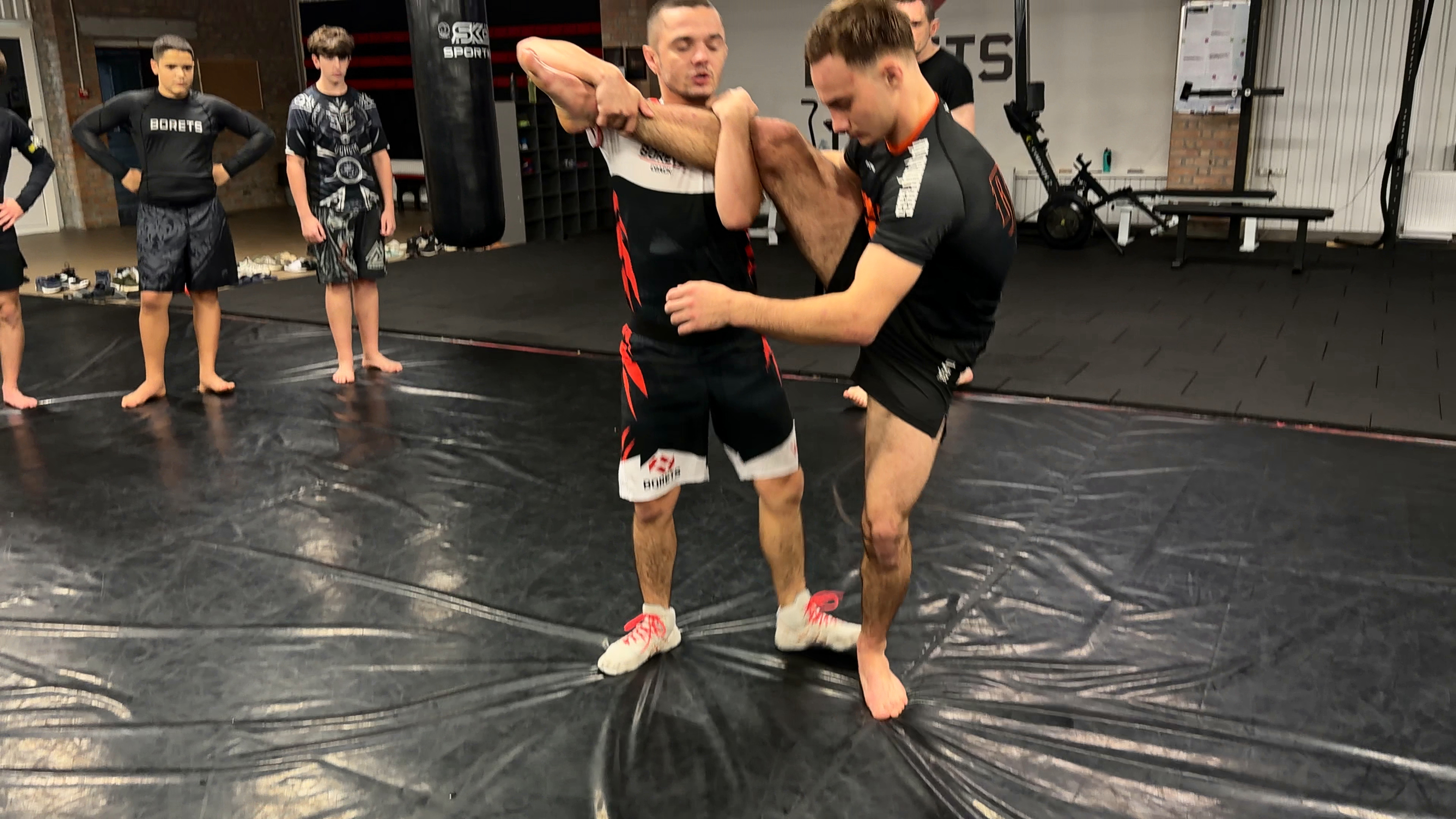 Single-Leg Entry Without PausingMykola Chaban
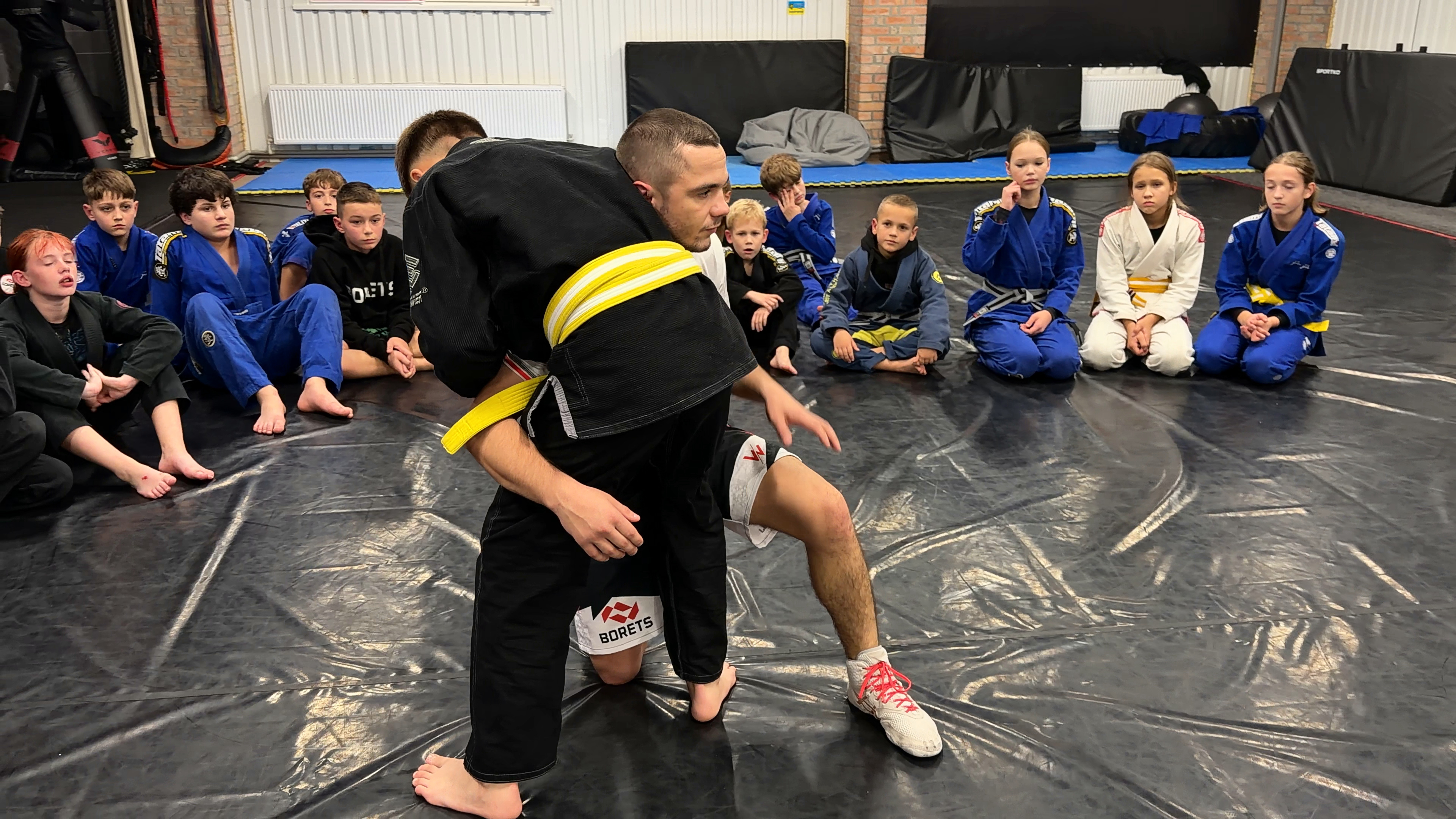 Double-Leg Situational WrestlingMykola Chaban
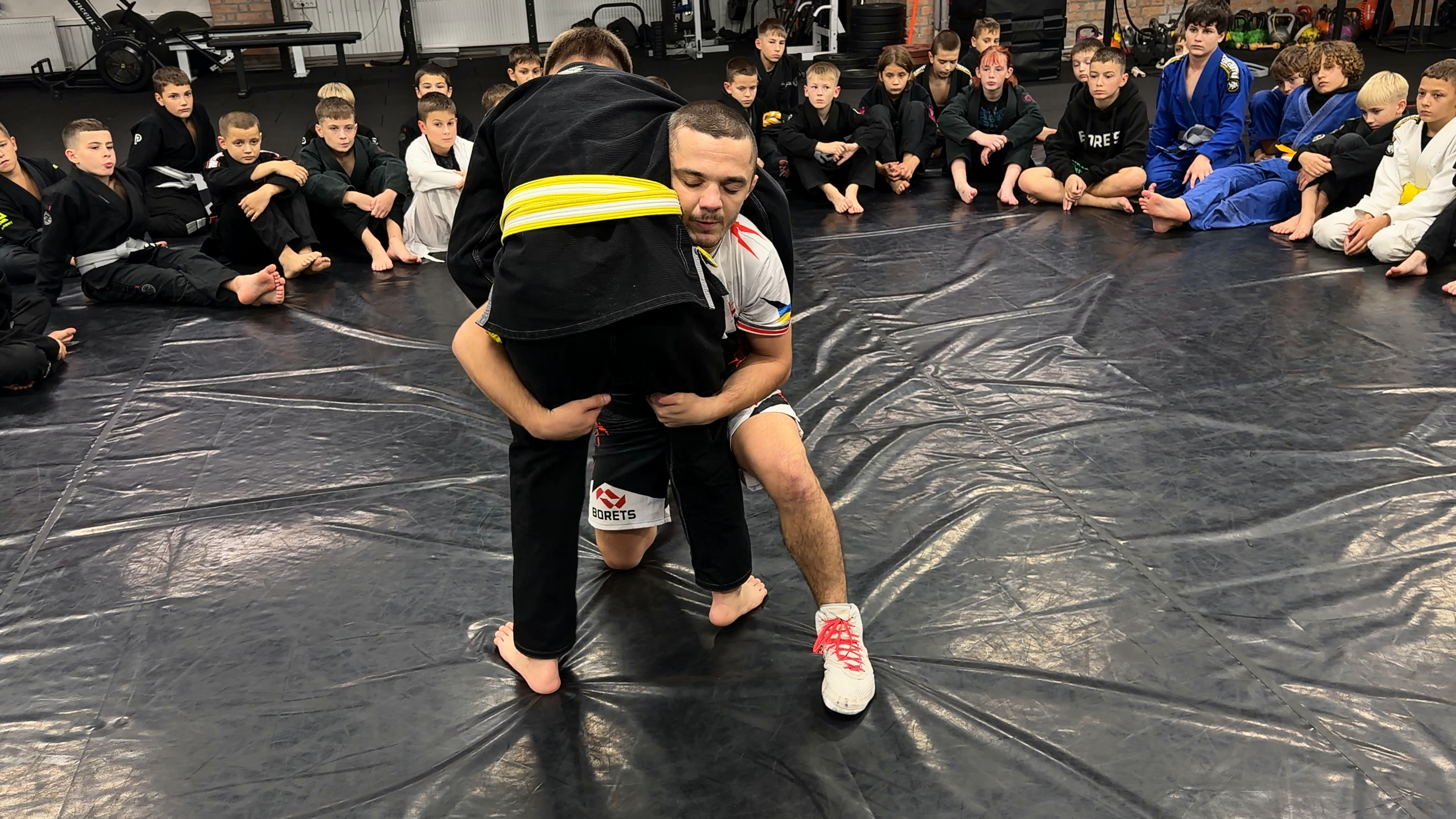 Snapdown to Double-Leg TakedownMykola Chaban
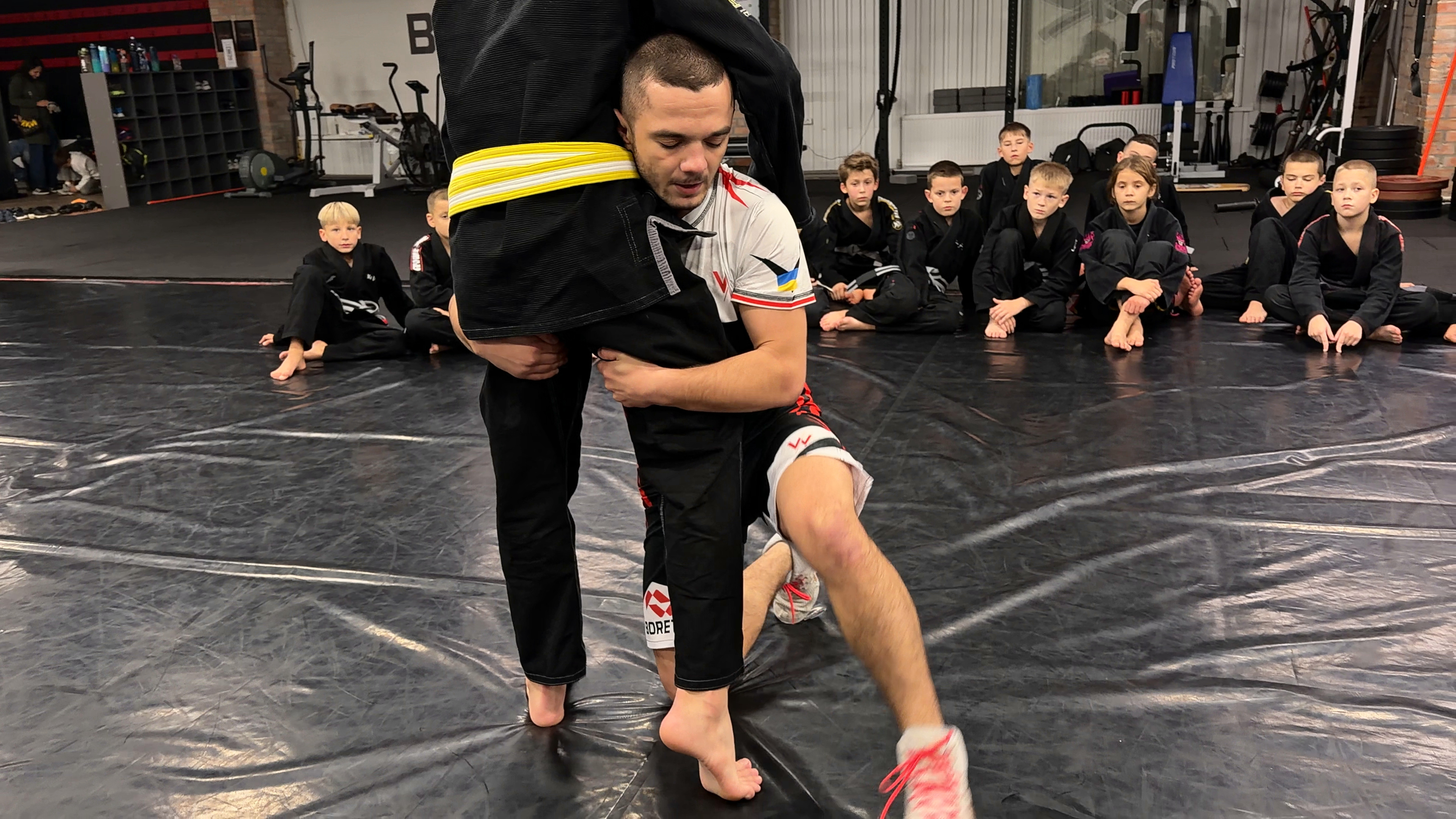 Sprawl to Double-Leg EntryMykola Chaban
Build a more complete grappling game.
Learn from the team that developed homegrown black belts and an adult ADCC Trials finalist at 16.
One membership unlocks every published lesson in sambo, BJJ, freestyle wrestling, strength and conditioning, and mental preparation. Pick your focus, study the details and take them into your next session.
1,340 UAH / month · 13,400 UAH / year
Payments are charged in Ukrainian hryvnia (UAH). Your bank determines the conversion to your currency.
Continue reading
- Freestyle Wrestling Rules: A Practical Starting GuideUnderstand freestyle wrestling's match structure, scoring and victory conditions, then use the rules to make your video study and practice more precise.
- What Is Grappling? BJJ, Wrestling and Sambo ExplainedUnderstand grappling, takedowns, ground control and submissions, and how BJJ, wrestling and sambo differ. A practical introduction for your first class.
- Wrestling Stance and Footwork: A Progression You Can CheckBuild a mobile wrestling stance, step without losing the base and connect level changes to an opponent’s position.
- Freestyle Wrestling for BJJ: Connect the Takedown to the GroundUse freestyle wrestling to improve BJJ entries and transitions. Learn what transfers, what changes under BJJ rules and how to review one complete exchange.