
Match the task to the surface
Clear enough space to step and stop without meeting furniture. Standing footwork needs a stable, nonslip surface; knee contact and floor transitions need suitable matting. A thin rug does not automatically make a hard floor appropriate. If the space is small, choose short direction changes instead of trying to reproduce a gym-length drill.
Do not improvise throws onto a bed, resistance anchors on furniture or neck bridges to imitate a highlight clip. Keep unfamiliar falls and partner contact in coached practice. Stop for pain or dizziness. The home environment should simplify the task, not introduce a new landing surface or equipment problem you have not learned to manage.
Use footwork as a short diagnostic
Move forward, backward and sideways from your stance, pausing after each change. Check that the feet recover useful spacing and the head does not bob upward before every step. Work on one awkward transition. Completing a long sequence is less useful than understanding why you consistently lose balance when moving toward one side.
Place an imaginary opponent at a fixed marker and circle while facing it. Then change the distance without reaching ahead of your base. This lets you inspect orientation and foot placement. It does not teach you when to circle against real pressure, so note the movement that needs to be tested with a partner later.
Rehearse an entry without pretending to finish a takedown
Use a penetration-step version already demonstrated in class. Lower through the legs, step toward a marker and bring the trailing leg under the body again. Begin without dropping onto a knee; add the taught knee-contact version only on suitable mats. The check is whether you arrive balanced enough to change direction, not how far you can lunge.
For a defensive rehearsal, move the feet and hips backward under control, then return to stance. A step-back version can teach the route before a full sprawl. Do not make hitting the floor hard the measure of success. There is no attacker here, so this is movement preparation rather than evidence that your takedown defense works.
Review one detail on a short recording
Record a few attempts from the front or side, with the full body visible. Choose one question before watching: do my feet cross, does my head drop, or does the rear leg recover? Compare the first and last attempt using that question. Avoid trying to diagnose every joint position from an unfamiliar camera angle.
Keep the home session connected to the next class
A useful sequence is easy movement preparation, one footwork problem, one entry or recovery drill, then a short note. Keep attempts controlled and stop before fatigue changes the task. USA Wrestling’s fundamentals resources support practicing stance, motion and level changes; they do not establish that solo work replaces coached wrestling or prescribe this particular home sequence.
Explore the video library
Published lessons in this training category, ready for your next session. Watch them all with your school membership.
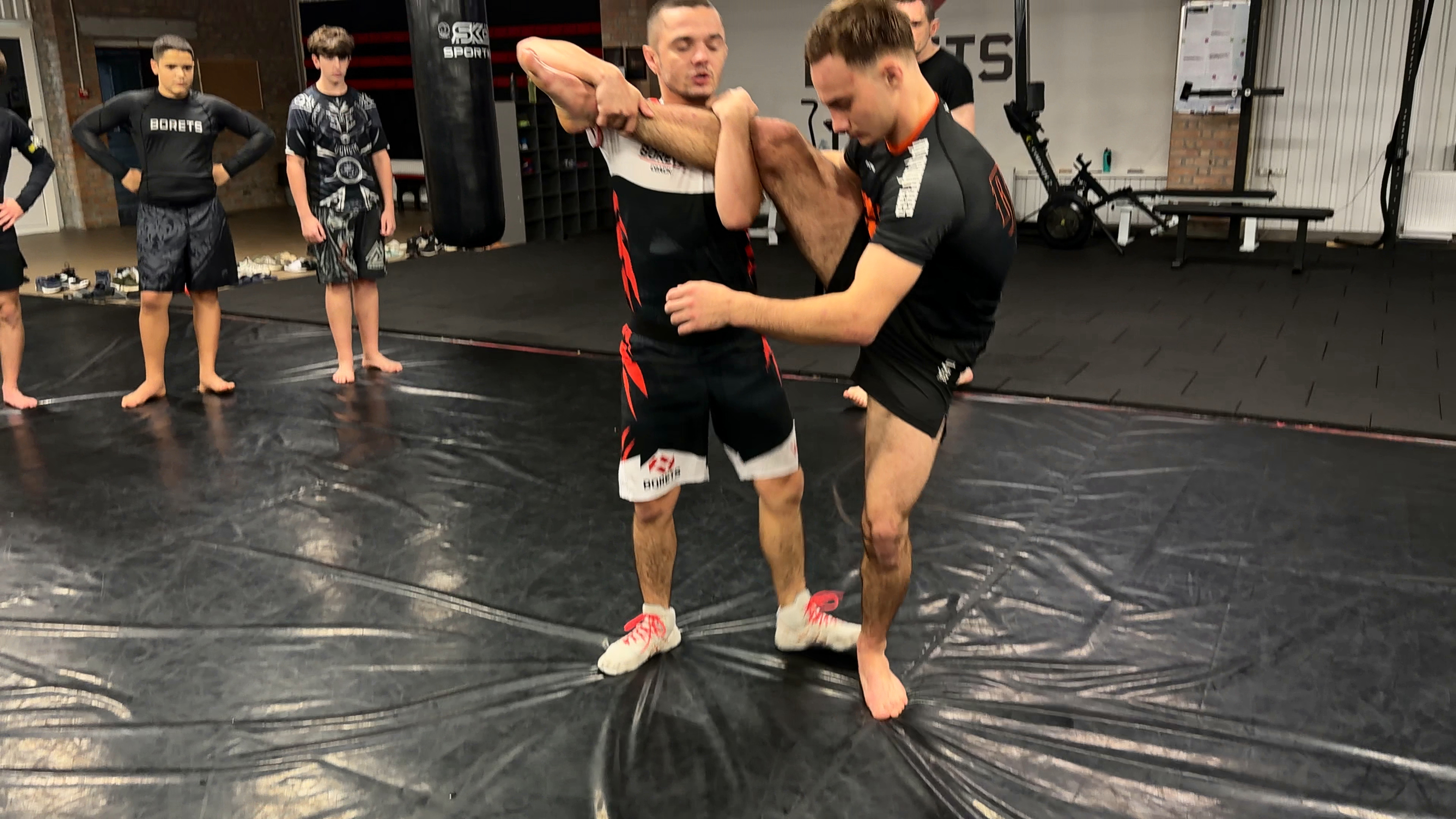 Single-Leg Entry Without PausingMykola Chaban
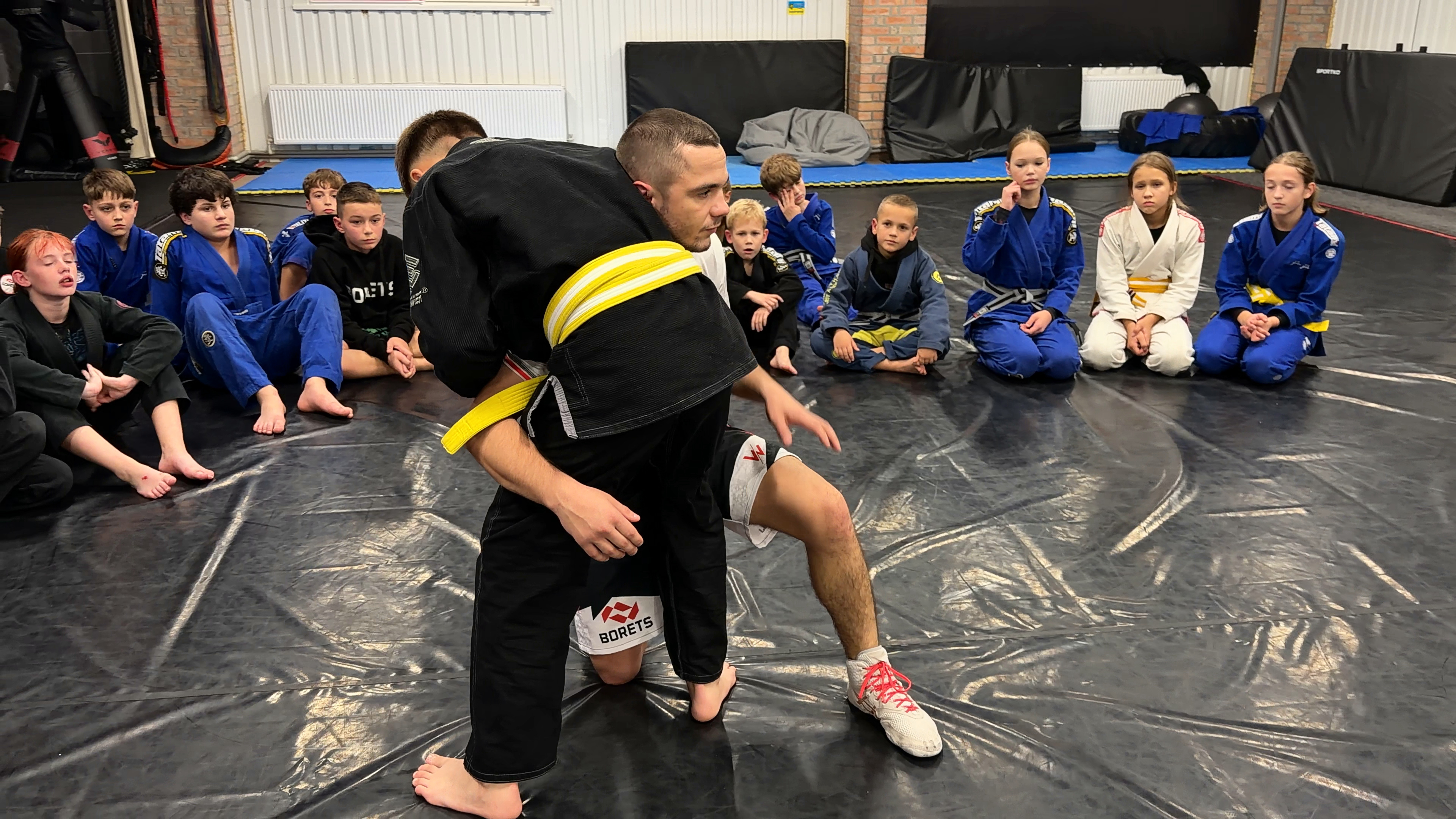 Double-Leg Situational WrestlingMykola Chaban
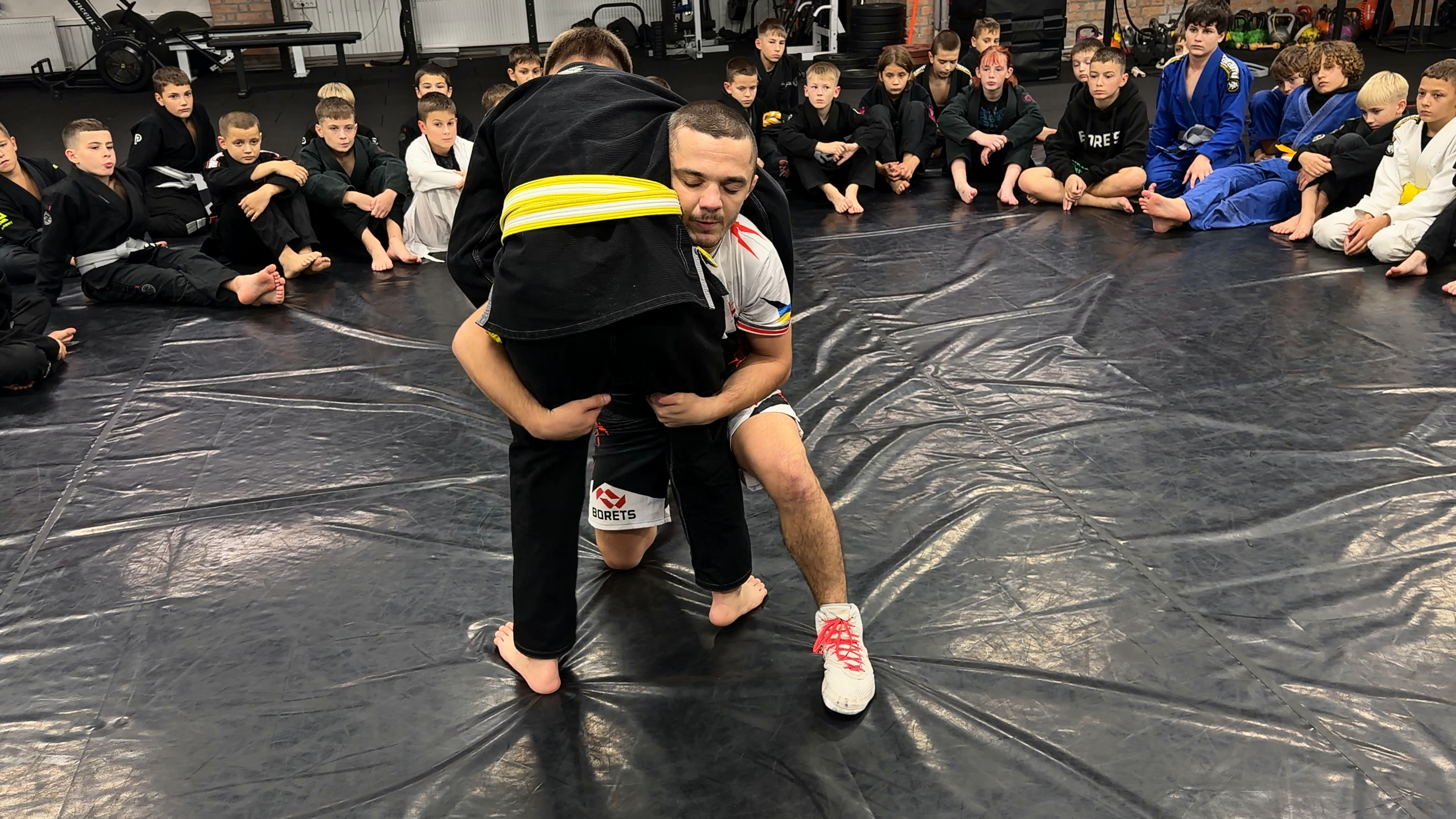 Snapdown to Double-Leg TakedownMykola Chaban
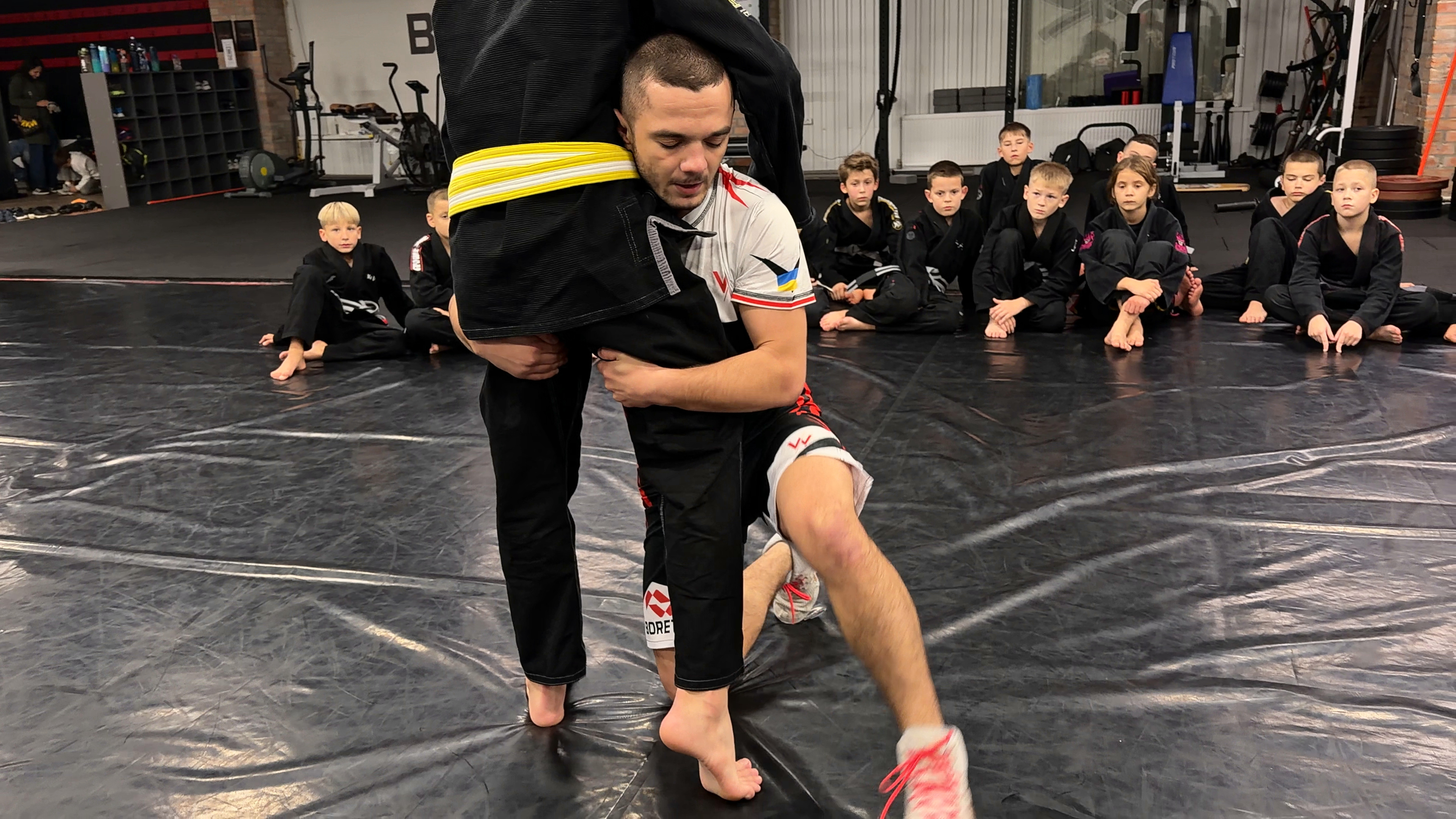 Sprawl to Double-Leg EntryMykola Chaban
Build a more complete grappling game.
Learn from the team that developed homegrown black belts and an adult ADCC Trials finalist at 16.
One membership unlocks every published lesson in sambo, BJJ, freestyle wrestling, strength and conditioning, and mental preparation. Pick your focus, study the details and take them into your next session.
1,340 UAH / month · 13,400 UAH / year
Payments are charged in Ukrainian hryvnia (UAH). Your bank determines the conversion to your currency.
Continue reading
- Wrestling Conditioning: Build Endurance for Repeated AttacksPlan wrestling conditioning around repeatable mat tasks, pacing and recovery. Track attack quality and output instead of measuring a workout by exhaustion.
- Wrestling Drills: Build a Focused 20-Minute Practice BlockOrganize wrestling practice with solo movement, partner tasks, controlled entries and short rounds. Includes a practical 20-minute drill block.
- Wrestling Stance and Footwork: A Progression You Can CheckBuild a mobile wrestling stance, step without losing the base and connect level changes to an opponent’s position.
- Freestyle Wrestling for BJJ: Connect the Takedown to the GroundUse freestyle wrestling to improve BJJ entries and transitions. Learn what transfers, what changes under BJJ rules and how to review one complete exchange.