 BORETS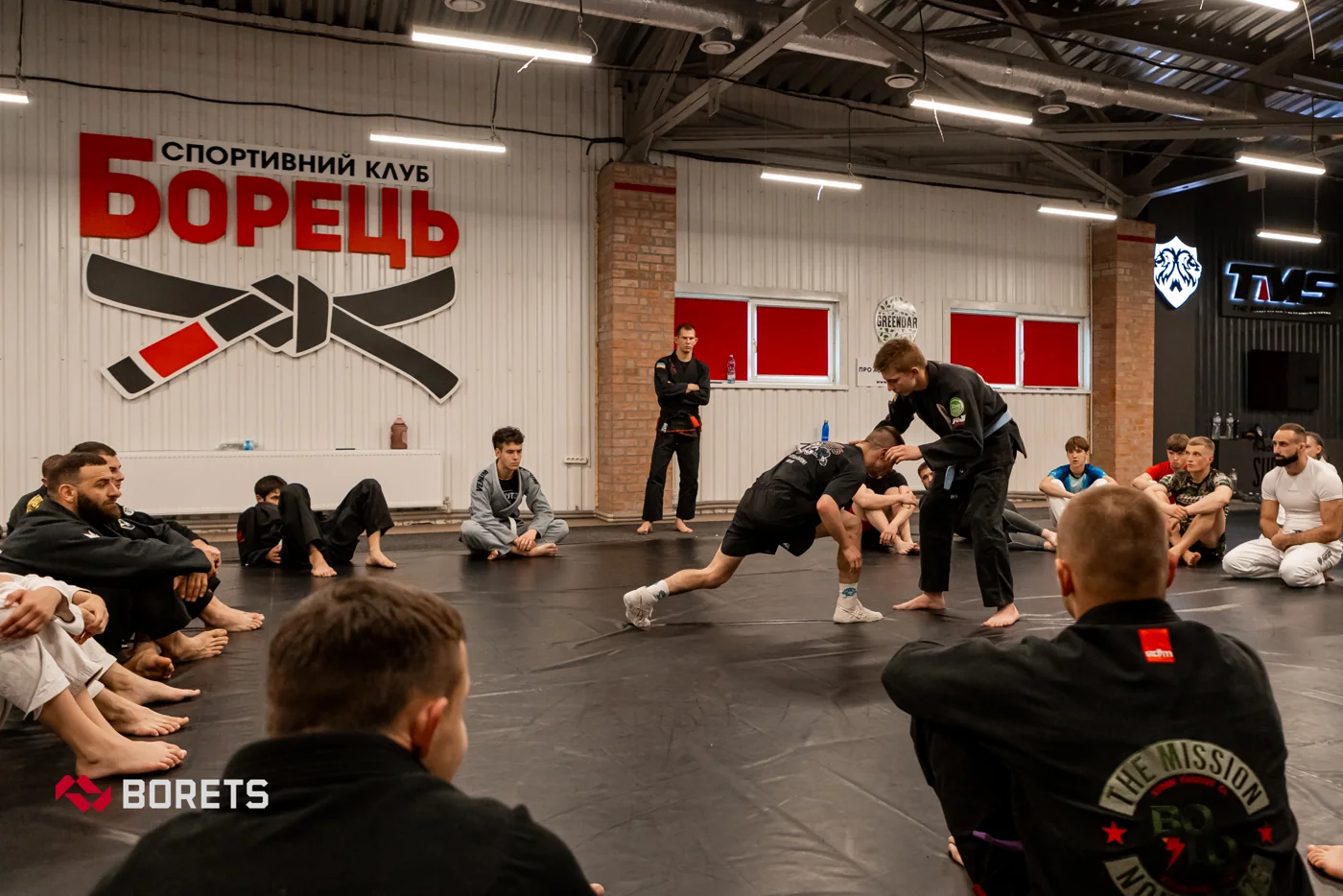
In this guide
An ankle pick combines upper-body control with an attack on a foot close enough to reach without losing your posture. The useful question is not how quickly you can grab an ankle. It is how your setup changes the opponent’s balance so that removing that support produces a controlled takedown. The details vary with stance, tie and ruleset.
Why the ankle pick works
Upper-body control and foot control need to work together. A collar tie, sleeve grip or another suitable connection can help direct the opponent’s posture while the free hand controls the ankle. Reaching for a distant foot without first creating the position separates the two jobs and can leave you stretched underneath the opponent.
Think of the ankle pick as a short attack from a prepared distance. You want a foot you can access while staying connected and balanced. The exact pressure and stepping pattern should come from the version your coach teaches, rather than mixing the grips of one variation with the finish of another.
Create the opening from a tie or a step
A collar tie can be used to draw a reaction and bring the opponent’s posture toward a reachable foot. Another opening appears as a partner steps into a position you can control. In each case, practise recognising the distance and balance first; a hard pull on the neck is not a substitute for the setup.
Begin with a cooperative partner who provides a consistent stance and response. Notice when the target foot moves beyond reach and reset instead of chasing it with an extended arm. Once the entry is understood, the partner can vary the response so you learn when to attack and when to keep hand fighting.
Change level without folding at the waist
Lower through your legs while keeping your trunk organised and your feet able to support you. Some variations use a controlled knee touch; others remain on the feet. Practise the taught version on suitable mats and keep the descent controlled rather than dropping your knee into the floor.
The reaching hand should not pull your whole body away from its base. If you can only touch the ankle by bending sharply forward and stretching, correct the entry distance. Head position also depends on the tie and variation; avoid driving through the crown or twisting your neck to maintain a failing attack.
Coordinate the ankle and upper-body control
Controlling the ankle removes or limits a support while your upper-body connection directs the opponent’s balance. Those actions belong to the same movement. Pulling the foot alone may let the opponent hop away; forcing the upper body without controlling the foot may leave their base intact.
In drilling, finish at a speed that lets your partner receive the fall. Maintain control without wrenching the ankle or forcing a trapped knee to rotate. Start and finish close enough that the action stays compact. Stop to correct the setup when finishing requires a sudden heave.
The finish changes with the sport
For BJJ, the landing may put you in guard or another position that still requires work. An ankle pick does not automatically earn guard-passing points or deliver side control. Under IBJJF rules, takedown scoring depends on the prescribed control and stabilisation criteria; practise the complete sequence rather than celebrating when the opponent first touches the mat.
For wrestling, understand the control required by your ruleset and what your opponent can do next. A familiar entry does not guarantee the same score across freestyle, folkstyle and submission grappling. Train the follow-up appropriate to the event, including maintaining position rather than reaching immediately for another attack.
Gi grips and common errors
In the gi, legal collar, sleeve or outside-trouser fabric grips can provide different connections from no-gi ties. Keep fingers out of sleeve and trouser openings under IBJJF rules. In no-gi, do not rely on gripping the opponent’s clothing. Ask your coach which grip belongs to the variation you are studying.
Common practice problems are reaching before the setup, losing the upper-body connection and continuing when the foot has moved away. Correct one at a time. A useful checkpoint is whether you can pause briefly at the entry without falling forward; if not, adding speed usually hides the problem rather than solving it.
Defence and a simple practice progression
Defensively, address the tie, distance and posture before the ankle is controlled. If the takedown is already happening, use the falling response taught by your coach rather than posting a rigid arm or twisting against a trapped leg. Practise defence cooperatively before trying to rescue a late position at full speed.
For learning, use a few entries without a finish, then controlled completions and finally short rounds where the defender may move the target foot. Reset when the entry is lost. BORETS LAB’s guides and public YouTube channel can support this study; the online school is in preparation, so check current access on the membership page.