 BORETS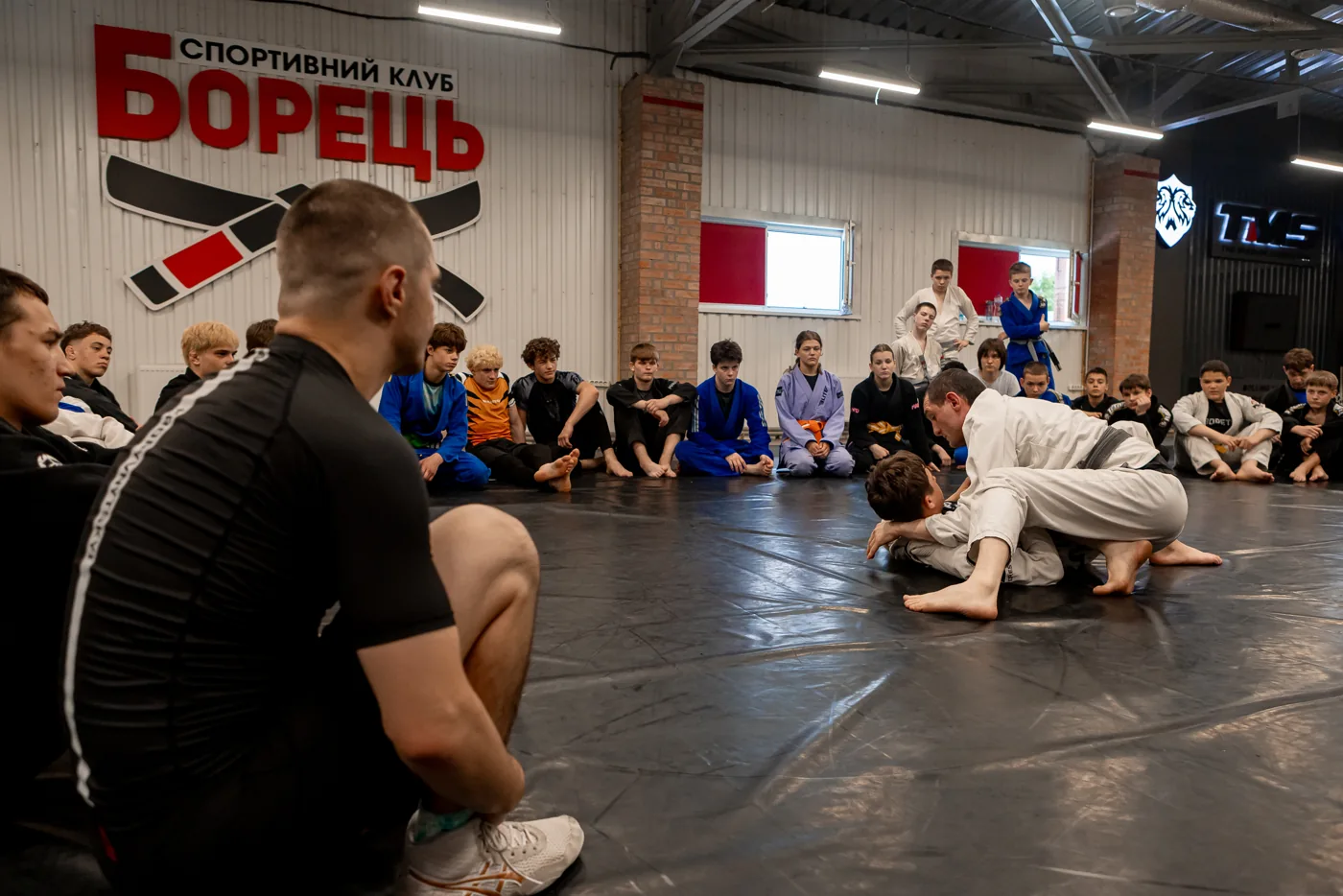
In this guide
BJJ stands for Brazilian jiu-jitsu, a grappling martial art built around controlling an opponent, escaping bad positions and using submissions such as chokes and joint locks. Sport BJJ has no striking, and matches can be won by submission or on points. For a beginner, the attraction is more immediate than a medal: each class gives you a physical problem to solve with another person and a way to see yourself improve.
Where the name comes from
Brazilian jiu-jitsu developed in Brazil from Japanese grappling traditions, particularly judo, with the Gracie family among its influential practitioners. Its distinctive emphasis is sustained ground fighting: guard, sweeps, positional control and submissions. The spelling varies between jiu-jitsu, jujitsu and jujutsu; BJJ is the abbreviation you will see most often on academy schedules. Today it is a global sport with several competition formats rather than one universal rulebook.
How a BJJ class is structured
A typical class combines a demonstration, practice with a partner and some form of resisted training. Positional sparring starts in a fixed situation, such as mount or closed guard, with each partner working on a specific task. Many classes also include movement drills and free sparring, usually called rolling. The balance and the introduction to sparring differ between beginner programmes.
A tap ends the exchange immediately. Tap your partner clearly or say 'tap' when your hands are occupied. Learn that agreement before learning a finish. Good beginner sessions pair you appropriately and build resistance gradually: the goal is to learn what works against movement without forcing a technique through.
Positions and submissions
Guard means the bottom player uses the legs to manage distance and control the opponent. Passing takes the top player beyond those legs into a pin such as side control. Mount and back control offer other strong attacking positions. Sweeps reverse top and bottom from guard; escapes remove a pin or recover a position from which you can work.
Submissions threaten the neck or a limb. In practice, the attacker establishes control and applies pressure gradually; the defender taps before injury. A useful first goal is simpler than collecting finishes: recognise where you are, protect yourself and know your next positional task.
Gi and no-gi
The gi is the jacket, trousers and belt. In gi jiu-jitsu you may use legal cloth grips: collars, sleeves and trouser legs become tools for control and submissions. No-gi usually uses shorts and a rash guard, with control coming from underhooks, wrist control and body locks rather than clothing grips.
No-gi can feel more slippery, while gi grips can slow an exchange, but neither format has a fixed pace. Both can be technical and athletic. Start with a beginner class that fits your schedule and gives you good coaching, then add the other format when you want to explore it.
Jiu-jitsu versus Brazilian jiu-jitsu
In a modern grappling gym, 'jiu-jitsu' often means BJJ. Elsewhere it may refer to Japanese jujutsu traditions whose programmes can include throws, locks, strikes and other material. The name alone does not tell you whether a class includes sparring or what its students train for.
Ask concrete questions: Is this a beginner grappling class? Do students practise with controlled resistance? Is the focus sport, self-defence or both? Watching a class tells you more than trying to identify the whole programme from its spelling.
Who BJJ is for
BJJ offers routes into training for adults, children, recreational athletes and competitors. Those groups need different introductions. At BORETS, Yaroslav Blazhko began at nineteen without wrestling experience and became the school's first BJJ black belt developed from a complete beginner; he now leads the club and its children's programme. Ievgen Skyrda, our founder, came to BJJ after about fifteen years of judo and sambo. Different starting points can belong to the same team.
Register for the BORETS LAB launch to join our team wherever you train. Membership will let you choose Ievgen Skyrda, Oleksandr Oliinyk, Kostiantyn Zhyvanov, Yaroslav Blazhko for children's development, or Mykola Chaban for freestyle wrestling. Send a specific question and receive a private written answer in your account; when useful, the team can record a video addressing it.
Questions beginners ask
Do I need to get fit first? You do not need competition fitness to attend a suitable beginner class. Start at a manageable pace, rest between rounds and build consistency. Strength and conditioning can support you from the beginning, with the workload matched to your recovery rather than added all at once.
How long does a black belt take? There is no reliable personal countdown. It commonly takes years of sustained practice; promotion depends on development and a coach's assessment. The IBJJF graduation system includes age and time requirements, with specific exceptions, rather than a promise that time served earns a belt.