
The direct answer
Use the positional hierarchy to decide what to protect, escape and attack first.
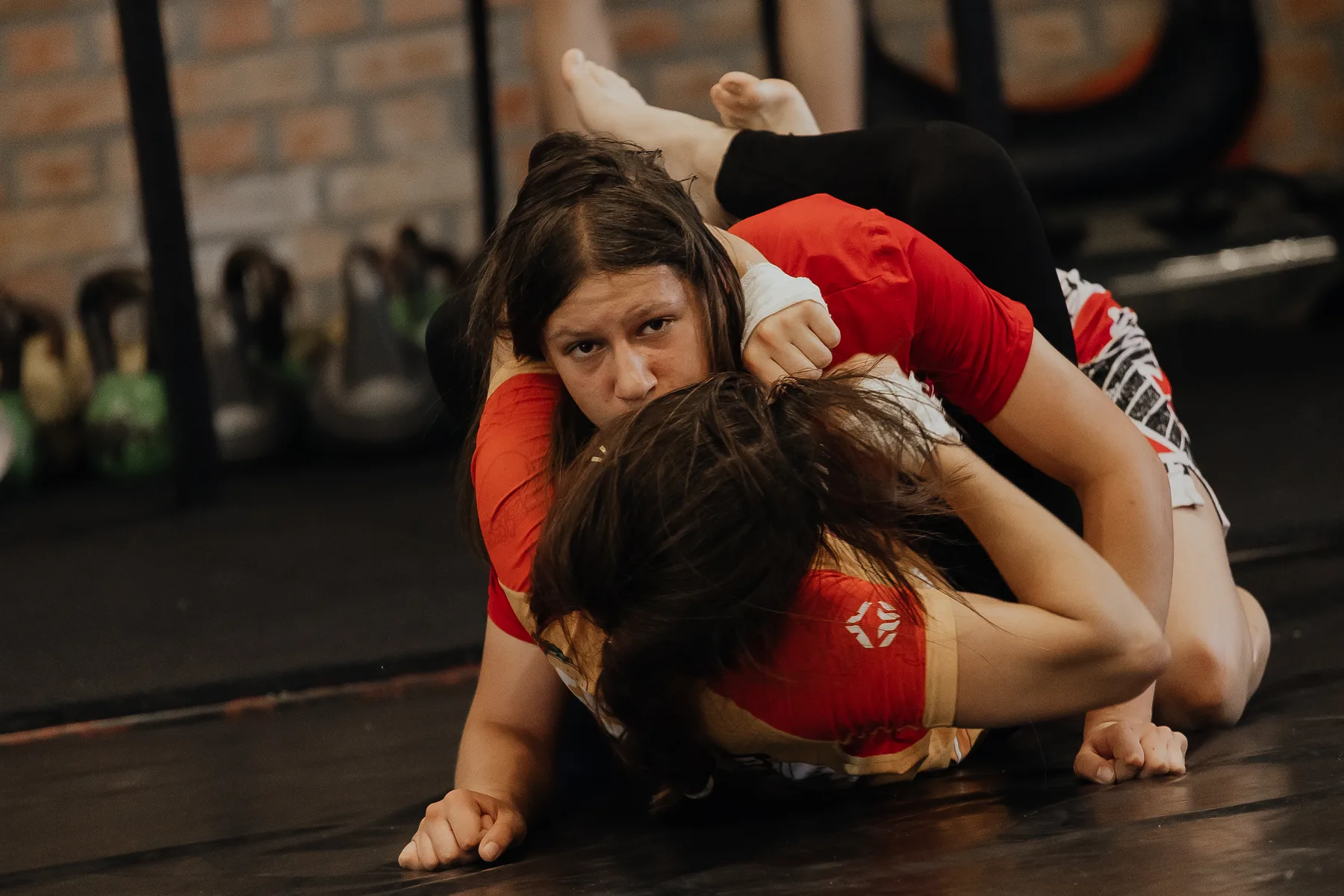
Back escape priorities are strict because neck danger can become immediate. The defensive athlete first protects the neck with both hands available, chin naturally aligned and shoulders active; hiding the chin alone is not reliable defense. Identify which arm threatens the neck and which hand controls or traps the defender. Use two hands against the most dangerous connection when possible, keeping fingers and wrists in safe alignment. Only after the choking line is controlled should the athlete move the shoulders and hips toward a safe side. The objective is to place the upper back or one shoulder on the mat, clear the opponent’s head position and remove the hooks or body connection without exposing the neck during the turn. Hook removal and hand fighting must stay connected: clearing a leg while the neck is open loses the priority battle, while gripping the wrist forever without changing shoulder position creates no escape. If the attacker transitions to mount, guard or another control, the defender recognizes the new position and changes projects. Train this position with exceptional restraint. Attackers apply no sudden squeeze, neck crank, jaw pressure or uncontrolled body-triangle compression. Defenders tap or verbally stop early and never use fingers as levers. A qualified instructor controls legal grips and division-specific submissions under the current official rules. This page focuses on hand fighting and shoulder-turn order, not on a general catalogue of back attacks.
01
What to understand
Identify danger and control hands
The arm crossing toward the neck and the hand trapping defense have different jobs. Naming them prevents random grabbing.
Use two-on-one safely
Control the wrist and forearm without bending fingers or twisting joints. Keep the dangerous arm away from the neck while creating shoulder movement.
Choose the safer shoulder
Head position, arm placement and hook configuration determine the turn. Move toward the side that lets the shoulder reach the mat without crossing the choking line.
Clear head and hip control together
A shoulder on the mat matters only if the attacker cannot follow the head and hips. Use the turn to remove alignment, then clear a hook.
Recognize the next position
The attacker may accept mount, guard or top control. Stop applying a back-escape script and organize the correct frames for the new problem.
02
How to train it
Round 1 · hand identification
Attacker changes the threatening arm slowly. Defender points, establishes safe two-on-one control and resets without turning.
Round 2 · shoulder-to-mat pathway
With the neck line controlled, defender moves one shoulder toward the mat while attacker gives progressive head and hook resistance.
Round 3 · hook-clear timing
Defender may clear a hook only after shoulder position is achieved. Attacker follows lightly to test whether the hips also escaped alignment.
Round 4 · transition recognition
Attacker chooses to maintain back control or move to mount. Defender must call the new position and switch frames immediately.
Round 5 · controlled positional escape
Start with secure but non-strangling back control. Defender scores a safe new position; attacker scores maintained control without sudden submission pressure.
Neck first; hooks second.
Name the dangerous hand and the trapping hand.
Two hands control an arm; fingers are never levers.
Shoulder to mat, head line clear, then turn.
When the position changes, the escape changes.
03
Common mistakes
Trusting the tucked chin
The jaw can still be pressured and the neck line remains threatened. Use hands, shoulders and positional movement as the defense.
Clearing hooks before the choking arm
The hands leave the neck while the attacker maintains upper-body control. Secure the dangerous connection before working lower-body control.
Turning across the choking line
The movement can deepen neck exposure. Choose the shoulder path from actual hand and head position, not a memorized side.
Training with sudden squeeze
Fast pressure removes learning time and raises risk. Attackers connect gradually, release on the first tap and never use the drill to test toughness.
04
Questions athletes ask
01 · Which hand should I fight first from back control?
Prioritize the connection that most immediately threatens the neck, while accounting for a second hand that may trap or feed the attack.
02 · Should I remove the hooks first?
Usually neck safety and dangerous-hand control come first. Hook clearing becomes useful after the upper-body line and shoulder direction are safer.
03 · What if the attacker uses a body triangle?
Keep neck defense primary and learn a coach-approved alignment and opening route. Never force the knee, ankle or torso through uncontrolled pressure.
04 · Can back escapes be practiced by beginners?
Yes with non-strangling starts, gradual connection, immediate release and explicit verbal or physical tapping rules under qualified supervision.
05
Sources and further reading
Training needs vary by athlete, schedule and coaching environment. Use these sources as context, then adapt with qualified support. Educational content for athletes and coaches. This guide does not diagnose injury, replace individualized coaching or override event rules. Stop if an activity causes pain, and use an appropriately qualified coach or healthcare professional for your situation.