
The direct answer
Use the positional hierarchy to decide what to protect, escape and attack first.
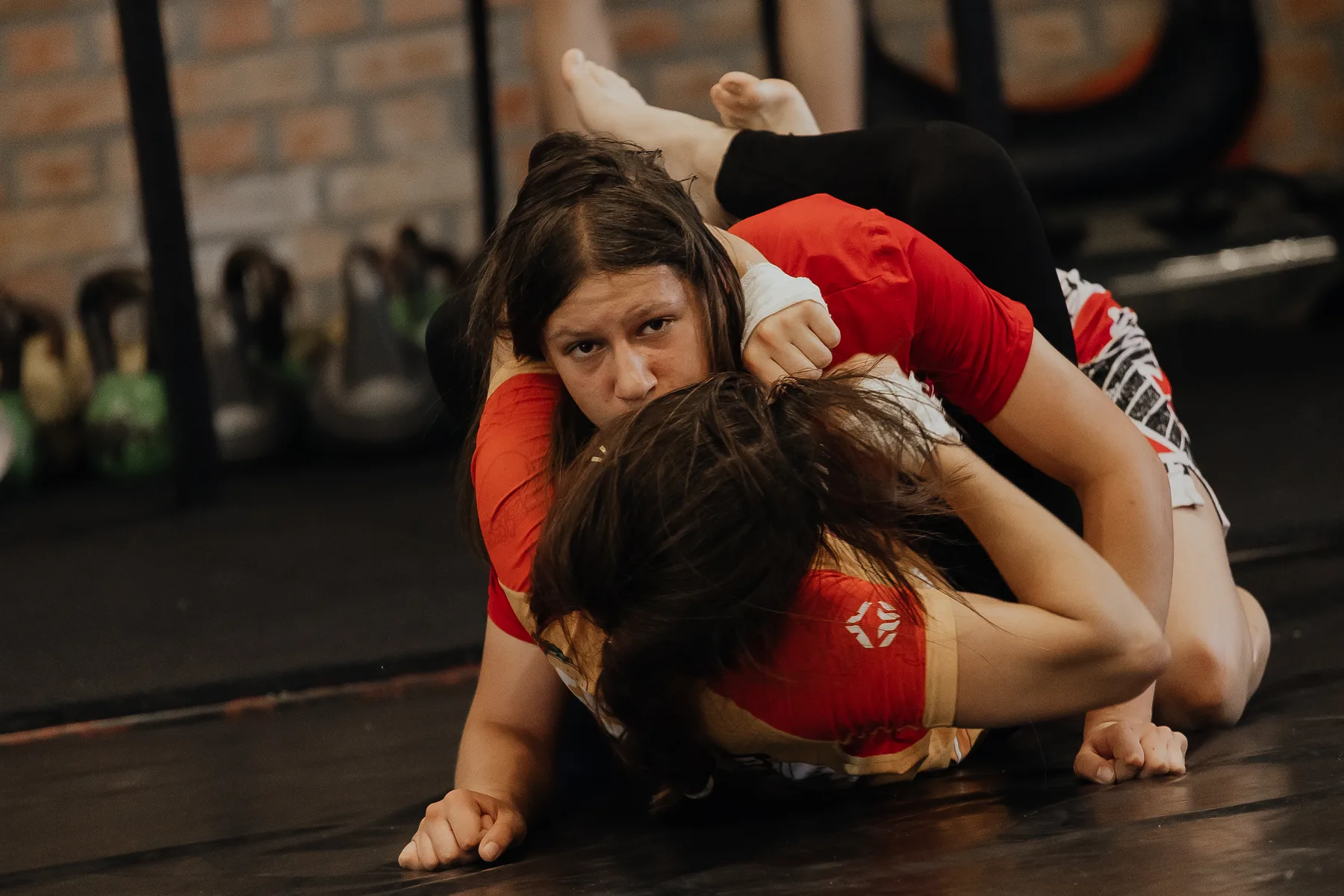
Butterfly guard works when seated posture, upper-body connection and lower-body hooks move the opponent as one system. Sitting upright without connection allows the passer to push or circle; lying back without control gives away angle and pressure. Begin with a stable seated base and a head position that protects the neck. Establish an upper-body tie—such as an underhook, overhook, wrist or other instructor-approved connection—and pair it with a hook that controls the opponent’s thigh rather than kicking upward. The guard player first creates a post or weight shift through pulling, framing and angle. Elevation comes after the opponent’s weight is loaded onto the useful hook. If the opponent widens, posts or retreats, the guard player switches direction, comes up to wrestle or reconnects to another guard. The top athlete learns posture, inside hand position and safe pressure without collapsing knees or jumping onto the seated player. Sweeps should finish in balanced top position, not by throwing the partner through uncontrolled height. Avoid lifting when the partner cannot post safely, twisting a trapped knee or driving the head into the neck. Start with low amplitude, progressive resistance and early stops. Exact scoring and legal grips vary by organization and division, so check the current official rules. This page focuses on connection mechanics and reactions, separating it from a broad sweep catalogue or a no-gi wrestle-up system.
01
What to understand
Build a seated base
Use active feet, hips and posture so the guard player can move forward, backward or to an angle without posting both hands behind.
Connect upper and lower control
An underhook or wrist tie guides the shoulders while the hook manages the thigh. One without the other leaves an easy post or step.
Load weight before elevation
Pull and angle the opponent onto the hook instead of lifting an uncommitted body with the leg. The weight shift makes elevation efficient.
Read the defensive post
A hand, knee, wide foot or retreat changes the sweep. Remove the post, switch direction or come up rather than forcing one elevation.
Arrive balanced on top
Follow the sweep with head, hands and hips organized. Clear the legs or stabilize before treating the movement as complete.
02
How to train it
Stage 1 · seated movement
Guard player moves through small angles while partner mirrors without grips. Hands remain available in front and the neck stays protected.
Stage 2 · tie and hook connection
Establish one approved upper tie and one butterfly hook. Partner changes posture slowly while bottom keeps both controls connected.
Stage 3 · load without sweep
Bottom angles and shifts partner’s weight onto the hook, then freezes. Coach checks that elevation would move through safe alignment.
Stage 4 · post reaction
Partner posts a hand or widens a knee. Bottom chooses post control, opposite direction or wrestle-up without forcing the original sweep.
Stage 5 · low-amplitude positional round
Bottom scores balanced top or a stable connected guard; top scores a controlled pass. Both stop if elevation or knee alignment becomes unsafe.
Seat, tie and hook form one connection.
Load the weight before lifting it.
Head position protects the entry.
A defensive post chooses the next direction.
Sweep into balance, not into a scramble.
03
Common mistakes
Lifting with the leg alone
An unloaded opponent feels heavy and can step away. Connect the upper body, create an angle and shift weight onto the hook first.
Falling flat too early
The seated base and ability to wrestle up disappear. Recline only as part of a connected off-balance with posture controlled.
Ignoring the posting hand
The opponent restores balance while bottom forces the same direction. Control, redirect or use the post to choose another branch.
Elevating through unsafe knee alignment
A trapped foot and rotating knee require an immediate stop. Release, reset the angle and use a coach-approved alternative.
04
Questions athletes ask
01 · Is butterfly guard good for beginners?
It can teach posture, connection and off-balancing when introduced with low amplitude and controlled partners under qualified instruction.
02 · Do I need two butterfly hooks?
No. Many useful positions use one active hook paired with upper-body control and another leg managing base or distance.
03 · What if the opponent stands up?
The distance and connection have changed. Follow into an instructor-approved open guard, wrestle-up or reset rather than clinging to a dead hook.
04 · How can butterfly sweeps be trained safely?
Start with low elevation, clear landing space, cooperative posting and controlled follow-through. Stop for trapped limbs, neck loading or lost descent control.
05
Sources and further reading
Training needs vary by athlete, schedule and coaching environment. Use these sources as context, then adapt with qualified support. Educational content for athletes and coaches. This guide does not diagnose injury, replace individualized coaching or override event rules. Stop if an activity causes pain, and use an appropriately qualified coach or healthcare professional for your situation.