
The direct answer
Use the positional hierarchy to decide what to protect, escape and attack first.
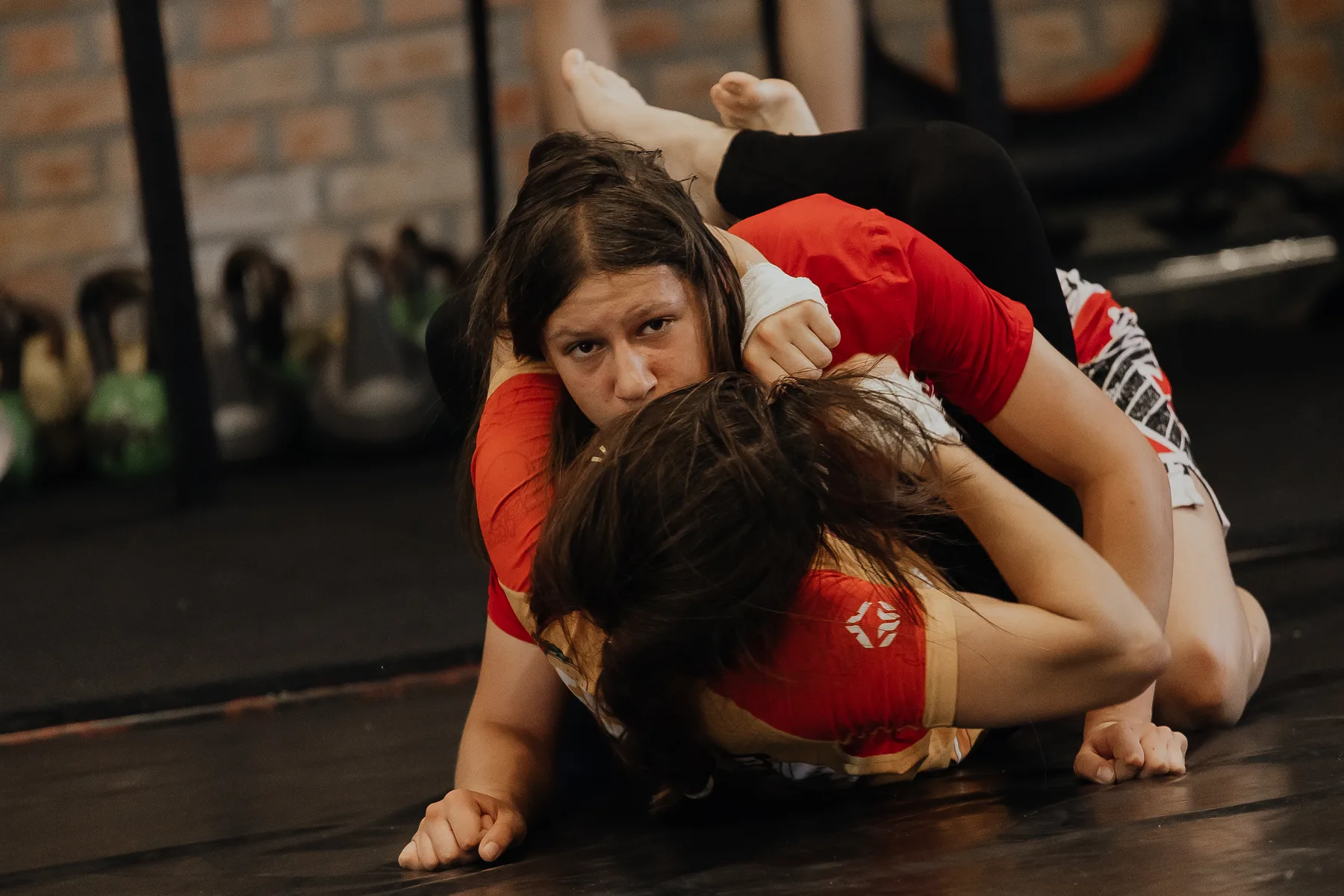
Closed guard is a connection around the top athlete’s waist, not a guarantee of control for the bottom athlete or safety for the top athlete. Bottom wants to break posture, create an angle and connect upper- and lower-body control before sweeping, attacking or transitioning. Top wants a stable base, organized head and elbows, grip awareness and a safe process for opening the legs. Both athletes should understand the first decision. If top posture is strong, bottom should create movement and asymmetry rather than pulling straight with the arms. If posture is broken, top restores alignment before forcing the guard open. Bottom attacks when a post, elbow, neck or shoulder line becomes isolated; otherwise it can move to another guard rather than holding with exhausted legs. Top opens through a coached standing or kneeling pathway that protects balance and submission lines, then immediately manages the feet and knees to begin passing. In gi, cloth grips change posture battles; in no-gi, head, wrist and overhook connections become more prominent. Exact legal attacks depend on age, belt and event, so use current official rules and instructor-approved technique. Tap early, release submissions immediately and avoid pulling the neck or joints through uncontrolled range. Practice on suitable mats with partners who communicate. This guide stays at the first-decision layer and does not duplicate a complete guard-passing system or a submission catalogue.
01
What to understand
Define posture from both sides
Top aligns head, spine, elbows and base; bottom tries to separate those structures. Each athlete should know which connection is currently winning.
Create angles instead of straight pulls
Bottom moves hips and shoulders off the center line so legs and upper-body control can combine against one side.
Use posts as information
A hand, foot or elbow that carries weight can be removed, redirected or isolated. Attacks begin from that structural change.
Open with balance intact
Top follows a practiced sequence that protects neck, arms and base. Breaking the legs open while leaning forward invites attacks.
Transition when the guard stops working
Bottom can move to open or half guard before connection is completely lost; top immediately manages the legs after opening.
02
How to train it
Round 1 · posture versus connection
Top scores stable posture for a short count; bottom scores a controlled posture break with an angle. No submissions or opening are allowed.
Round 2 · post removal
Top gives one hand or foot post. Bottom shifts weight, controls the post and creates off-balance without completing a sweep.
Round 3 · safe opening sequence
Top performs one instructor-approved opening while bottom gives progressive grip and posture resistance. Freeze as soon as the legs separate.
Round 4 · first transition
After opening, bottom recovers a known open-guard connection while top controls a foot or knee line. The repetition ends in a recognizable next position.
Round 5 · two-choice closed guard
Bottom may off-balance toward two directions; top may posture or begin opening. Both score the correct decision before any submission finish.
Closed legs do not guarantee closed space.
Posture and angle decide the first project.
Move the hips before pulling harder.
Open with your neck, elbows and base protected.
Every opening becomes the next guard or pass.
03
Common mistakes
Squeezing without upper-body control
The legs fatigue while top maintains posture. Connect head, arm or torso control and create an angle before spending effort.
Pulling posture straight down
Symmetrical pulling fights the strongest structure. Shift the hips and isolate one side so the legs and arms share the task.
Standing to open without grip awareness
Top can rise into off-balance or submission control. Clear dangerous connections and build the standing base in a coached order.
Pausing after the legs open
The next guard or pass begins immediately. Top manages feet and knees; bottom establishes frames and a new connection.
04
Questions athletes ask
01 · Is closed guard a dominant position?
It can give bottom meaningful control and attacks, but effectiveness depends on posture, grips, angle, rules and whether strikes are present.
02 · Should beginners attack submissions from closed guard?
Yes under qualified instruction after learning posture, angle and control. Use early taps and controlled release rather than forcing finishes.
03 · Should top stand or kneel to open?
Both families can be taught. Choose an instructor-approved route that fits the format and preserves balance, posture and submission safety.
04 · What should happen after closed guard opens?
Bottom establishes a known open or half-guard connection; top controls the legs and begins a passing route. Do not leave the transition undefined.
05
Sources and further reading
Training needs vary by athlete, schedule and coaching environment. Use these sources as context, then adapt with qualified support. Educational content for athletes and coaches. This guide does not diagnose injury, replace individualized coaching or override event rules. Stop if an activity causes pain, and use an appropriately qualified coach or healthcare professional for your situation.