
The direct answer
Use the positional hierarchy to decide what to protect, escape and attack first.
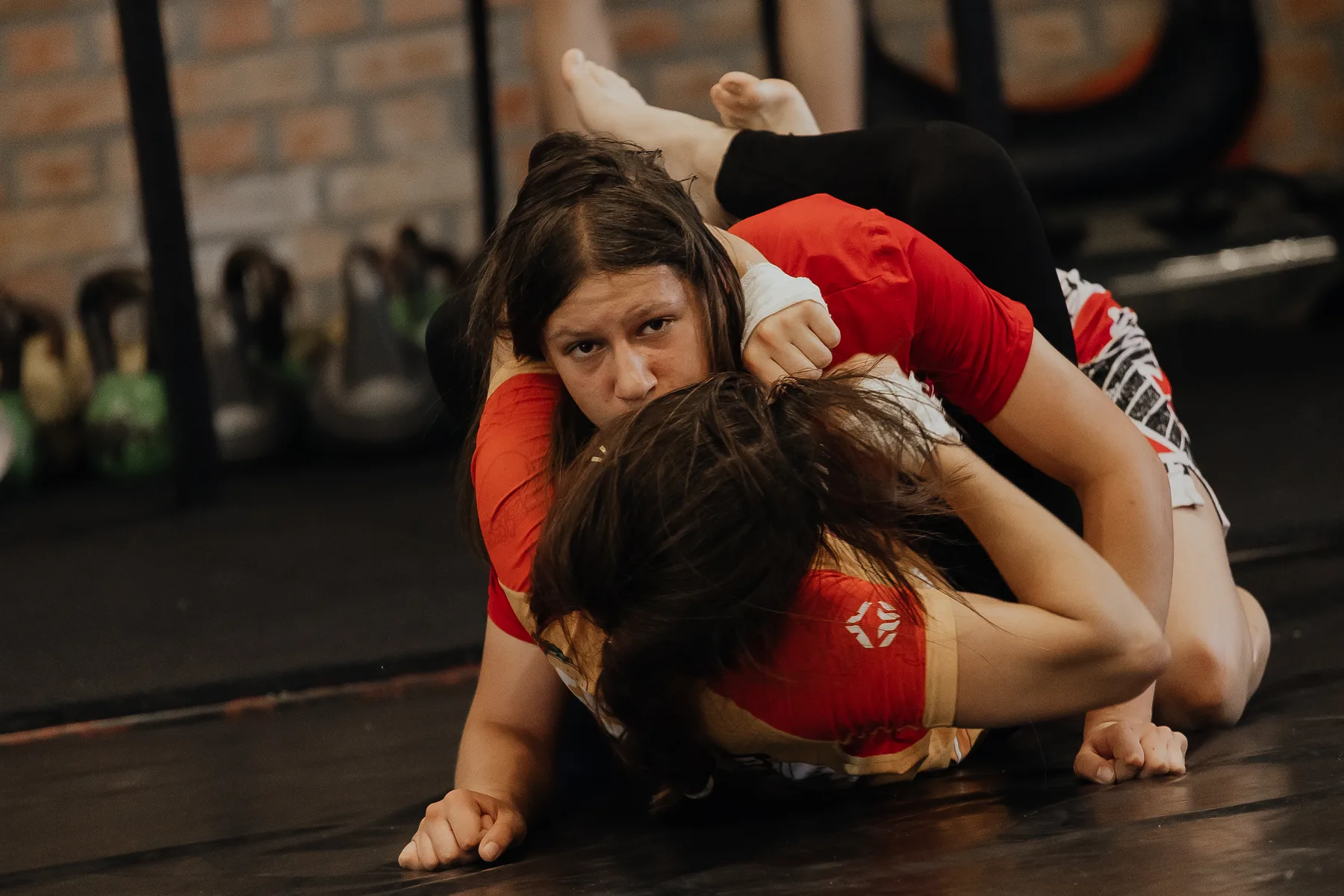
Pressure passing is the controlled use of alignment and connection to make guard movement smaller while the passer clears the knee line. It is not permission to crush the neck, drive through pain or hold the breath against a partner. Begin by controlling the guard player’s hip direction and one leg line while keeping your own head, elbows and base safe. Pressure becomes useful when it pins a mobile structure—hip, thigh or shoulder—and forces a predictable frame. The passer then addresses that frame, changes angle and advances the knee line. If bottom turns away, the passer may follow the hips or choose a back-exposure route; if bottom pushes directly, the passer can redirect rather than driving harder; if the knee returns inside, restore leg control before chasing the upper body. A pass is not complete when the feet are merely cleared. Settle a recognizable top control against an immediate recovery attempt. Practice at a pressure level that allows breathing, communication and safe joint alignment. Never use sudden neck compression, uncontrolled stacking, face pressure, trapped-limb twisting or bodyweight drops. Stop immediately for pain or verbal concern and learn variations from a qualified instructor. Gi and no-gi grips change the connections, and official scoring requirements vary, so verify current event rules without inventing values. This page focuses on the decision architecture of pressure and frames, remaining distinct from a broad guard-passing system or a body-lock-specific no-gi guide.
01
What to understand
Control hip direction first
The guard player’s pelvis determines where knees and feet can recover. Angle your base to limit that rotation before adding upper-body pressure.
Pin one mobile leg structure
Control a thigh, knee line or shin so the guard cannot freely replace frames. Avoid twisting the foot while the knee is fixed.
Read and remove the frame
A forearm, knee or hand tells you where bottom is carrying pressure. Redirect the structure or change angle rather than forcing through it.
Advance the knee line in stages
Clear the foot, then knee, then hip relationship while preserving balance. Skipping stages invites recovery underneath the chest.
Settle control after clearing
Connect hips and shoulders in the next position while bottom attempts one honest recovery. Only stable control completes the technical pass.
02
How to train it
Stage 1 · hip-direction game
Bottom rotates the hips at light resistance. Top mirrors with base and one leg control, using no chest pressure.
Stage 2 · frame identification
Bottom inserts one knee, forearm or hand frame. Top names it, changes angle and clears it without pressing the face or joint.
Stage 3 · knee-line checkpoints
Coach pauses the pass at foot, knee and hip stages. Top states what is controlled; bottom states the available recovery.
Stage 4 · reaction direction
Bottom may frame directly or turn away. Top chooses redirect, angle change or hip follow instead of repeating one line.
Stage 5 · pass and settle
Top scores after clearing the legs and holding safe control through one recovery attempt; bottom scores known guard recovery.
Pressure follows alignment; it does not replace it.
Control hip direction before chasing shoulders.
The frame tells you where to change angle.
Foot, knee, hip: clear in order.
The pass settles against a real recovery.
03
Common mistakes
Equating pressure with discomfort
Useful pressure controls movement through alignment. Pain, neck compression or inability to communicate is a stop signal, not evidence of quality.
Driving into the strongest frame
Direct force reinforces bottom structure. Redirect the frame, move the base and attack the space it leaves.
Twisting the trapped leg
Foot rotation under a pinned knee can become unsafe quickly. Release, improve hip and knee position, then continue.
Relaxing after the feet clear
Bottom can recover before hip and shoulder control forms. Connect the cleared legs to a stable top position.
04
Questions athletes ask
01 · Is pressure passing about strength?
Strength can help, but alignment, hip direction, leg control and frame removal determine whether pressure becomes efficient and repeatable.
02 · How much pressure is safe in practice?
Use progressive pressure that allows communication and safe breathing and joint alignment. Stop immediately for pain, panic or unsafe neck loading.
03 · Does pressure passing work in no-gi?
Yes, although cloth grips disappear and body, head, wrist and leg connections change. The alignment and decision principles remain.
04 · When is a pressure pass complete?
Technically, after the legs are cleared and stable top control denies immediate recovery. Use current official rules for event scoring.
05
Sources and further reading
Training needs vary by athlete, schedule and coaching environment. Use these sources as context, then adapt with qualified support. Educational content for athletes and coaches. This guide does not diagnose injury, replace individualized coaching or override event rules. Stop if an activity causes pain, and use an appropriately qualified coach or healthcare professional for your situation.