
The direct answer
Use the positional hierarchy to decide what to protect, escape and attack first.
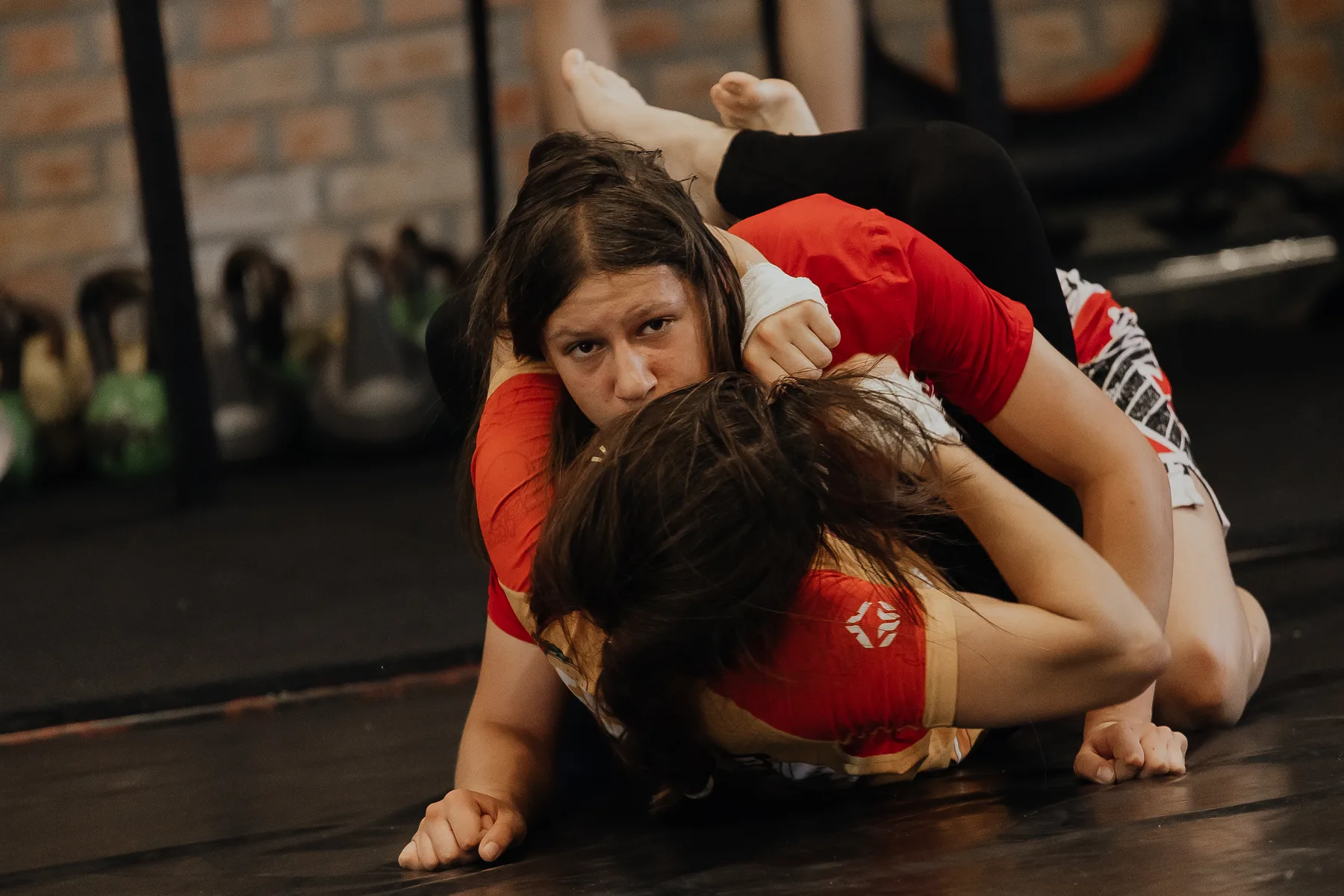
Brazilian jiu-jitsu is a grappling sport and martial art centered on positional control and submissions; mixed martial arts is a combat ruleset that integrates striking, clinch, takedowns and ground fighting. Starting BJJ means narrowing the first learning environment so you can spend many repetitions on guard, passing, escapes, back control and submission safety without punches or kicks. Starting at a well-designed MMA fundamentals program means learning several ranges from the beginning and, crucially, how those ranges alter one another: stance must answer both shots and strikes, guard must account for ground-and-pound, and takedowns must interact with the fence. Neither starting route is universally superior. BJJ can be the more accessible adult recreational option and supports competition without head strikes. MMA is the direct path for an athlete whose actual goal is an amateur MMA bout, but a responsible gym will not use hard sparring as the default teaching method. Coach quality is decisive. Look for progressive technical contact, clear separation between drilling and sparring, controlled partner matching, medical and competition standards, and a curriculum that does not confuse toughness with repeated head impact. A beginner can build a BJJ base and add striking, or begin integrated MMA and maintain dedicated grappling classes. Choose the route that matches your desired competition, risk tolerance, available coaching and schedule—not a fantasy matchup between specialists.
01
What to understand
Understand that MMA is integration
MMA is not BJJ plus a kickboxing class placed elsewhere on the timetable. Strikes change posture, hand position and time available for every grappling action. The fence changes underhooks, stand-ups and takedown finishes. Gloves change gripping and submission access. A legitimate MMA curriculum therefore includes transition tasks: punch to shot, shot to fence, wall escape to striking exit and ground control that protects against damage. Ask to see that bridge, not only separate specialist classes.
Compare competition without pretending risk is equal
BJJ competition brings real orthopedic and concussion risk through takedowns, collisions and submissions, but it does not intentionally score head strikes. MMA explicitly includes legal striking and demands medical screening, sanctioned matchmaking and trained officials. An athlete who enjoys learning all ranges may still choose grappling competition while training technical MMA. Wanting fitness or self-confidence does not create an obligation to accept amateur fights or repeated hard sparring.
Match the learning width to available time
A two-session week divided among boxing, kicking, wrestling, wall work and submissions can expose the beginner broadly but progress slowly in each area. Two focused BJJ sessions may produce clearer early competence in one domain. Conversely, an athlete training five times can support specialist classes plus integration. Ask what the gym recommends at your real attendance level. The right curriculum respects total hours rather than advertising the professional team’s schedule to a recreational newcomer.
Choose the beginner contact culture
In BJJ, beginners must learn to tap, release, fall and regulate live-round pressure. In MMA they need all of that plus defense, controlled striking power and an understanding of when sparring stops. Observe whether coaches pair by size and experience, enforce protective equipment and intervene quickly. Technical sparring can be highly constrained and useful; gym wars are not a rite of passage. The room’s contact culture matters more than promotional language about being beginner friendly.
02
How to train it
Observe the fundamentals class, not the fight team
Professional camp footage says little about how a new adult is taught. Watch the class you would actually join. Count coaching attention, controlled repetitions, decision drills and hard impacts. Ask when striking sparring begins and whether choosing not to compete changes access to instruction.
Run a goals-and-risk interview
Tell the coach whether you want an MMA bout, BJJ competition, fitness, technical literacy or social practice. State any concerns about head contact and past injuries. A credible coach proposes a route and boundaries rather than pressuring every athlete into the same identity.
Test a strike-aware ground drill
From a familiar BJJ position, let the top athlete touch open-hand targets at low power while the bottom athlete protects posture, controls wrists and chooses escape, sweep or stand-up. The objective is decision awareness, not impact. This quickly shows why some sport-BJJ habits need adaptation and whether the MMA coach can teach that adaptation safely.
Use a twelve-week foundation review
Review attendance, enjoyment, head-contact exposure, submission safety and named skills in every trained range. If MMA remains the goal but grappling collapses, add a specialist block; if BJJ remains the goal but standing confidence is absent, add supervised takedowns. Change the training dose based on evidence rather than changing identities after every difficult class.
BJJ narrows the problem; MMA integrates the ranges.
Hard sparring is an exposure, not a teaching default.
The fence changes every familiar ground exit.
Competition choice and training choice can differ.
Match curriculum width to weekly hours.
03
Common mistakes
Calling MMA a martial art for experts only
A responsible fundamentals program can introduce mixed ranges progressively to beginners. The problem is not integration itself; it is poor coaching, uncontrolled contact or a curriculum built only for active fighters.
Assuming BJJ automatically works unchanged in MMA
Position and submission mechanics remain valuable, but strikes, fence, rounds, gloves and judging alter grips, guard choices and urgency. Sport expertise needs rule-specific adaptation and live testing at controlled intensity.
Using fighter toughness as the safety policy
Clear tap culture, concussion response, protective equipment, sanitized mats, qualified supervision and sanctioned competition are operational standards. Motivation cannot substitute for them.
04
Questions athletes ask
01 · Should I learn BJJ before MMA?
Not necessarily. A high-quality MMA fundamentals program can teach integrated skills from day one. A BJJ base is also a valid route, especially where integrated beginner coaching is weak. The important step is eventually practising grappling with strikes and fence constraints if MMA competition is the goal.
02 · Is BJJ safer than MMA?
BJJ avoids intentional striking and therefore removes a major source of head-impact exposure, but it still carries takedown and joint-injury risks. MMA risk varies with sparring design and competition. Ask about actual exposures rather than treating either label as a guarantee.
03 · Is BJJ or MMA better for self-defense?
MMA tests more combat ranges; BJJ gives deeper grappling practice. Neither sport reproduces every real situation or replaces awareness, avoidance, de-escalation, escape and local legal knowledge. The safest high-quality training you will sustain is more useful than a broad curriculum you avoid.
04 · Can I train MMA without competing?
Many good gyms support technical and recreational members, but policies differ. Ask directly whether non-competitors receive the same fundamentals, whether hard sparring is optional and how progression is measured. You should not have to accept an amateur bout to learn integrated skills.
05
Sources and further reading
Training needs vary by athlete, schedule and coaching environment. Use these sources as context, then adapt with qualified support. Educational content for athletes and coaches. This guide does not diagnose injury, replace individualized coaching or override event rules. Stop if an activity causes pain, and use an appropriately qualified coach or healthcare professional for your situation.