
The direct answer
Use the positional hierarchy to decide what to protect, escape and attack first.
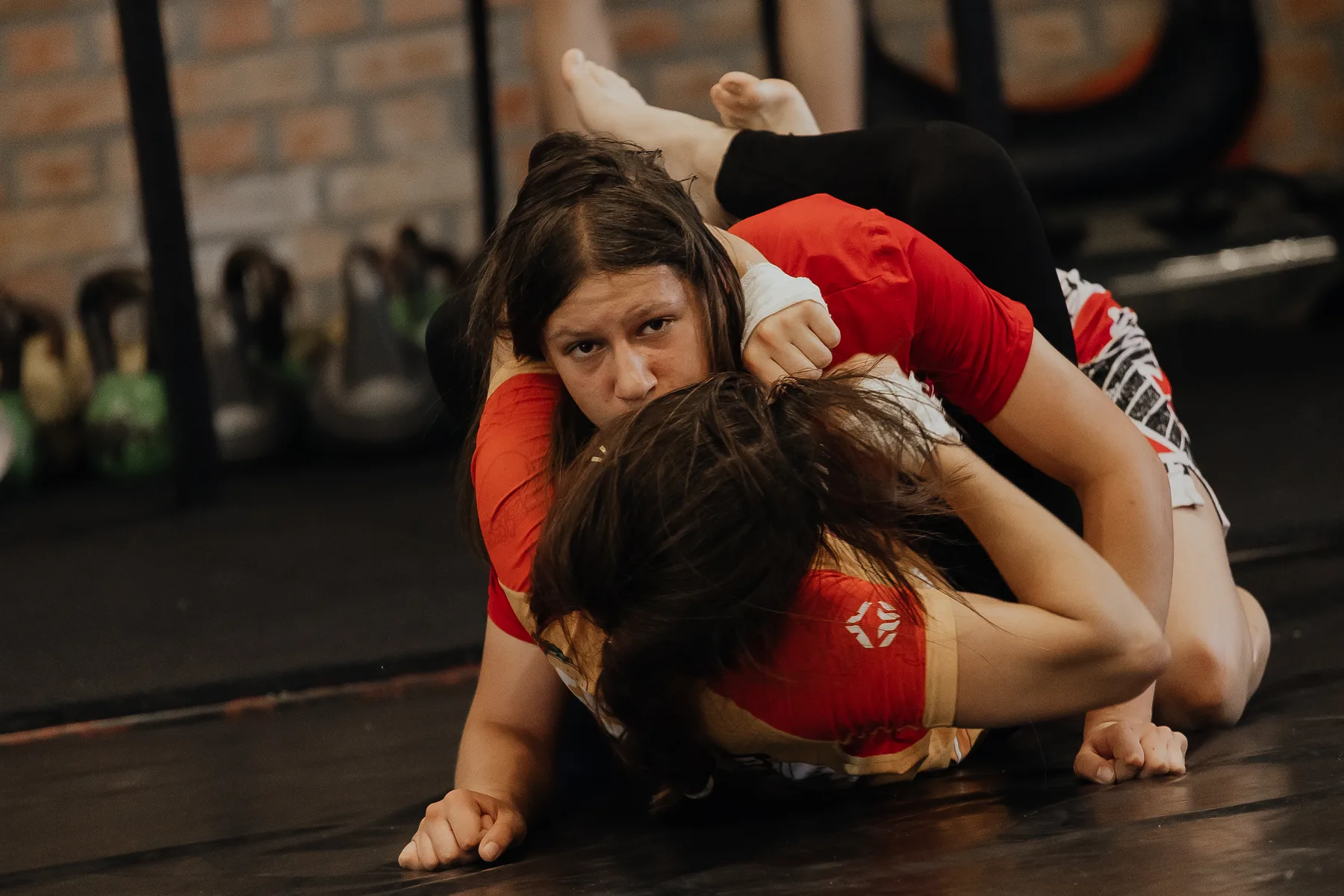
Wrestling and Brazilian jiu-jitsu overlap in takedowns, rides, escapes, pins and positional control, yet they solve those problems under different clocks and incentives. Wrestling usually prioritizes initiating contact, finishing takedowns, exposing or pinning an opponent and escaping immediately from bottom. BJJ allows submissions and often grants more time to work from guard or other bottom positions, so an athlete can use the legs and grips to attack without first standing up. Wrestling commonly develops exceptional stance discipline, pressure, scrambling and work rate. BJJ commonly develops submission awareness, layered guard passing and comfort navigating longer ground sequences. “Which is better?” only becomes useful after naming the destination. For scholastic or collegiate competition in the United States, wrestling is the direct pathway and is often time-sensitive because school access narrows after graduation. For adult recreational entry, submission grappling competition or deep positional study, BJJ is usually easier to find. For MMA, both are highly valuable: wrestling decides where exchanges occur, while BJJ contributes submission offense, defense and positional exits. The best local coach, suitable partners and sustainable schedule still outweigh abstract rankings. A teenager with school wrestling access may sensibly wrestle now and add BJJ later; an adult with no wrestling club may build takedown competence inside a serious BJJ academy.
01
What to understand
See how bottom position changes
In folkstyle wrestling, the bottom athlete is expected to escape or reverse while the top athlete rides, turns and seeks a fall. Freestyle and Greco-Roman place different value on exposure and may return athletes to the feet quickly. In BJJ, guard can be an offensive structure: the bottom athlete controls distance, sweeps, takes the back or submits. That does not make lying underneath universally safe; it means the scoring system recognizes a different set of productive actions. Athletes crossing over must learn when their familiar bottom behavior gives away points, control or strikes in another format.
Separate takedown depth from takedown availability
A dedicated wrestling program normally allocates far more repetitions to stance, hand fighting, level changes, chain finishes, mat returns and boundary reactions. A BJJ academy may teach excellent takedowns, but some begin many rounds from the knees or seated guard because of mat space and curriculum priorities. Inspect the actual class. Ask whether standing rounds are supervised, whether beginners learn safe falling and whether the coach can connect a failed shot to guard, front headlock or submission danger rather than treating takedown and ground work as separate worlds.
Account for submissions and exposure
Wrestling teaches athletes to drive, post, bridge and scramble through positions that can expose the neck or limbs under submission rules. BJJ teaches respect for those threats, but a submission-first athlete may accept takedowns or remain underneath in ways that lose wrestling matches. Neither habit transfers automatically. Crossover practice should identify the exact decision that changes: where hands post, when the head leaves alignment, whether rolling exposes the back and which grips are legal. Do not erase an athlete’s strongest instincts; add a rules-aware branch to them.
Use the available age pathway
In the United States, middle-school, high-school and college wrestling can provide structured coaching, frequent matches and a peer team at unusually low cost. That opportunity is difficult to recreate later. Adult wrestling clubs exist but are less common than BJJ academies. In Ukraine and much of Europe, freestyle and Greco-Roman pathways may be organized through sports schools and clubs rather than school teams. BJJ often offers an easier adult entry in both markets. Choose with the local ecosystem in mind, not only the global reputation of each sport.
02
How to train it
Audit one live round
Watch where the round starts, what scores, how long athletes remain in one position and what causes a reset. Count meaningful takedown attempts, bottom escapes, guard recoveries and submission sequences. One observed class provides better decision data than a hundred online arguments because it reveals the exact version of the sport available to you.
Run a three-state crossover drill
Use standing contact, takedown connection and first stable ground position as three checkpoints. The wrestler adds neck and limb safety before driving through a scramble. The BJJ athlete adds stance recovery and an immediate get-up option instead of accepting bottom automatically. Reset after the first coherent decision and repeat at increasing resistance.
Choose the competition calendar first
List the events realistically available during the next year, their rules, travel cost and entry requirements. If a school season is approaching, that deadline may settle the priority. If local BJJ events run monthly and adult wrestling competition is absent, the useful answer changes. Training gains meaning when the athlete knows which rules will test the decisions.
Add the second sport without losing recovery
Keep two or three anchor sessions in the primary discipline, then add one technical session from the second. Track sleep, joint soreness, school or work performance and quality of live rounds for four weeks. More mat time is not automatically better if every class becomes fatigued survival. Integration should solve a named gap such as takedown entries, submission defense or bottom escapes.
Wrestling asks: can you impose position now?
BJJ asks: what threat survives the next transition?
Do not confuse accepting bottom with losing control.
A takedown ends one phase and starts another.
Train for the rules you will actually enter.
03
Common mistakes
Calling all wrestling one ruleset
Folkstyle, freestyle and Greco-Roman reward different controls, exposures and attacks. A comparison that does not name the style can mislead a beginner. Ask which program is available and which competitions it prepares for.
Assuming a BJJ belt proves takedown depth
A belt reflects progress within an academy and ruleset, not a universal number of wrestling hours. Evaluate standing skill directly. The same caution applies to assuming every successful wrestler understands submission safety.
Adding two hard programs at once
A motivated athlete can quickly accumulate neck, shoulder, knee and fatigue load. Establish attendance and recovery in one room, then add the second for a defined purpose. Coaches should know about the combined schedule.
04
Questions athletes ask
01 · Is wrestling or BJJ better for MMA?
MMA needs both location control and submission literacy. Wrestling often provides stronger tools to choose standing, fence or top position. BJJ contributes submission offense, defense and exits when the preferred location fails. Start with the best available coaching, then deliberately fill the missing phase under MMA rules.
02 · Does wrestling beat BJJ in a match?
There is no rules-free answer. Athlete size, experience, condition, starting position and permitted techniques matter, and the rules decide what counts as victory. A useful comparison identifies transferable decisions instead of predicting strangers from style labels.
03 · Should a teenager wrestle before starting BJJ?
If a safe school or club wrestling program is available now, its season, coaching volume and competition access can be difficult to replace in adulthood. The teenager can add BJJ off-season or later. Safeguarding, enjoyment and sustainable workload remain essential.
04 · Can an adult learn wrestling at a BJJ gym?
Yes, when the academy has qualified standing instruction, enough mat space, progressive falling work and live rounds from the feet. Ask who teaches the class and how often it runs. A weekly takedown segment is useful, but it is not identical to a full wrestling program.
05
Sources and further reading
Training needs vary by athlete, schedule and coaching environment. Use these sources as context, then adapt with qualified support. Educational content for athletes and coaches. This guide does not diagnose injury, replace individualized coaching or override event rules. Stop if an activity causes pain, and use an appropriately qualified coach or healthcare professional for your situation.