
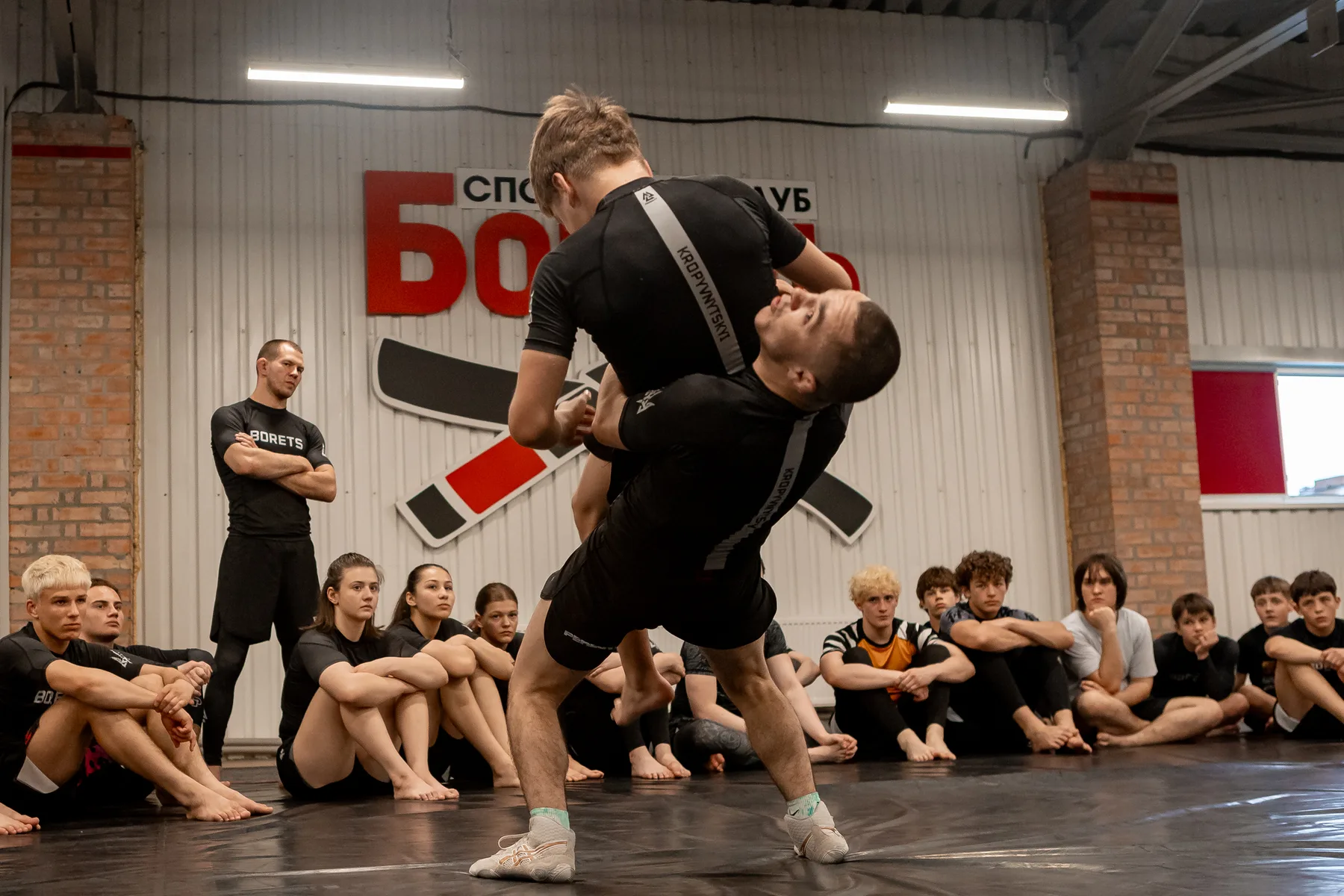
The direct answer
Start with the rule set, then connect stance, first contact and one reliable finish.
Freestyle wrestling does not reward motion by itself. A scoring action must create the result recognized by the officials: established control, a legally defined exposure, a boundary outcome, a reversal or another result described in the governing rules. The same exchange can be worth different tactical value depending on where it finishes, whether danger is created and what the scoreboard requires next. Before competing, identify the exact rule set, age division and event bulletin; United World Wrestling published rules for 2026, while domestic and developmental events may use adaptations. Learn principles from this guide, but use the current official document and the event referee briefing for point values, passivity procedure, timing, challenges and victory thresholds.
01
What to understand
Start with the governing document
Write down the federation, rules edition, age group and any event modifications before building tactics. UWW events, a national federation tournament and a local youth meet can share the same sport yet differ in administration, bout format or interpretation. A screenshot from social media is not a rulebook. Save the official link, note its effective date and ask the event organizer which document controls if the bulletin is unclear.
Separate takedown, control and exposure
A leg attack is not automatically a score, and touching the mat is not automatically control. Follow the exchange until officials can identify who established the recognized position and whether the opponent’s back entered the defined danger zone. Review video from the referee’s angle, pausing at the instant control changes. This prevents athletes from celebrating an entry while the opponent is still scrambling, countering or creating the more valuable result.
Understand continuation in par terre
The first score should lead immediately to the next legal objective. The top wrestler must know when pressure can create a turn and when a rushed lock only gives space; the bottom wrestler must clear danger, build a stable base and respond to the referee rather than waiting passively. Train the transition from the scoring action through the official restart so athletes understand which sequences continue and which return to neutral under the applicable rules.
Treat the boundary as a position
Near the edge, foot placement, direction of force and who initiated the action matter more than a generic instruction to push. Practice attacking toward safe space, circling away before both feet are trapped and finishing without reckless momentum into tables or spectators. Boundary decisions can involve action, counteraction, fleeing or other rule concepts, so athletes should continue wrestling to the whistle and let qualified officials apply the current interpretation.
Convert the scoreboard into decisions
Score, criteria, remaining time and warning status create the match state. The best action while trailing may be an unnecessary risk while leading, and the safest one-point idea may be useless if a larger result is required. Build a simple corner language for lead, deficit, criteria and time, then rehearse it under noise. Coaches should distinguish the technical score from team classification points or bracket procedures, which are separate layers.
02
How to train it
Build a one-page rules card
Using only the official rulebook and event bulletin, summarize the current definitions your athlete needs: match format, recognized scoring outcomes, passivity process, boundary procedure, prohibited actions, challenge availability and victory conditions. Add document links and effective dates. The coach or a qualified referee should approve the card, and the team should replace it rather than silently editing it when a new edition appears.
Run a silent video audit
Choose ten short clips from official competition footage. Before seeing a scoreboard graphic or hearing commentary, each athlete records initiator, control, landing, exposure, boundary and likely continuation. Compare answers with the official call, then separate a rule misunderstanding from a camera-angle problem. The purpose is not to argue isolated calls; it is to make athletes observe the facts a referee must judge in real time.
Score neutral-action scenarios
Start from a named tie or leg-attack position and give the athletes fifteen seconds to create a clearly recognized result. After the whistle, attacker, defender and observer each state what changed and why. Rotate roles. Count the repetition only when the athlete can explain control and continuation, not merely when someone falls. Add realistic counters gradually so the drill preserves decision quality instead of becoming cooperative choreography.
Connect takedown to par terre
Begin with a live neutral exchange. Once a recognized takedown occurs, continue for a short coached window in which top seeks legal exposure and bottom seeks a safe, rule-aware recovery. An observer tracks whether the first scorer relaxed, whether bottom conceded a second action and when a restart would likely occur. Keep torque controlled and prohibit improvised neck, joint or high-amplitude actions outside qualified supervision.
Rehearse edge, clock and corner
Wrestle repeated final-minute scenarios at the edge with a visible score, criteria note and warning status selected from the current event rules. The corner may use only four agreed commands. After every round, the athlete explains the chosen risk and the observer identifies the boundary fact that decided the exchange. Reset immediately if momentum could carry athletes beyond properly padded safe space.
Control first; the scoreboard follows the recognized result.
Read initiator, landing, danger and continuation.
At the edge, create an angle before force.
Know score, criteria, time and warnings.
Official document first; commentary and memory second.
03
Common mistakes
Memorizing a points chart without positions
A chart cannot show when control was established, whether danger occurred or how a counter changed the action. Athletes then call every familiar-looking throw the same score. Pair every rule concept with official video, a freeze-frame and a verbal explanation of initiator, control and finish. If teammates disagree, consult a qualified referee instead of voting on the answer.
Training every round from zero-zero
Open wrestling develops exchanges but hides scoreboard intelligence. A wrestler who never practices protecting criteria, chasing a larger result or responding to a passivity sequence must learn those decisions under tournament stress. Assign a score, clock and event-valid warning state before situational rounds, then grade the tactical choice separately from whether the athlete happened to win the exchange.
Stopping when someone touches the mat
Early celebration turns good entries into lost scrambles. The attacker should secure the recognized result and prepare the next legal action; the defender should continue through every available counter until the whistle. Coaches must still protect athletes: stop any uncontrolled fall, dangerous joint alignment or movement beyond the safe mat even if a competition exchange would otherwise continue.
Assuming the last event sets today’s rules
Federations can issue new editions, interpretations and event-specific procedures. A familiar official, broadcast graphic or old PDF does not override the governing document. Recheck sources before every competition block, record the access date and brief athletes on changes. Where wording is disputed, the event’s authorized officials—not this guide—make the operative decision.
04
Questions athletes ask
01 · How many points is a freestyle wrestling takedown?
There is no responsible one-line answer without seeing the action and identifying the rules in force. Officials consider how control, landing, danger and continuation meet the current definitions; a counter can also change who receives recognition. Learn common examples from the current UWW rulebook and official referee education, then confirm any domestic or age-group modifications in the event bulletin.
02 · What ends a freestyle wrestling match early?
Official rules describe several possible victory conditions, including a fall and other decisive results such as reaching the applicable technical-superiority threshold. The definitions, threshold and procedure must come from the edition and event regulations currently governing the bout. Coaches should teach athletes to wrestle through the official signal and never infer that a match has ended from a private score calculation.
03 · How does passivity work in freestyle wrestling?
Passivity is an officiating process, not simply a coach’s opinion that one wrestler moved less. The current rules specify how officials identify insufficient engagement, communicate warnings and apply any activity procedure or consequence. Because wording and administration can change, study the current official sequence and rehearse the event’s commands with a qualified referee rather than memorizing an old timer or penalty.
04 · Which rules should a wrestler check before competing?
Start with the organizer’s event bulletin, then the linked federation rulebook, age and weight-category regulations, weigh-in and uniform instructions, medical and anti-doping requirements, challenge procedure and any published modifications. Confirm the effective date and language version. If documents conflict, ask the organizer in writing and follow the authorized technical meeting; do not rely on a search snippet or this educational guide.
05
Governing and institutional sources
Rules can change. The linked governing document—not this summary—controls your event. Educational content for athletes and coaches. This guide does not diagnose injury, replace individualized coaching or override event rules. Stop if an activity causes pain, and use an appropriately qualified coach or healthcare professional for your situation.