
The direct answer
Start with the rule set, then connect stance, first contact and one reliable finish.
Wrestling conditioning should improve the athlete’s ability to repeat technically useful actions, recover between exchanges and preserve decision quality late in practice and competition. Start with the individual: training age, health, schedule, weight-management demands, injury history and the specific competition format. Develop an aerobic base that supports recovery, expose speed and high-power efforts without turning them slow, and use live or constrained wrestling for the most specific conditioning. Coordinate every hard session with technical and strength priorities, then adjust from performance, sleep, soreness and coach observation. This is a planning framework, not medical advice or an individual prescription; athletes with symptoms, health conditions or unusual fatigue need qualified medical and performance support.
01
What to understand
Define the performance problem
Do not diagnose every late-round failure as bad cardio. The limiter may be poor pacing, inefficient hand fighting, weak position, local muscular fatigue, anxiety, heat, inadequate fueling, a recent illness or insufficient recovery. Review competition video and training data with the coach. Describe the exact failure—such as slower re-attacks after hard scrambles—before choosing a conditioning method. Seek medical review for concerning symptoms or unexplained performance decline.
Build aerobic support without stealing skill
Easy cyclical work, tempo movement or appropriately controlled technical activity can increase low-cost volume and support recovery between harder efforts. The modality should fit the athlete’s joints, equipment and schedule. Keep the intensity genuinely sustainable and stop adding volume when it reduces mat quality. Aerobic work is infrastructure, not a punishment for losing; its value appears in repeatability and recovery, not in how exhausted the athlete looks.
Preserve quality in high-power work
Short explosive efforts can target acceleration, shots, lifts or rapid direction changes only while output and mechanics remain high. Use enough recovery to keep the intended quality; otherwise the session changes into slower fatigue work. Select low-skill implements for supplemental conditioning when fatigue would make complex throws unsafe. End the set when speed drops clearly rather than using technical breakdown as proof of toughness.
Make wrestling the specific layer
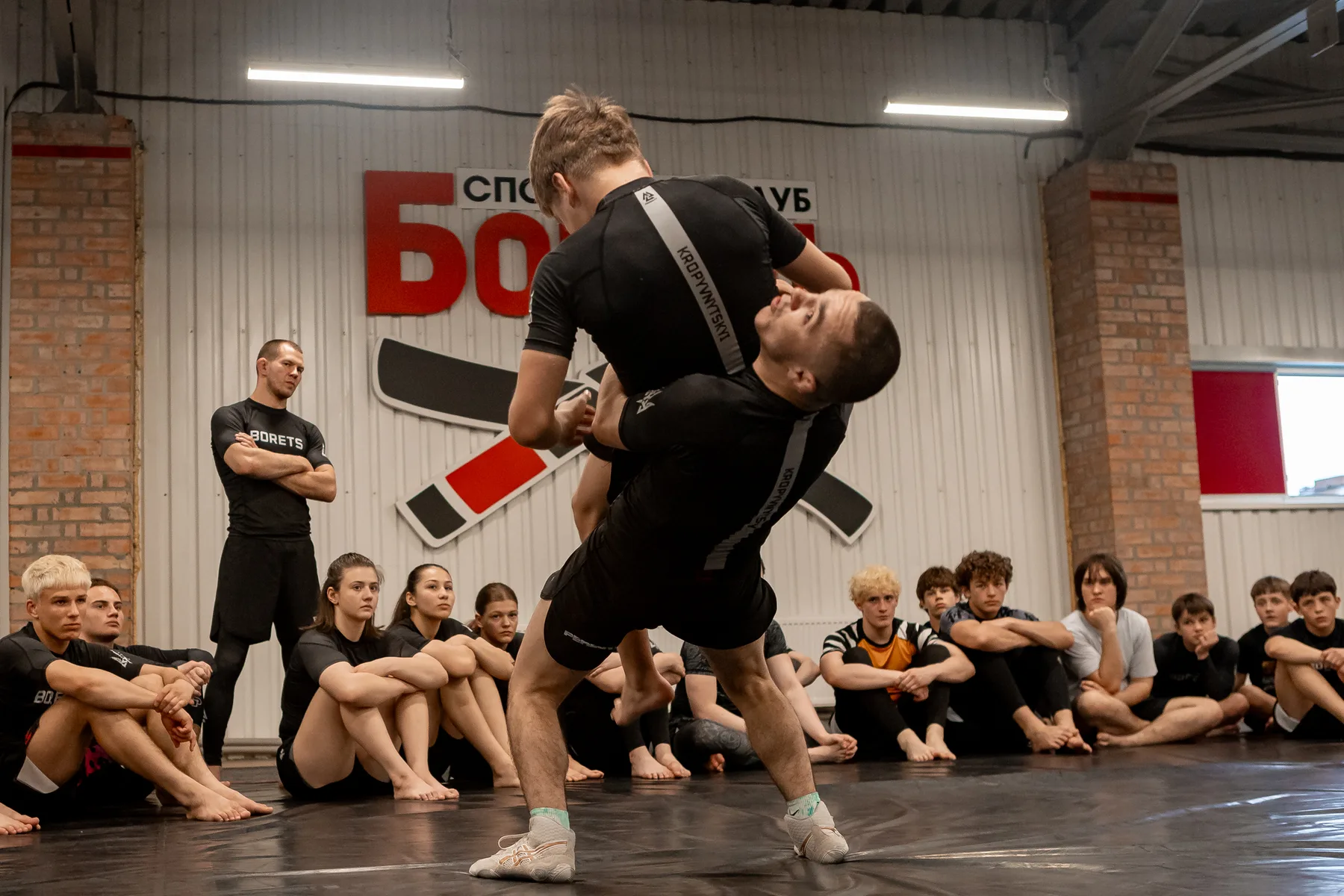
No machine reproduces grip decisions, positional pressure, opponent reactions and rule-based pacing together. Use constrained rounds to emphasize the target exchange, then live rounds to integrate it. Specific does not mean chaotic: define the starting position, task, partner behavior, work window and technical stop criteria. Fresh-partner formats can raise pressure, but dose them carefully because they increase both physical stress and injury exposure.
Manage the whole training week
Conditioning cannot be programmed independently from hard wrestling, lifting, school or work, travel and weight management. Place the most important technical session when the athlete can execute it well, cluster compatible stress where appropriate and protect recovery before key practices. Track a few signals consistently rather than many sensors occasionally. The plan should become simpler near competition, with enough intensity exposure to stay ready and less unnecessary accumulated volume.
02
How to train it
Create a two-week baseline
Before adding work, record session type, duration, perceived effort, sleep quality, soreness and one wrestling-specific output such as successful attacks late in rounds. Keep normal training and note illness, travel or weight change. Two weeks do not diagnose physiology, but they expose obvious stress patterns and give coach and athlete a shared starting point. Do not test maximal efforts when health or recovery is questionable.
Add an easy aerobic session
Choose a joint-tolerant modality and a duration the athlete can complete at conversational effort without affecting the next priority practice. Begin conservatively, progress one variable at a time and judge success by improved consistency, not sweat. The athlete should finish able to train again, not emptied. Use individual response and professional guidance rather than copying another wrestler’s heart-rate zones or weekly mileage.
Use a quality power microdose
After a suitable warm-up, perform a small number of brief explosive efforts using safe sprints, throws with an appropriate implement or another coached modality. Rest long enough for repeatable speed and stop when output or mechanics clearly deteriorate. Keep a simple result such as time, distance or video speed. This session should sharpen acceleration, not become a disguised endurance circuit.
Condition through a target exchange
Select one match problem, such as repeated hand-fight-to-shot sequences or recovery after a scramble. Build controlled rounds around that task with clear starts, legal actions, partner rotation and stop criteria. Score technical success as well as completion. Increase density only when the same decisions survive. If posture, landing or defensive awareness fails, extend rest or end the block rather than rehearsing dangerous fatigue.
Review and adjust every week
Compare planned and completed load with mat quality, late-round execution, sleep, soreness, motivation and any pain. Keep what solves the defined problem, reduce overlapping stress and schedule lighter periods before breakdown forces them. One poor day is information, not a verdict; a persistent negative pattern deserves action. Sudden chest symptoms, fainting, neurological signs or unusual shortness of breath require urgent medical assessment.
Condition the performance problem, not the athlete’s pride.
Easy work stays easy; power work stays fast.
Specific rounds must preserve specific decisions.
Count technical quality alongside completed work.
The weekly plan serves the priority mat session.
03
Common mistakes
Making every session maximally hard
When easy, power, specific and strength sessions all become exhaustion tests, their adaptations blur and technical practice deteriorates. Hard work has a place, but intensity needs a purpose and recovery cost. Label the target of each session, define a quality stop and remove extra finishers that add fatigue without solving the stated problem. Consistency beats isolated heroic workouts.
Copying a champion’s camp
Public workouts omit the athlete’s training history, medical context, hidden recovery and total weekly load. The same interval can be useful for one wrestler and excessive or irrelevant for another. Borrow principles, not volume. Start from current capacity, progress conservatively and coordinate with coaches who see the whole program rather than assembling a week from disconnected social clips.
Using technical breakdown as conditioning
Repeated shots with a rounded back, uncontrolled landings or late defensive reactions do not make fatigue more sport-specific; they rehearse failure and increase risk. Set minimum technical standards and end or modify the interval when they disappear. Supplemental conditioning can use simpler movements so tired athletes are not forced to practice complex partner skills at unsafe speed.
Treating aggressive weight loss as conditioning
Dehydration and severe restriction can distort heart rate, output, recovery, cognition and perceived fitness while creating serious health risk. Conditioning cannot compensate for unsafe weight management. Competition preparation should follow current federation requirements and an individualized plan from qualified sports-medicine and nutrition professionals, especially for minors. Symptoms or rapid deterioration require stopping and obtaining medical help.
04
Questions athletes ask
01 · How many conditioning sessions does a wrestler need each week?
There is no universal number because wrestling practice already supplies substantial conditioning. Count the full week first: technical intensity, live rounds, lifting, competition schedule and life stress. Add the smallest dose that addresses the identified limiter without reducing skill quality. Beginners, in-season athletes and full-time senior competitors may need very different supplemental volumes.
02 · Is running the best cardio for wrestling?
Running can be a useful, accessible aerobic modality, but it is not mandatory and it does not replace wrestling. Choose among running, cycling, rowing, swimming or controlled mat movement based on joints, skill, equipment and recovery cost. The best modality is one the athlete can perform consistently at the intended intensity without compromising priority practice.
03 · Should conditioning copy the exact match duration?
Sometimes a match-length round is useful for pacing and specificity, but duration alone does not reproduce the changing work inside wrestling. Short explosive exchanges, lower-intensity positional work, stoppages and recovery all interact. Use different interval structures for defined qualities and let live wrestling integrate them. Confirm the current event format rather than assuming every age group competes identically.
04 · How do I know whether the plan is working?
Look for improvement in the problem you defined: more high-quality re-attacks, faster recovery between rounds, stable late-round technique or better completion at the same perceived effort. Interpret these alongside sleep, soreness, mood and pain. A harder workout or higher heart rate is not automatically progress. Retest under similar conditions and change one major variable at a time.
05
Sources and further reading
Training needs vary by athlete, schedule and coaching environment. Use these sources as context, then adapt with qualified support. Educational content for athletes and coaches. This guide does not diagnose injury, replace individualized coaching or override event rules. Stop if an activity causes pain, and use an appropriately qualified coach or healthcare professional for your situation.