
The direct answer
Start with the rule set, then connect stance, first contact and one reliable finish.
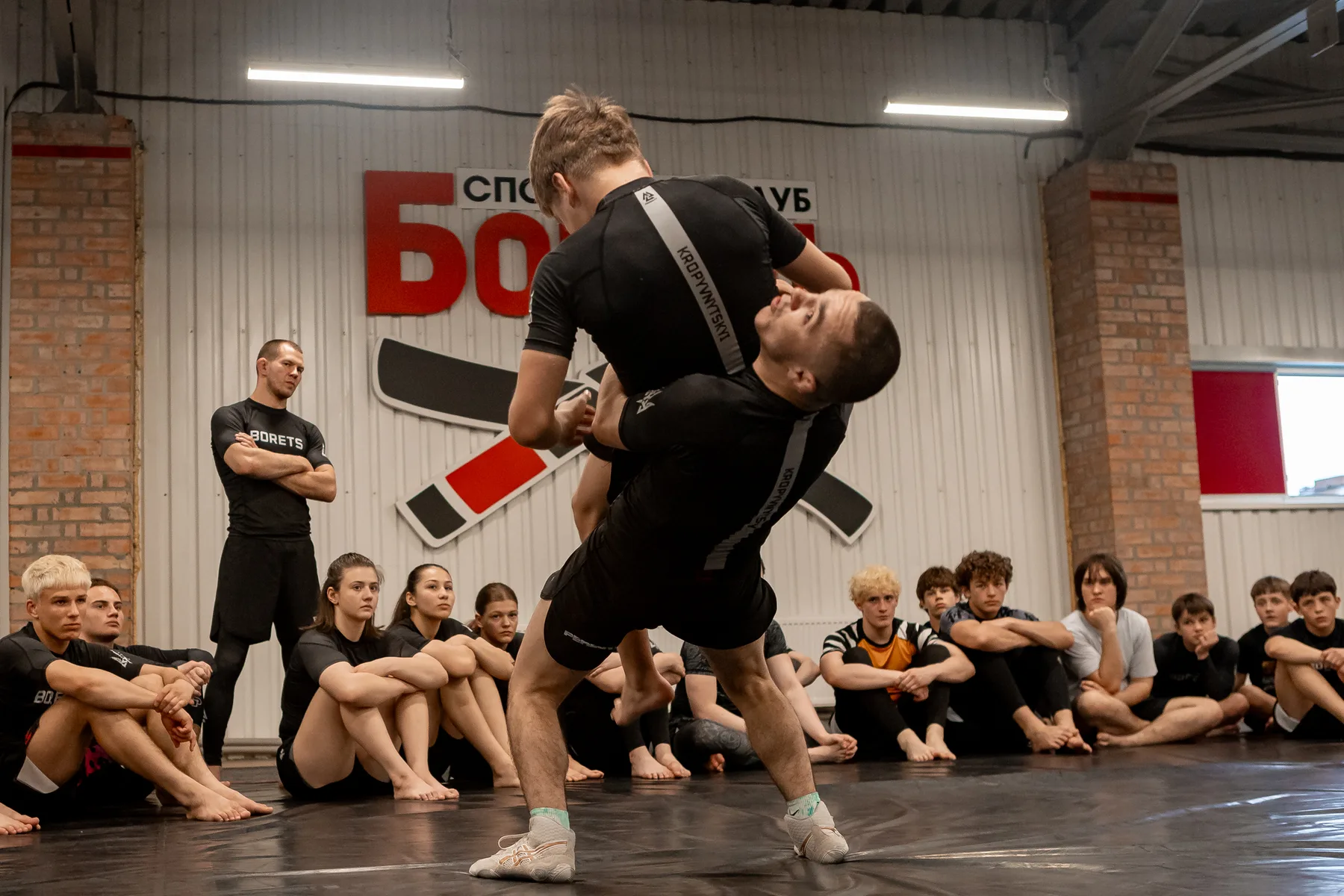
A reliable single leg begins before the penetration step. First make the target leg available through stance, hand fighting, angle or a forced step. Enter with the head, spine, hands and hips organized so the opponent cannot immediately sprawl, crossface or pull you underneath. From the captured leg, finish according to the defender’s hip and upper-body response rather than forcing one favorite motion. Every branch must end in ruleset-appropriate control, and every failed branch needs a safe recovery to stance or a trained secondary attack. Learn this system under a qualified wrestling coach, add resistance gradually and control all lifts, knee rotations and landings.
01
What to understand
Create access before changing level
Choose one setup that consistently moves the target foot: a post and circle, snap and wrist, inside tie or another connection your coach supports. The setup succeeds when the opponent’s weight, hands or stance briefly stop protecting the chosen lane. Film entries from neutral and count how often access existed before the shot. If the athlete attacks a closed lane, improve the setup instead of demanding a faster penetration step.
Arrive in a protected capture
The hands connect the leg while the posture carries force through the floor. Keep the head in the coach-defined safe lane, the near shoulder connected and the hips close enough to move the feet underneath you. Do not leave both knees parked at distance with arms stretched around the leg. Freeze after entry and test whether the athlete can breathe, see, step and resist light defensive pressure without collapsing.
Classify the defender’s response
Use a small decision map. Square or retreating hips may permit one finish; heavy hips and downward pressure require posture recovery; an overhook, crossface, shin block or hopping balance changes the direction again. Name observable landmarks rather than memorized move names. The athlete should be able to say what the defender gave before selecting a branch, which turns live resistance into information instead of panic.
Finish with feet, angle and connection
Most finishes improve when the attacker brings the feet to the captured leg, turns the corner and directs the opponent toward a controlled landing. Pulling with the arms from a long kneeling position gives the defender time and loads the attacker’s back. Whether the trained answer is a turn, shelf, trip, switch or return, preserve joint alignment and never rotate a trapped knee against a fixed foot.
Own the next position or recover
A takedown system is incomplete if the opponent immediately rolls, turns in or exposes the attacker to a counter. Define the first control after every finish according to freestyle, folkstyle, grappling or MMA goals. Also define the bailout: if posture, head position or the captured leg is lost, clear safely, square the hips and return to stance or use one coached secondary attack. Persistence is valuable only while structure remains.
02
How to train it
Map one setup to one footstep
Start in neutral contact and allow no takedown. The attacker scores only by making the defender place the target foot inside a marked attack lane while keeping balanced posture. The defender gives realistic but moderate resistance. Rotate lead legs and partners, record successful reactions and stop rewarding dramatic snaps that do not move the foot. This gives the shot a repeatable invitation rather than a hopeful launch.
Freeze and audit the entry
From the created step, enter and freeze at first secure contact. A coach checks head lane, shoulder connection, spinal control, hand position, hip distance and the ability to move either foot. The defender adds light sprawl, crossface or pull pressure without finishing. Correct one landmark, reset and repeat. Only increase speed when the capture remains stable under all three tests.
Train three defensive branches
Choose the three responses most common in the room and assign one high-confidence answer to each. The defender presents them predictably at first, then in random order and finally with progressive resistance. The attacker calls the landmark before finishing. If recognition becomes late or posture breaks, reduce resistance. Quality comes from choosing early, not collecting five low-percentage finishes for every possible defense.
Require finish plus control
A repetition counts only when the defender lands safely and the attacker establishes the agreed next position for a short confirmation. The defender may continue a realistic scramble, but neither partner may create uncontrolled torque or impact. Change the finishing objective when training another ruleset. This exposes attractive finishes that score in drilling yet consistently surrender position in live wrestling.
Score live attempts by phase
Run constrained rounds in which the attacker can use only the selected single-leg family and the defender can counter normally within safe rules. Track access created, stable captures, correct branch choices, finishes and final control as separate numbers. A low finish rate with many stable captures indicates a different problem than entries that never reach the leg. Review one phase, select one correction and retest next practice.
Make the foot arrive before you attack it.
Head connected, hips underneath, feet still available.
Read the hips before choosing the finish.
Bring your feet to the leg; do not pull from distance.
Control the landing, then own the next position.
03
Common mistakes
Shooting at a protected leg
Speed cannot reliably repair a closed lane, square defender and waiting hands. Repeated failed shots teach the athlete to absorb weight and crossfaces. Score setups independently in practice and require a visible step, hand displacement or angle before entry. If the opponent refuses the planned reaction, use the paired branch rather than forcing the original attack through prepared defense.
Staying on both knees with long arms
This position disconnects the attacker’s hips from the leg and lets the defender apply weight while freeing the captured limb. Restore posture, connect the shoulder, step the feet closer and choose an angle. If those landmarks cannot be recovered safely, exit. Coaches should not praise survival underneath as determination when the athlete is rehearsing a structurally lost and potentially hazardous position.
Forcing one finish against every defense
A finish is a response to alignment, not a personal brand. Turning harder into a fixed knee, lifting through a compromised back or driving into a strong overhook can injure a partner and still fail technically. Limit the tree, but give it genuine branches. Stop immediately if a trapped foot, knee or shoulder cannot follow the direction of force.
Ending the repetition at first contact
Entry-only drilling hides the difficult part: converting pressure, choosing under uncertainty and securing control. Use entry isolation for calibration, then reconnect it to finish, scramble and recovery. Track where the sequence breaks. Partners should increase resistance gradually and preserve safe landing skill; uncontrolled live speed is not the shortcut from choreography to competence.
04
Questions athletes ask
01 · Which single-leg finish should I learn first?
Choose the finish that fits your entry, head position, ruleset and the defense you encounter most often. It should allow controlled practice and lead to a stable next position. Learn one answer for square or retreating hips and one answer for the room’s most common counter, then add a safe recovery. A coach should select the exact technique from live evidence.
02 · How many finishes does a single-leg system need?
Most developing wrestlers need fewer than they think: a primary finish, a clear answer to two frequent defensive alignments and a bailout or secondary attack. The system becomes larger only when match review shows a recurring unsolved response. Three reliable decisions under resistance are more useful than ten named techniques that appear only with a cooperative partner.
03 · How do I stop getting sprawled on during a single leg?
Audit the phase before blaming penetration speed. Common causes include attacking without a forced step, reaching before the feet arrive, entering with the head or hips out of position and pausing after contact. Use video and freeze drills to find the first lost landmark. Practice posture recovery, but exit when structure cannot be restored instead of absorbing repeated uncontrolled pressure.
04 · Can the same single leg work in freestyle, BJJ and MMA?
The core ideas—access, posture, angle and reaction—transfer, but stance, legal threats, scoring and the desired next position change. A finish that exposes the back, neck or head may be acceptable in one setting and costly in another. Train each version with a qualified coach for that ruleset, and never assume clothing grips, cage use or striking exposure transfer unchanged.
05
Sources and further reading
Training needs vary by athlete, schedule and coaching environment. Use these sources as context, then adapt with qualified support. Educational content for athletes and coaches. This guide does not diagnose injury, replace individualized coaching or override event rules. Stop if an activity causes pain, and use an appropriately qualified coach or healthcare professional for your situation.