
The direct answer
Check the event rules before choosing takedown, guard and leg-lock priorities.
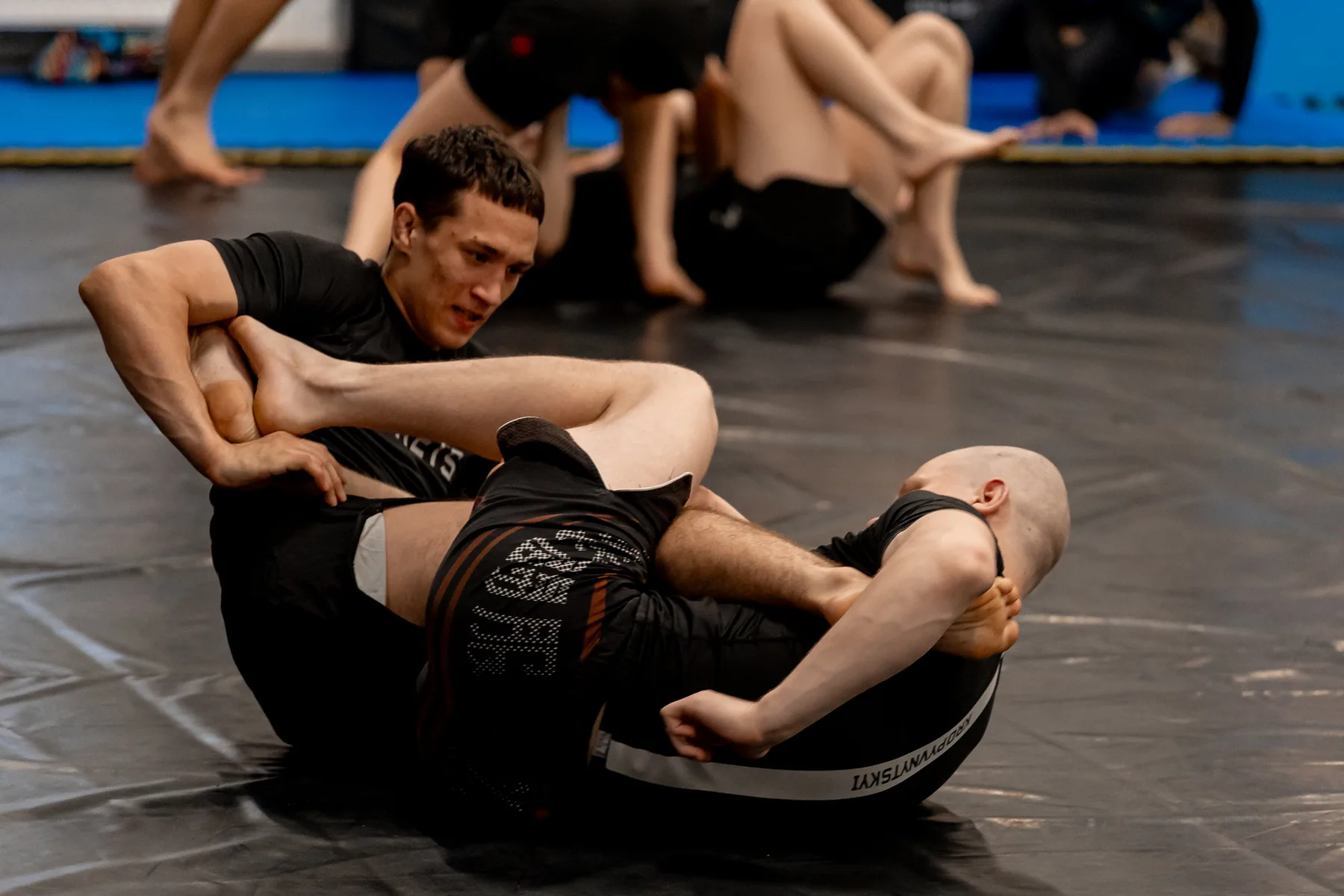
Submission grappling and MMA share takedowns, top control, guard, escapes and submissions, but MMA adds legal strikes and a fence, so every shared position changes. In grappling, an athlete can use both hands to build grips, accept some bottom positions and pursue a submission without accounting for punches. In MMA, hand position must protect the head, bottom control must reduce damage and the fence can either trap an athlete or help them stand. Submission grappling is usually the more focused choice for someone who wants no-strike competition, long technical ground exchanges or an adult recreational path with lower deliberate head-impact exposure. MMA is the direct choice for someone committed to learning striking and possibly competing under mixed rules. “Start with grappling first” is useful only when local integrated MMA instruction is poor or when the athlete wants a narrower entry. A well-coached MMA fundamentals class can safely introduce range integration without hard sparring. Conversely, an MMA gym that merely lets beginners fight from day one is not superior because it is broader. Evaluate instructor competence, controlled contact, fence teaching, partner matching, competition governance and the number of sessions you can attend. Athletes can also split goals: compete in grappling, learn technical MMA, and decide later whether full-contact competition fits their risk tolerance.
01
What to understand
See how strikes rewrite familiar positions
Closed guard, half guard, turtle and mount exist in both formats, but their value is not identical. A grip that controls posture in submission grappling may leave the head exposed in MMA. A bottom athlete may need to frame, tie up a striking arm, sweep or stand sooner. The top athlete must balance damage, passing and submission risk. Good MMA coaching revisits familiar grappling positions with strike-aware objectives rather than simply adding gloves to an ordinary roll.
Treat the fence as a separate skill
A wall prevents normal movement through space and creates new posts, head positions and get-up sequences. Takedowns that finish cleanly on an open mat may stall against it; positions that look pinned can become wall walks. Submission-grappling rooms sometimes train wall wrestling, but it is not guaranteed. If MMA is the destination, verify weekly fence work and safe instruction around fingers, head contact and mat-wall seams.
Compare competition density and commitment
Grappling events often allow several matches in one day and recurring entries throughout the year, with divisions by experience and weight. Amateur MMA usually involves a sanctioned bout, medical requirements, matchmaking, a camp and greater consequence from one contest. Local regulations vary. A person who wants frequent technical tests may prefer grappling competition even while training MMA skills. A person seeking an MMA record needs a credible team that treats matchmaking and medical clearance seriously.
Match equipment and hygiene to reality
Submission grappling usually needs rashguard, shorts and sometimes a mouthguard. MMA adds gloves, hand wraps, shin guards and other coach- or rule-required protection. Shared equipment should not replace properly fitted personal gear. Both environments demand clean mats, trimmed nails, covered skin problems and a culture of staying off the mat when contagious. Equipment cannot make uncontrolled contact safe, but poor equipment and hygiene can make a good curriculum fail.
02
How to train it
Compare one shared position
Choose half guard or turtle. First work a submission-grappling round with normal scoring and legal attacks. Then repeat with low-power open-hand touch strikes and an MMA objective such as standing, pinning to strike or reaching the fence. Pause whenever a familiar grip creates new exposure. This is a technical diagnostic, not a toughness test.
Inspect the sparring ladder
Ask how the gym moves from solo movement to partner drilling, constrained rounds, technical sparring and optional hard preparation. Look for explicit power limits and coach intervention. In grappling, ask how dangerous submissions are staged. In MMA, ask how head contact is tracked and what happens after suspected concussion symptoms.
Trial the timetable, not one class
Plan a realistic two-week sample using the sessions you could attend after work, school and family obligations. A complete MMA program may require several specialist classes that do not fit your week. A grappling timetable may provide more consistent repetitions. Alternatively, an integrated MMA fundamentals class may use limited hours more efficiently. Attendance data answers the question better than aspiration.
Set a competition decision gate
After a foundation block, meet the coach and review technical readiness, defensive behavior, health, training consistency and desire. Entering a grappling tournament does not obligate a future MMA bout, and technical MMA practice does not require competition. Separate the decision to learn from the decision to accept full-contact risk.
Shared positions do not have shared consequences.
The fence is a surface, not background decoration.
Technical contact should answer a named question.
You may train MMA and compete only in grappling.
Let actual attendance choose the curriculum width.
03
Common mistakes
Treating grappling as incomplete practice
Grappling is narrower than MMA but can be deeper in its domain and may match the athlete’s competition and risk goals perfectly. Breadth is valuable only when it serves the destination and is taught well.
Calling light contact completely safe
Low-power sparring reduces exposure but does not remove accidental collision, cumulative contact or orthopedic risk. Clear rules, attentive coaching and honest symptom reporting remain necessary.
Training every range without an integration class
Separate boxing, wrestling and grappling can build strong pieces while leaving transition gaps. If MMA is the goal, the program needs constrained rounds that connect ranges under MMA posture and rules.
04
Questions athletes ask
01 · Is grappling the same as MMA?
No. Grappling excludes striking and focuses on takedowns, control and submissions under its own rules. MMA integrates striking with grappling and fence work. Some techniques overlap, but posture, timing and tactical value change when legal strikes are present.
02 · Should I start grappling before MMA?
It is a sound route when it gives you better local coaching, safer early progression or more compatible scheduling. It is not mandatory when a strong integrated MMA fundamentals program exists. If MMA remains the goal, add strike- and fence-aware practice rather than assuming transfer is automatic.
03 · Which burns more calories, grappling or MMA?
Session structure, body size, work-to-rest ratio and intensity matter more than the label. Calorie estimates from watches are rough. Choose the class you can perform consistently and recover from; technical learning and attendance are better decision criteria than a promised number.
04 · Can submission grappling prepare me for an MMA fight?
It can provide an important base, but an MMA bout also requires striking defense, strike-to-takedown transitions, fence work, ground-and-pound decisions, conditioning and rules-specific sparring under qualified supervision. A grappling record alone is not complete fight preparation.
05
Sources and further reading
Training needs vary by athlete, schedule and coaching environment. Use these sources as context, then adapt with qualified support. Educational content for athletes and coaches. This guide does not diagnose injury, replace individualized coaching or override event rules. Stop if an activity causes pain, and use an appropriately qualified coach or healthcare professional for your situation.