
The direct answer
Check the event rules before choosing takedown, guard and leg-lock priorities.
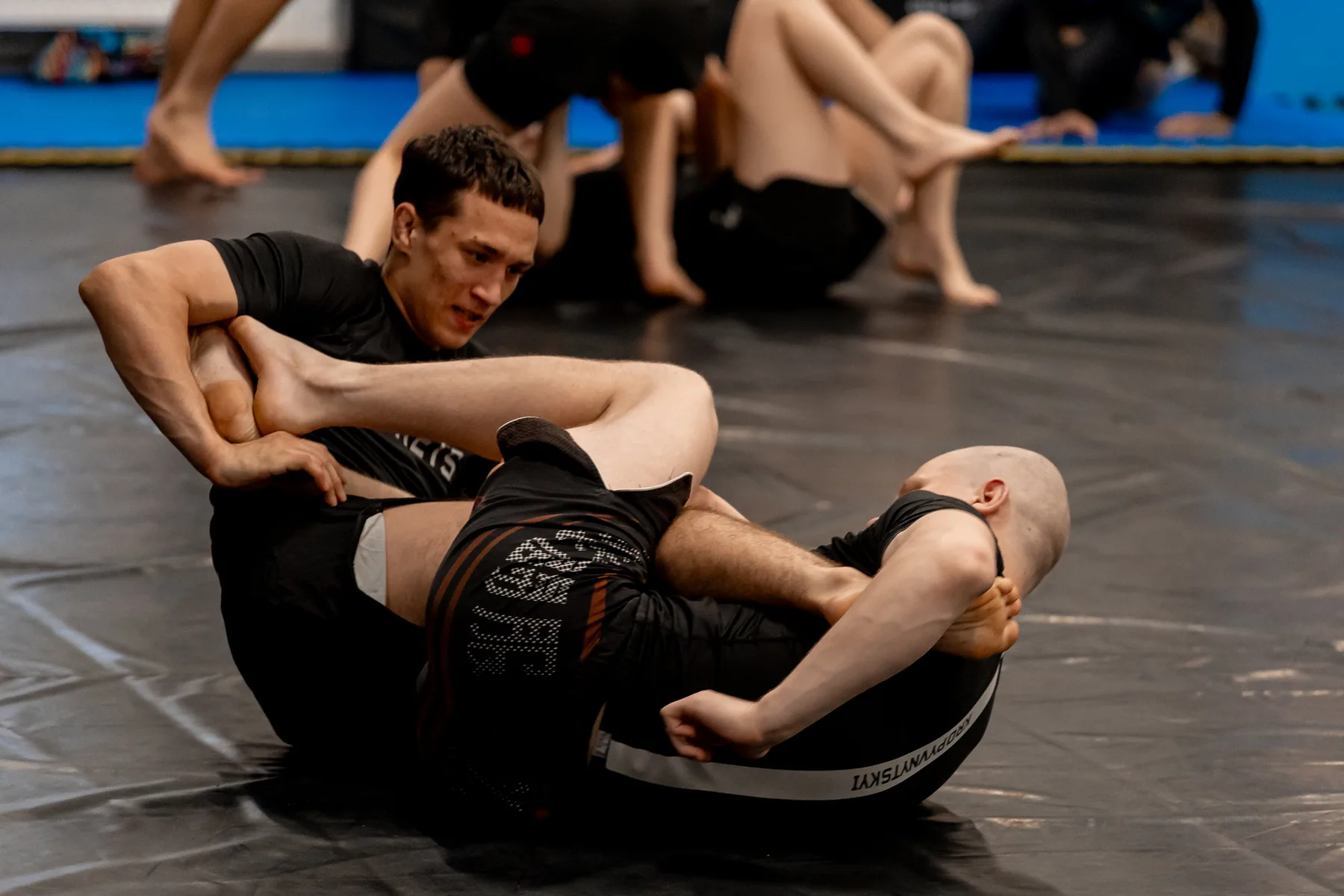
A no-gi wrestle-up turns guard into a standing or kneeling wrestling connection without abandoning positional safety. The guard player first creates seated posture with hands in front, head protected and hips close enough to move. Next, hand fighting removes the passer’s controlling post or earns wrist, elbow, underhook or head position. A lower-body connection—often a leg, hip or waist line—must be paired with upper-body posture so the athlete does not dive underneath a front headlock. The first objective is not always a dramatic takedown. It may be standing with connection, forcing a post, reaching a body lock or coming to a balanced single-leg position. From there, finish into top control or reset to guard if head position and grips are lost. The opponent’s response chooses the branch: retreat creates space to stand, forward pressure may load an angle or leg, and a sprawl may call for guard recovery or a safer secondary connection. Practice with controlled takedowns and no head-first drives, slams, neck cranks or blind rolling. Protect knees during entanglements, tap early and release when alignment becomes unsafe. Keep neighboring pairs and hard objects outside the landing area before live starts. Rules for takedowns, reversals, guard pulling and leg attacks vary across submission-grappling events, so verify current official documents without inventing scores. This page specifically addresses no-gi guard-to-wrestling connection, distinct from general takedowns, open guard or butterfly sweeps.
01
What to understand
Build active seated posture
Keep hands available, head safe and hips ready to move. Posting both hands behind makes connection and neck defense slow.
Win a hand-fighting lane
Control or remove the passer’s post before reaching the legs. Upper-body access protects the entry from frames and front headlocks.
Pair leg connection with head position
A leg grip without posture leaves the neck and back exposed. Bring the head and shoulders into a safe wrestling relationship.
Come up in stages
Move from seat to knee, foot and standing connection while preserving control. Height without balance is not progress.
Finish top or recover guard
If posture and connection remain, complete a controlled finish. If they are lost, frame and return to a known guard instead of forcing underneath.
02
How to train it
Layer 1 · seated hand fight
Top offers changing wrist and elbow posts. Bottom wins one inside connection while keeping head and hands protected.
Layer 2 · leg connection freeze
Bottom connects to a leg and freezes. Coach checks head position, shoulder height, knee alignment and an available exit.
Layer 3 · staged stand-up
Move seat to knee to foot under light resistance. Top frames realistically without snapping the neck or dropping weight.
Layer 4 · retreat or sprawl
Top chooses retreat or controlled hip removal. Bottom stands into connection, switches branch or recovers guard from the signal.
Layer 5 · top-control finish
Bottom completes a low-amplitude finish and must establish balanced top control against one recovery attempt.
Seated posture comes before leg reach.
Win the hand lane, then connect lower.
Head and leg connection rise together.
Height is earned through balanced stages.
Lost posture means guard recovery, not desperation.
03
Common mistakes
Diving at the leg with head down
The entry exposes front headlock and back control. Win hand position and bring posture into the connection.
Standing without controlling the post
Top frames, circles or snaps while bottom loses balance. Remove or redirect the post before building height.
Holding a dead leg connection
When head position and angle are lost, squeezing the leg leaves the athlete underneath. Switch or recover guard.
Finishing with uncontrolled descent
A wrestle-up is not permission to drop a partner. Guide the landing, protect joints and arrive balanced on top.
04
Questions athletes ask
01 · What is a wrestle-up in BJJ or no-gi?
It is a transition from guard into a wrestling connection that can produce standing, a takedown, reversal or stable top position.
02 · Which guard is best for wrestling up?
Several seated, open and half-guard relationships can work. Choose one that preserves head position and connects upper and lower control.
03 · What if the opponent sprawls?
Protect the neck, preserve a useful connection and choose a coached secondary attack or guard recovery. Do not remain extended underneath.
04 · How do rules affect wrestle-ups?
Organizations may define takedowns, reversals and guard actions differently. Verify the current official event document for scoring and legality.
05
Sources and further reading
Training needs vary by athlete, schedule and coaching environment. Use these sources as context, then adapt with qualified support. Educational content for athletes and coaches. This guide does not diagnose injury, replace individualized coaching or override event rules. Stop if an activity causes pain, and use an appropriately qualified coach or healthcare professional for your situation.