
The direct answer
Check the event rules before choosing takedown, guard and leg-lock priorities.
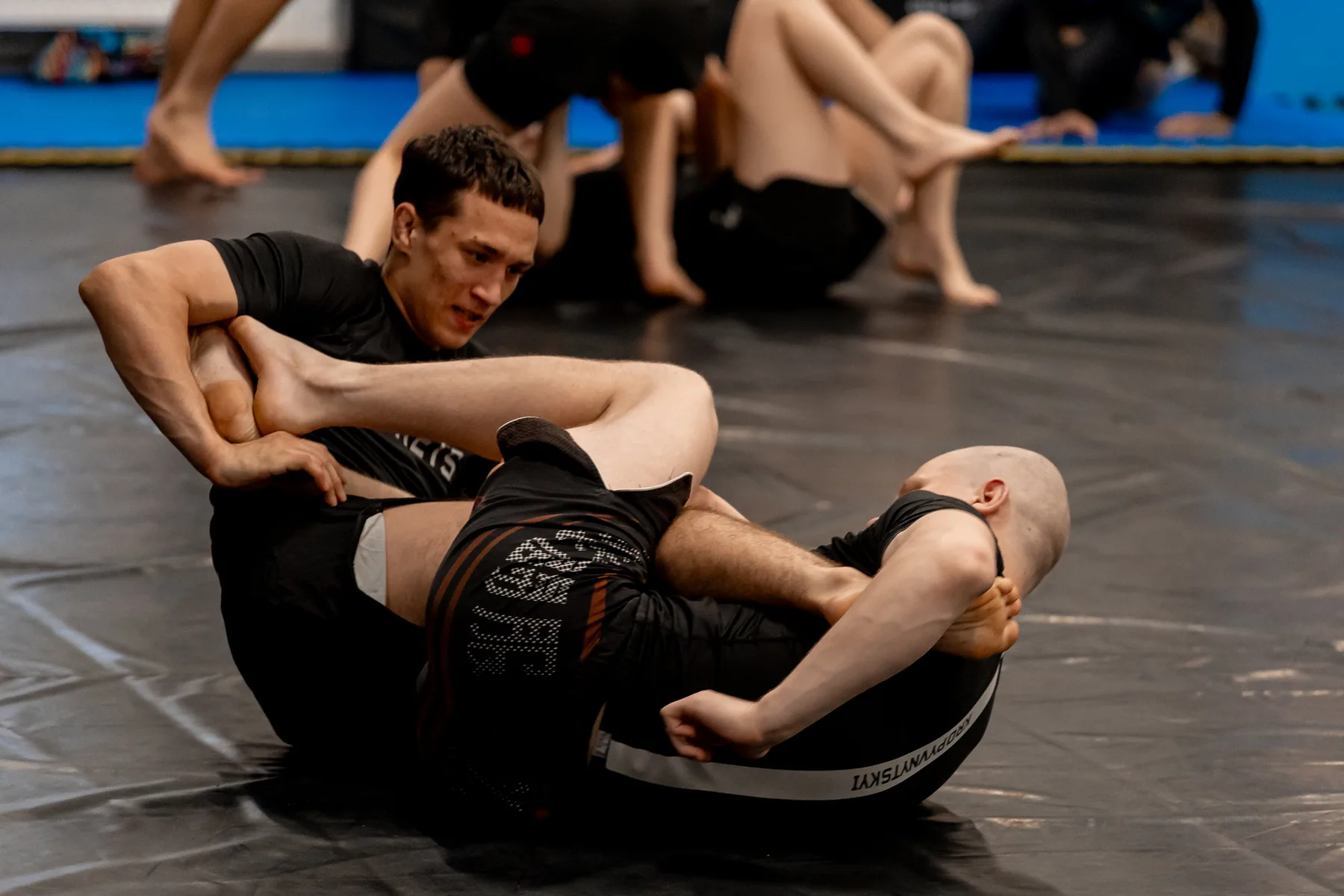
A leg-entanglement map should begin with position and safety, not the name of a finish. Identify whose knee line is controlled, where each hip points, which athlete owns inside leg position and whether either foot or knee is trapped under rotational pressure. Those facts determine who can hold, pass, come up, disengage or transition. The offensive athlete first stabilizes hip and knee relationship without twisting the joint. The defensive athlete protects the knee line, clears secondary controls and turns only through a direction that does not increase torque. If the exact position is not understood, pause and reset rather than guessing. Submission entries come after control and require a clear tapping route, gradual pressure and immediate release. No sudden heel rotation, uncontrolled bridging, toe twisting, knee reaping through resistance or finishing while a partner rolls. Legal entanglements and leg attacks vary sharply by age, belt, experience level and organization, so consult the current official event rules and the academy’s approved curriculum. A professional ruleset is not a beginner safety prescription. Train first with positional identification, then controlled exits and top-position conversions, and only then instructor-supervised submissions. This is general technical education, not injury or medical advice; pain or concerning symptoms require stopping and appropriate professional guidance. The page maps relationships and decisions, remaining distinct from a general leg-lock defense guide or a list of submission mechanics.
01
What to understand
Read the knee line first
Determine whether the knee has crossed the controlling hip or leg structure. Foot contact alone does not describe positional control.
Map hip direction and inside position
Hip orientation and which legs occupy inside space reveal available turns, stand-ups, passes and safe disengagement routes.
Control without rotational pressure
Use positional connection to prevent escape while joints remain in safe alignment. Do not prove control by twisting the knee or foot.
Build exits in a safe order
Protect the knee line, clear secondary grips, orient hips and then withdraw or come up. Blind spinning can multiply torque.
Separate position from submission
A stable entanglement can lead to top control, pass or disengagement. Submission pressure is optional, rules-dependent and trained only with supervision.
02
How to train it
Map 1 · position freeze
Coach places athletes in approved entanglements with no submission grip. Both identify knee lines, hip directions and inside legs.
Map 2 · controlled hold and release
Offense holds position without torque for a short count, then releases on command while defense remains still.
Map 3 · knee-line recovery
Defense clears one secondary control and recovers the knee line through a coached direction. Offense gives progressive positional resistance.
Map 4 · exit to top or guard
After the knee line is safe, defense chooses disengagement, guard recovery or balanced top position and freezes.
Map 5 · submission-entry protocol
Only under qualified instruction, offense forms an approved grip without finishing pressure, confirms the tap path and releases immediately.
Knee line before submission name.
Hip direction reveals the safe turn.
Position controls; torque does not prove control.
Clear secondary controls before spinning.
Pressure is gradual and ends at the first signal.
03
Common mistakes
Naming the lock before reading position
Athletes chase a finish while knee line and hips are uncontrolled. Identify the relationship first and choose position, exit or attack second.
Spinning without clearing controls
A trapped foot or hip can convert rotation into knee torque. Stop, clear the secondary connection and use the coached direction.
Applying submission pressure suddenly
Leg attacks can tighten before a partner can react. Build position slowly, maintain a clear tap path and release immediately.
Copying professional legality into practice
Rules permission does not define readiness. Follow the academy’s curriculum, athlete level and conservative safety limits.
04
Questions athletes ask
01 · What is a leg entanglement?
It is a positional relationship in which the athletes’ legs control hip, knee or movement lines. It may lead to passing, top control, exit or submission.
02 · Which leg entanglement should a beginner learn?
Begin with instructor-approved positional identification, safe alignment and exits. Submission entries should wait until the curriculum introduces them.
03 · How do I escape without hurting the knee?
Stop if torque appears, protect and recover the knee line, clear secondary controls and follow a coached hip direction rather than spinning blindly.
04 · Are heel hooks and reaping legal?
Legality varies by organization, age, belt and division and can change. Verify the current official event rules and follow academy restrictions.
05
Sources and further reading
Training needs vary by athlete, schedule and coaching environment. Use these sources as context, then adapt with qualified support. Educational content for athletes and coaches. This guide does not diagnose injury, replace individualized coaching or override event rules. Stop if an activity causes pain, and use an appropriately qualified coach or healthcare professional for your situation.