
Earn close range through hand fighting
Enter from a useful tie such as an underhook or a position reached after passing an arm. Keep your head and shoulders organized while your feet close the gap. Reaching both arms around an opponent who is still far away can expose your posture and make the grip easy to separate. First establish a connection that lets you stand comfortably near them. Then join the hands using the grip taught for that version. Avoid trapping fingers or trying to compensate for poor distance by squeezing harder.
Align the grip with your stance
Keep the hands connected at the level your coach has selected and bring the hips into a position from which you can step. The chest connection should allow movement without forcing the partner’s lower back into an exaggerated bend. If your feet are too far behind, your arms may be holding the torso while your base cannot follow. If you stand too narrow and upright, a small turn may unsettle you. Test the position with slow steps before asking it to support a finish.
Create a corner before the descent
Use your connection to encourage the opponent to step, then move toward a corner of their base rather than pushing squarely into their strongest line. A coach may teach a low turning finish with a carefully placed foot or leg assisting the movement. The important relationship is that the torso and hips travel together into an agreed landing route. Do not pin a foot and rotate the knee against it. If the opponent recovers a broad, stable stance, return to moving them before attempting the descent.
Follow the landing without collapsing
Keep enough connection to guide the opponent, then adjust your hands and base as the mat approaches. Avoid dropping uncontrolled weight onto their torso or pinning an arm underneath them. Once down, identify where their hips are and whether they can immediately turn into you. The repetition should end in a recognizable control position selected by the coach. If you reach the mat tangled together with no clear top position, investigate the direction and your follow-through rather than celebrating the fall alone.
Know when the body lock has become a squeeze
Watch for clenched arms with no foot movement, the partner’s hips remaining out of reach or your own posture becoming increasingly bent. These signs suggest the connection is not yet giving you useful control. A stronger grip may delay a separation but will not necessarily create the missing angle. Reset and test one change: closer feet, better shoulder alignment or a different moment to join the hands. Ask the defender what changed their balance, so the feedback includes more than the attacker’s effort.
Build a grounded progression
Begin with entries, comfortable holds and immediate releases. Add a movement game in which the defender tries to regain a square stance while the attacker seeks a side angle. Only then add the low finish with a cooperative receiver. Children and beginners can stop at the angle or practice a coach-guided descent without lifting. Back-arching throws are a separate training task and are not part of this progression. Log the moment the opponent’s base changed and whether the final control remained available.
Explore the video library
Published lessons in this training category, ready for your next session. Watch them all with your school membership.
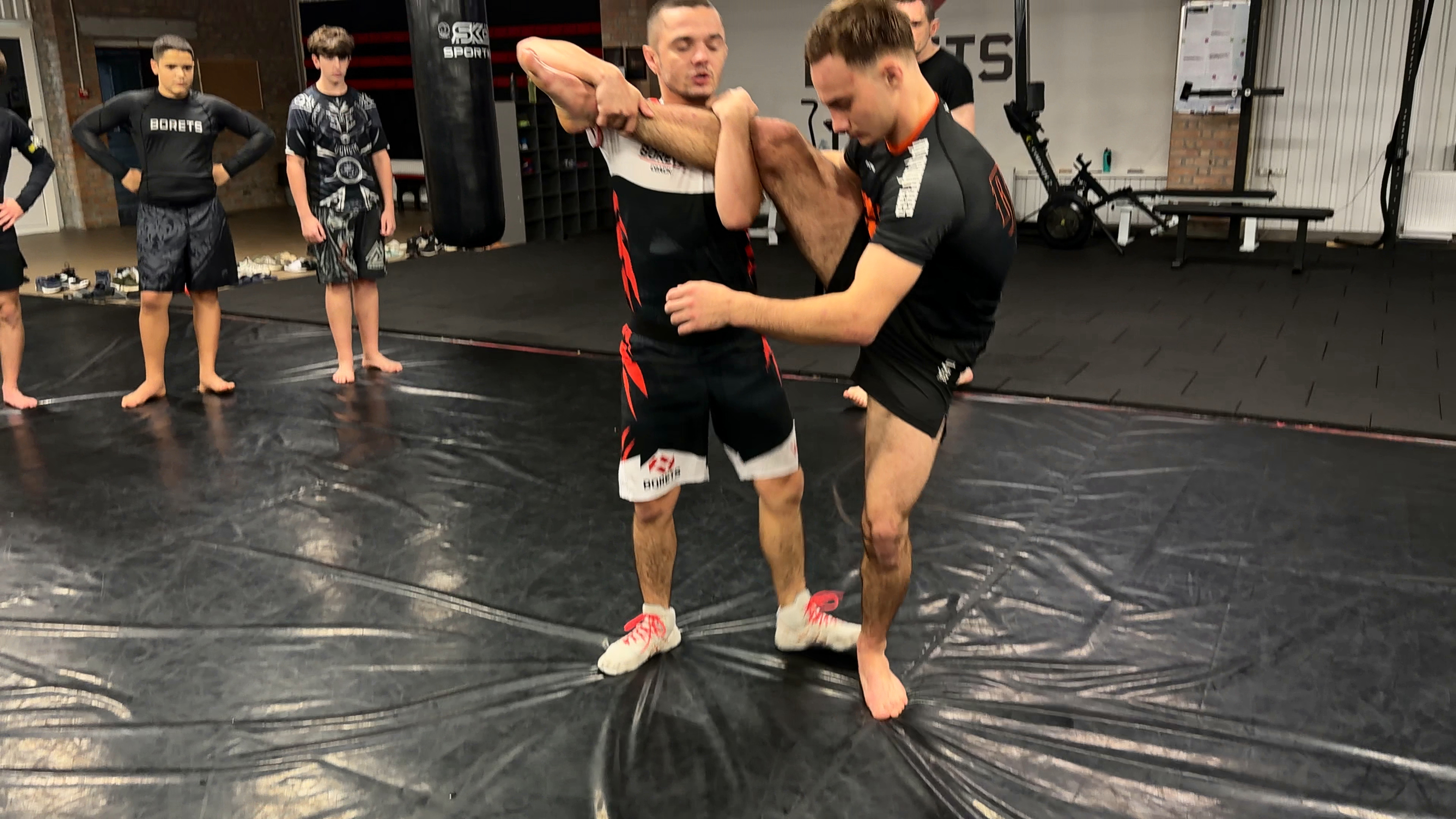 Single-Leg Entry Without PausingMykola Chaban
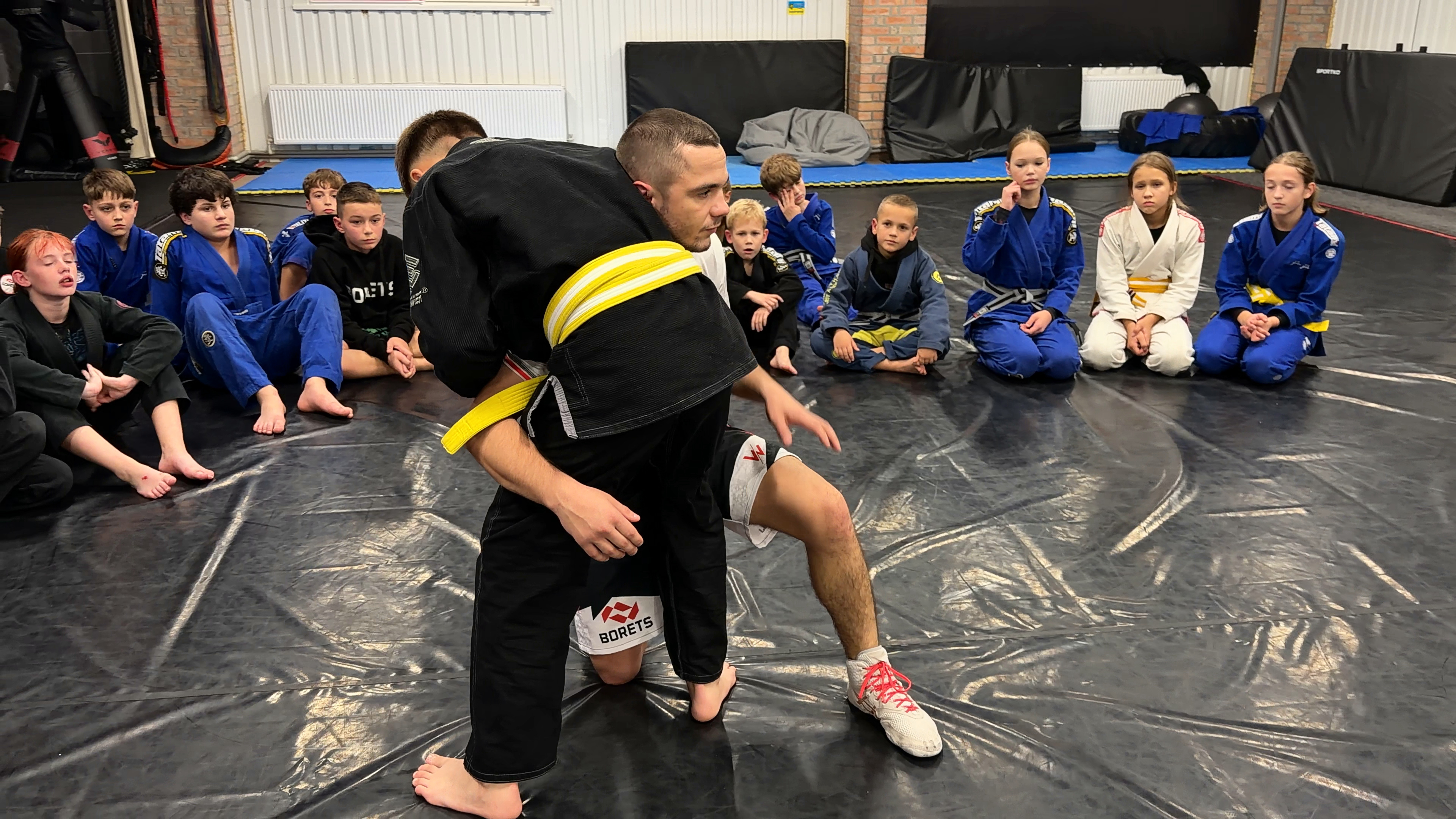 Double-Leg Situational WrestlingMykola Chaban
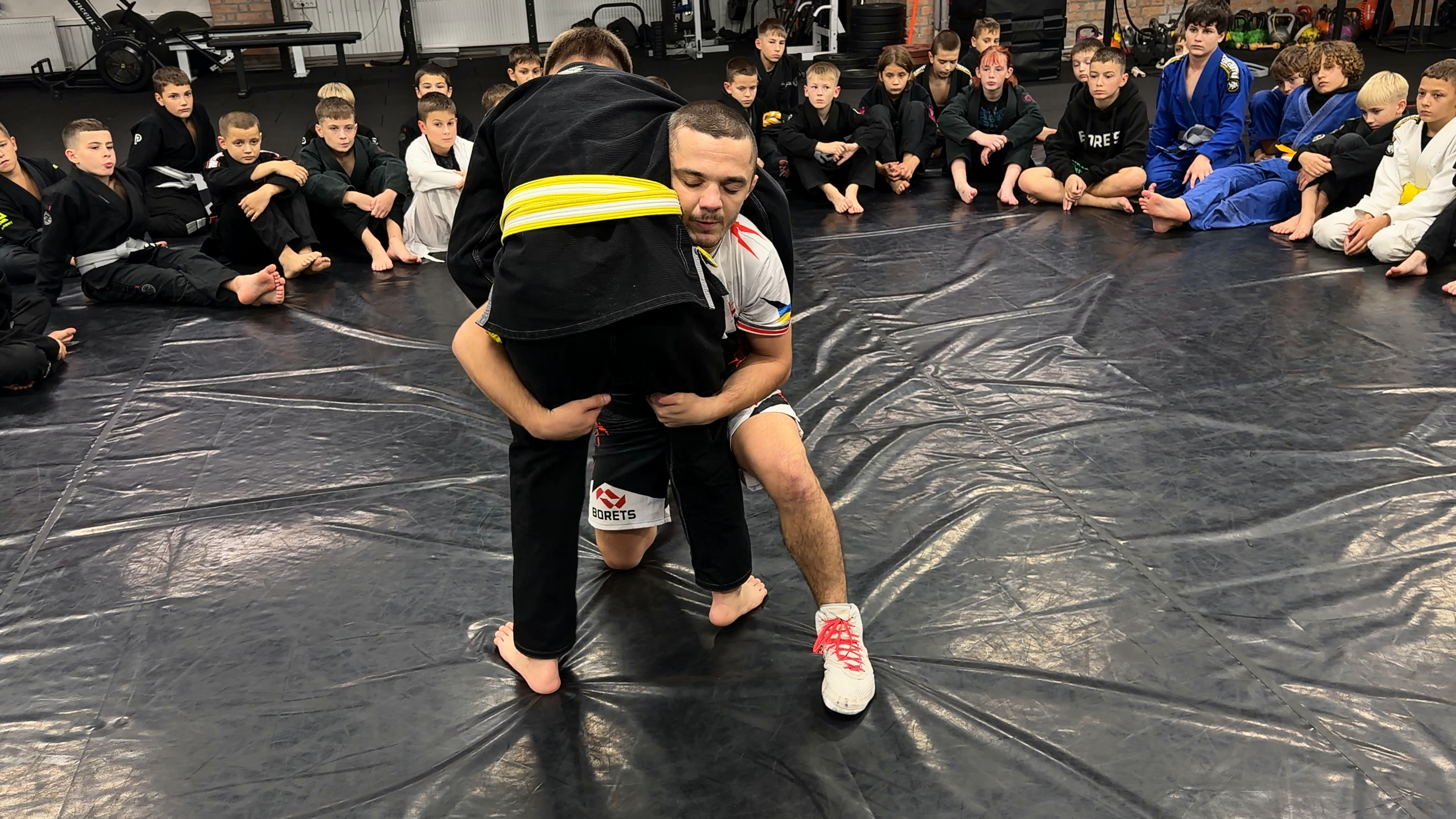 Snapdown to Double-Leg TakedownMykola Chaban
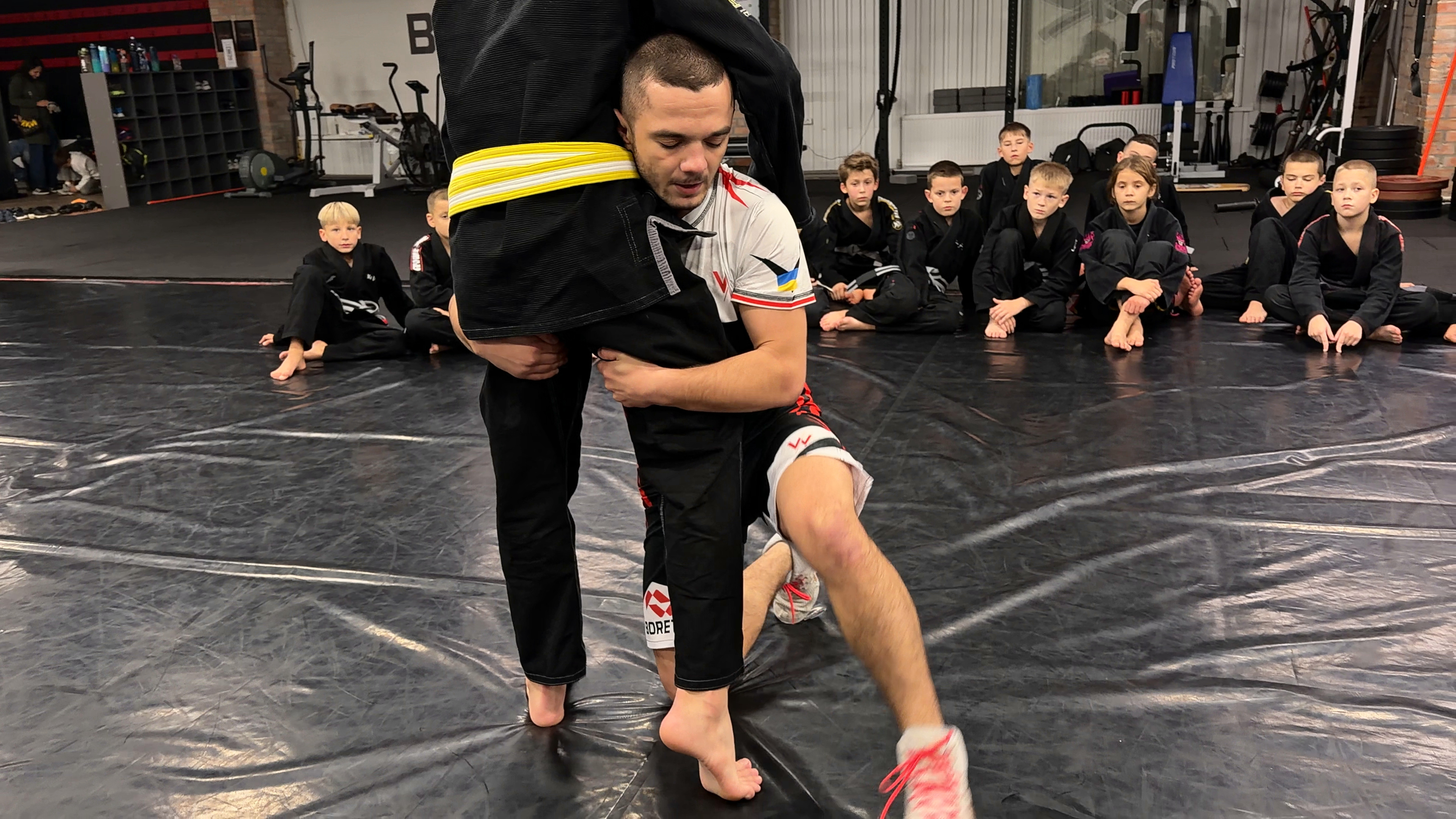 Sprawl to Double-Leg EntryMykola Chaban
Build a more complete grappling game.
Learn from the team that developed homegrown black belts and an adult ADCC Trials finalist at 16.
One membership unlocks every published lesson in sambo, BJJ, freestyle wrestling, strength and conditioning, and mental preparation. Pick your focus, study the details and take them into your next session.
1,340 UAH / month · 13,400 UAH / year
Payments are charged in Ukrainian hryvnia (UAH). Your bank determines the conversion to your currency.
Continue reading
- Wrestling Mat Return: Rear Control and a Controlled FinishUnderstand a wrestling mat return from rear control, how to follow a stand-up and why a controlled landing and the next position matter across rulesets.
- Wrestling Drills: Build a Focused 20-Minute Practice BlockOrganize wrestling practice with solo movement, partner tasks, controlled entries and short rounds. Includes a practical 20-minute drill block.
- Wrestling Stance and Footwork: A Progression You Can CheckBuild a mobile wrestling stance, step without losing the base and connect level changes to an opponent’s position.
- Freestyle Wrestling for BJJ: Connect the Takedown to the GroundUse freestyle wrestling to improve BJJ entries and transitions. Learn what transfers, what changes under BJJ rules and how to review one complete exchange.