 BORETS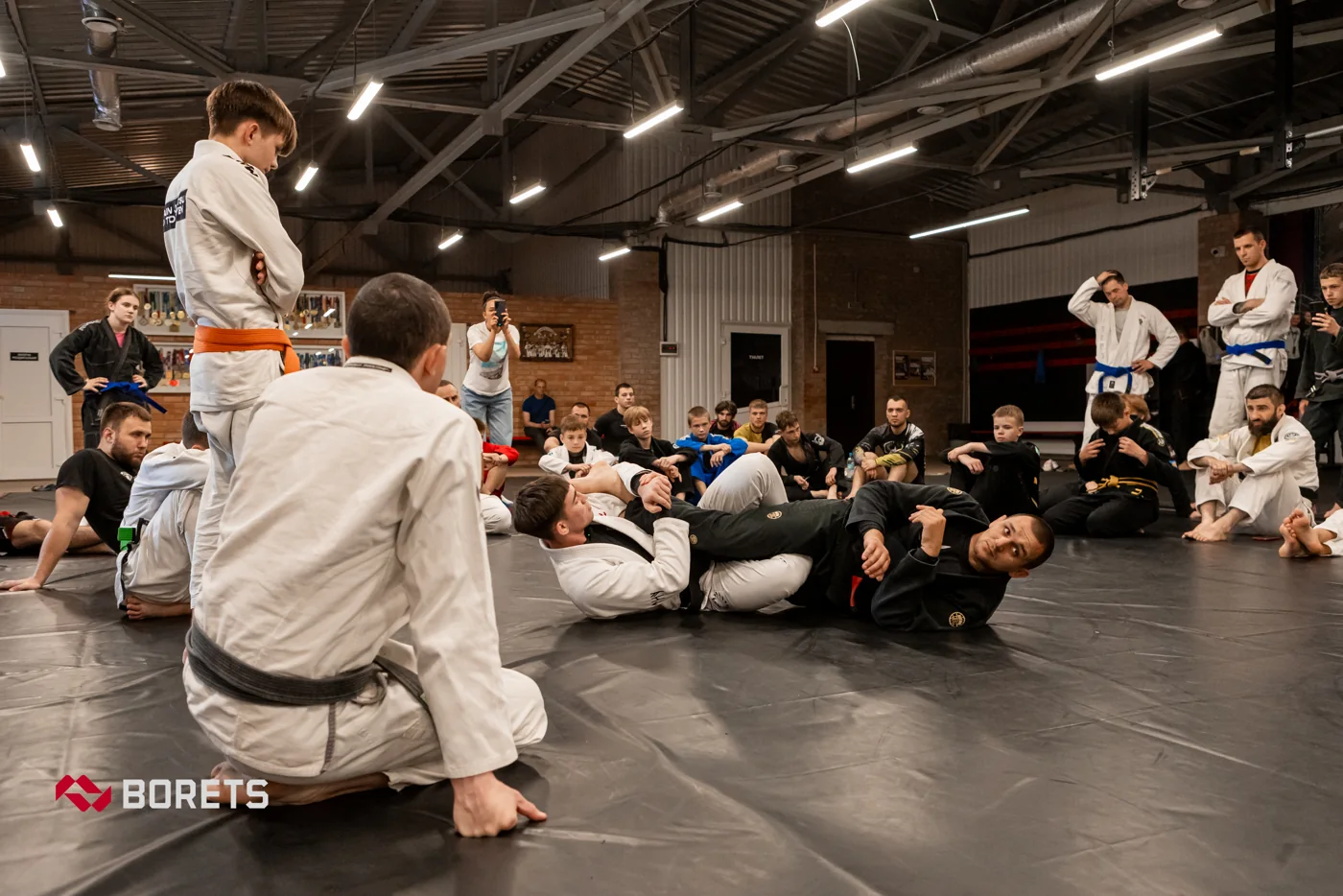
In this guide
BJJ can help with self-defence by teaching balance, close-contact control, escapes and practice against resistance. It does not cover every part of a confrontation. Strikes, weapons, other people and the surface change the problem. Treat grappling as one useful skill set within a broader objective: avoid the confrontation when possible, create space and leave.
What BJJ gives you
Training against resistance makes balance, grips and body position concrete. You learn what it feels like when somebody pins or turns you. Escapes and controlled stand-ups can help if you are grabbed or end up on the ground.
Practice may support clearer decisions under physical pressure, but calmness in a round is not a guarantee in a confrontation. Control is not automatically harmless either. The value is having trained ways to move and create options instead of relying on an untested idea of what you would do.
Where sport habits need adjustment
Sport BJJ assumes rules, a defined opponent and a prepared surface. Guard can be effective because striking is absent and scoring recognises sweeps, passes and dominant positions. Pulling guard itself does not earn IBJJF points; it is a tactical choice within that environment.
Outside sport, staying on the ground can limit mobility and awareness. Another person or a weapon changes the situation, while a hard or cluttered surface changes how you can fall or move. A tournament strategy is not automatically the right decision for a confrontation.
Create space and stand
When escape is possible, a useful objective is enough room to get up and leave. That may require managing grips, recovering a frame, turning towards an opening or controlling distance while building a base. The sequence depends on the position.
Technical stand-ups teach balance while rising, but solo repetitions do not teach every surrounding decision. A partner and coach help establish when the opening exists and which connection must be removed first. Chasing a submission can work against the goal of getting away.
Train decisions as well as movements
A self-defence-focused session can add distance, exits and obstacles to familiar grappling tasks. Communication and recognising when to disengage belong alongside physical skill. Define the decision being practised rather than turning every exercise into an all-out fight.
A supervised positional round might reward creating space and standing instead of holding mount or finishing a choke. Another may start from a standing grip and stop at separation. Changing the objective reveals habits a normal sport round may not test.
Where combat sambo fits
BORETS draws on BJJ, freestyle wrestling, sport sambo and combat sambo. Each offers a different perspective on balance, grips and transitions. Under FIAS rules, combat sambo includes permitted strikes and chokes as well as throws and groundwork; sport sambo has different permissions and scoring priorities.
Combat sambo can connect grappling to a striking context, but remains a regulated sport with equipment and officials. Introducing strikes to practice needs qualified coaching and a progression. Equipment does not make every level of contact appropriate.
Choose training that fits the question
Ask how a programme practises standing up, breaking contact and making decisions against controlled resistance. Ask how striking awareness is introduced and how beginners are paired. A useful answer describes progression rather than promising one technique that defeats any attacker.
Keep useful sport training while recognising what it tests. Work on balance, escapes and standing transitions, then add context through supervised sessions. A question about a position you actually struggle with is more productive than asking which martial art wins every confrontation.
Register for the BORETS LAB launch to join our team wherever you train. Membership will let you choose Ievgen Skyrda, Oleksandr Oliinyk, Kostiantyn Zhyvanov, Yaroslav Blazhko for children's development, or Mykola Chaban for freestyle wrestling. Send a specific question and receive a private written answer in your account; when useful, the team can record a video addressing it.