
The direct answer
Start with the rule set, then connect stance, first contact and one reliable finish.
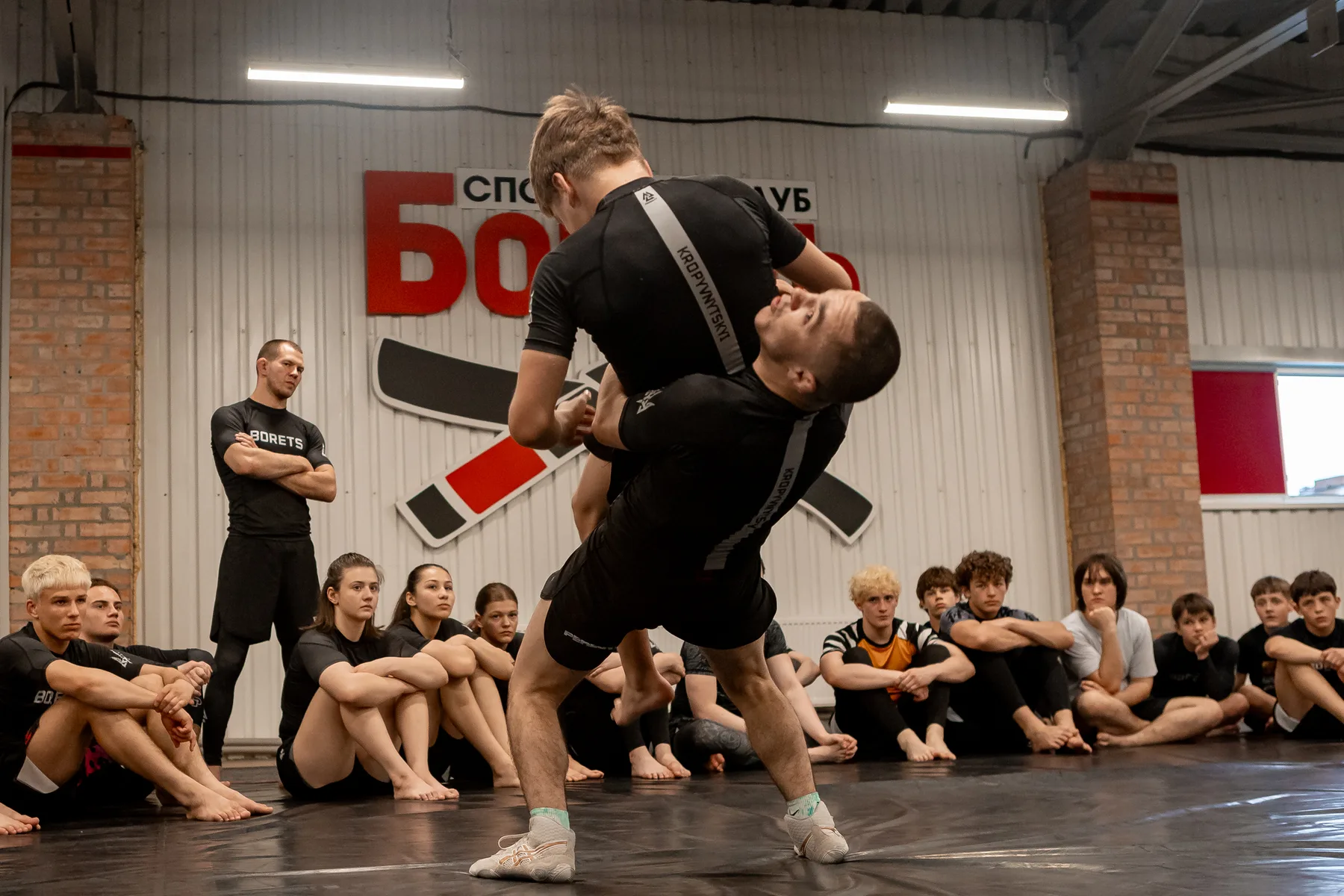
Freestyle par-terre offense should reach a high-confidence turn quickly without becoming a race to grab whichever body part is nearest. The top wrestler first identifies the defender’s base, hand position, hip height and available side. From there, the athlete chooses a primary family—often a gut-wrench route when torso access and hip line are favorable, or a leg-lace route when the legs are compactly available—and keeps a transition when the defender seals that family. The hands create legal connection while chest, hips, knees and feet generate pressure and rotation. After each turn or failed entry, the athlete reassesses rather than repeating automatically. Editorial status: reviewed July 27, 2026. Exact start procedures, action windows, legal grips, leg use, exposure, scoring, continuation, danger and stoppage are controlled by the UWW rules and event documents in force. This guide intentionally omits numeric rule values. USA Wrestling athletes must also verify the current domestic packet. Qualified coaching is required for rotational practice.
01
What to understand
Read the defensive base first
Before reaching, identify whether elbows and hips are compact, one side is lifted, legs are together or extended, and the defender is prepared to crawl or seal. This first picture determines access. Freeze match clips at top control and ask athletes to choose a family with evidence rather than naming their favorite turn.
Build one torso route and one leg route
A complete beginner-to-intermediate map does not need every turn. It needs a compact gut-wrench access and a compact leg-lace access, each with a control checkpoint and a safe reset. The two routes should answer different defensive structures so they support each other rather than compete for practice time.
Generate the turn with whole-body position
For either family, hands connect but feet, knees, chest angle and hip line move the defender. The attacker should control intermediate positions and be able to stop on command. If rotation depends on a sudden arm pull, twisting an unsupported joint or uncontrolled momentum, qualified coaching must regress the drill.
Reassess after every action
A turn can change grip, base, boundary, official position and the defender’s available structure. Decide whether to chain the same family, transition to the other, rebuild control or respond to the whistle. Practicing automatic repetition without a fresh read can teach athletes to attack a picture that no longer exists.
02
How to train it
Block 1 · base classification
The defender assumes several realistic par-terre shapes without resistance. The top athlete identifies torso access, leg access or no clean access and reaches only the first contact checkpoint. Reset every few seconds. The coach randomizes the shapes and rejects answers that are based only on habit.
Block 2 · two access routes
At moderate resistance, the defender protects either the torso route or leg route. The attacker gains the open family with compact posture but does not rotate. Score hand path, hip distance and ability to stop. When neither route is sound, the correct choice is to rebuild top control.
Block 3 · coached rotation stops
From each sound grip, the coach calls an intermediate or finish checkpoint. The attacker rotates only that far, maintains partner-safe control and returns. This exposes differences in foot and hip direction between turn families. Resistance increases only after both sides remain controlled throughout the arc.
Block 4 · turn-transition rounds
The attacker begins with one family; after the first controlled action, the defender changes base to leave the same route, opposite route or no route available. The attacker reads and chooses. Use current event activity expectations and stop commands. Score correct transitions and resets as well as successful turns.
Read base before reaching.
Torso route and leg route solve different pictures.
Compact access preserves the turn.
Hands connect; the body rotates.
Every turn creates a new decision.
No clean route means rebuild.
03
Common mistakes
Grabbing before classifying the base
The first available hand position may lead into the defender’s strongest seal. Pause practice clips at the moment of top control and require a verbal read before movement. Over time the read becomes fast, but skipping it in learning creates an attack menu driven by luck.
Using the same body mechanics for both turns
Gut-wrench and leg-lace families connect to different structures and require different pressure lines, footwork and hip relationships. Keep shared principles, but teach separate checkpoints. Blending them into one generic rolling motion weakens control and can create unsafe positions.
Chaining without reading the official or boundary
Technical opportunity does not override a whistle, stoppage, boundary state or rules administration. Athletes should hear the official while maintaining safe control. Practice random stop commands and immediate release or reset so competitive urgency never becomes continuation after the action is stopped.
04
Questions athletes ask
01 · Should freestyle athletes learn gut wrench or leg lace first?
Either can be the first family. Choose by coaching expertise, athlete movement, common defensive pictures and the ability to practice safely. A strong curriculum eventually gives one torso route and one leg route, but depth in a reliable first system should precede a large menu.
02 · How much par-terre offense should a practice include?
Use frequent short exposures that preserve grip, posture and decision quality rather than occasional exhausting blocks. The dose depends on the team’s phase, event format and technical priorities. Include access-only and checkpoint work so learning volume does not require repeated full rotations.
03 · Can this page define the current par-terre scoring?
No. Scoring and procedure must come from the current UWW rules, current USA Wrestling materials where applicable and the event packet. Use this page for technical organization, then label every scoreboard drill with ruleset, effective version and staff verification date.
05
Sources and further reading
Training needs vary by athlete, schedule and coaching environment. Use these sources as context, then adapt with qualified support. Educational content for athletes and coaches. This guide does not diagnose injury, replace individualized coaching or override event rules. Stop if an activity causes pain, and use an appropriately qualified coach or healthcare professional for your situation.