
The direct answer
Start with the rule set, then connect stance, first contact and one reliable finish.
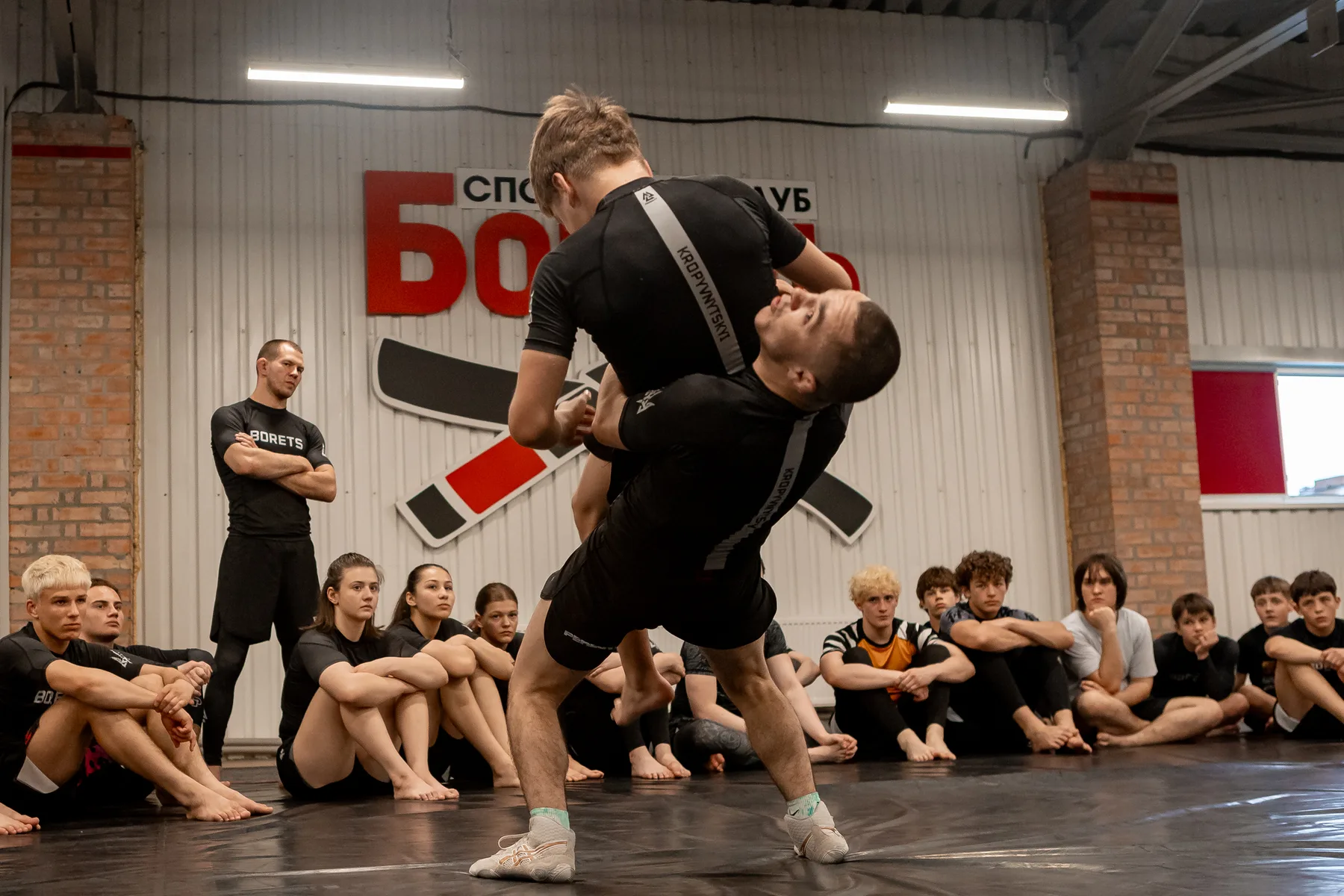
You can start learning wrestling as an adult, but access is often the first obstacle—not age itself. In the United States, much of folkstyle wrestling is organized through schools, colleges and youth clubs, so an adult beginner may need to look for an MMA gym, submission-grappling academy, open regional wrestling club or a private fundamentals group rather than a conventional adult class. Freestyle and Greco-Roman clubs may offer another route depending on the area. Recreational wrestling skill—stance, hand fighting, takedown entries, finishes, defense and positional control—can be learned later in life. Becoming an elite wrestler after missing the long developmental pipeline is a much less realistic objective and should not be confused with the value of training. Adult onboarding needs to address demands that experienced wrestlers take for granted: repeated level changes, contact from standing, falling, pressure through the neck and shoulders, short explosive exchanges and the discipline to stop a scramble before it becomes unsafe. A qualified coach should scale those elements, match partners by control as well as size, and teach a clear stop-and-reset culture. Beginners should not be used as bodies for an established team’s hardest rounds. Anyone with concerning symptoms, known health issues, balance problems or meaningful musculoskeletal limitations should consult an appropriately qualified healthcare professional and communicate relevant restrictions before participating. Safety depends heavily on coaching, progression, partners, rules and environment. The useful question is therefore: can you find a room willing to teach an adult from first principles? If yes, a late start can build real wrestling competence without pretending to recreate a childhood career.
01
What to understand
Find an adult teaching pathway
Ask whether the room has true beginners, not merely adults who wrestled in high school. A useful coach can explain how stance, falls, takedown finishes and live intensity are introduced. If every session assumes years of reactions, request a foundations block or keep looking; access to a mat is not the same as access to instruction.
Learn stance as energy management
A beginner often squats too low, holds tension and burns out before making a technical choice. Build a stance that protects the legs while allowing breathing, vision and movement. Its exact height changes with ruleset and body type; it should be taught as a responsive position, not a punishment hold.
Build contact before takedown volume
Use head position, posts, inside ties and hand-fighting games to understand distance. Then connect one entry to one finish and one safe return. Repeatedly shooting from too far teaches collision and fatigue; a late beginner benefits from fewer, better organized contacts.
Treat stopping as a wrestling skill
Adult bodies arrive with different histories. Partners need an immediate verbal and physical stop signal, and neither athlete should chase a finish through a bad landing, trapped joint or collision with another pair. Resetting early preserves the next high-quality repetition.
02
How to train it
Session block 1 · stance and boundary
Move in stance along lines and circles while a partner gives visual direction cues. Add a light shoulder post, then recover square position without crossing the feet. Finish with boundary awareness: both athletes freeze before leaving the safe work area and restart in the center.
Session block 2 · first-contact games
Score a training point for establishing safe inside position, not for a takedown. Begin at low speed with one hand, then two. The coach limits pulling on the head and teaches posture recovery. This gives adults useful wrestling without making every exchange a fall.
Session block 3 · entry, finish, return
Choose a single-leg or body-lock family appropriate to the rules and athlete. Drill the approach, connect to the hips, pause, then complete onto an agreed surface with a cooperative partner. Control the descent and finish in a recognizable position before releasing.
Session block 4 · constrained live work
Start from a known tie and allow one attack plus one defensive response. Use short rounds and long enough rest to preserve decisions. Increase the number of options before increasing force; complexity and intensity do not need to rise together.
Stay athletic enough to move, relaxed enough to learn.
Win first contact before chasing the legs.
One clean finish beats five distant shots.
Control the return; do not merely cause a fall.
Reset while judgment is still intact.
03
Common mistakes
Joining a competition room without beginner instruction
A hard room may be excellent for experienced wrestlers yet inappropriate for first exposure. If no one teaches falls, stance or safe completion, the beginner is being asked to imitate reactions they do not have. Seek an actual teaching pathway.
Making conditioning the entrance exam
Wrestling is demanding, but endless circuits do not teach distance or contact. Scale the work interval so the athlete can still execute the technical task, then develop capacity through repeated quality exposure. Fatigue should not conceal a lack of instruction.
Comparing yourself with former school wrestlers
Their apparently simple reactions may contain thousands of earlier repetitions. Compare your current stance, recognition and control with your own first month. Use experienced partners as information, not as evidence that beginning was a mistake.
04
Questions athletes ask
01 · Can you start wrestling at 30?
Yes, adults can learn wrestling skills if they find appropriate instruction and a recoverable training dose. The main challenge may be locating an adult-beginner room outside the school system.
02 · Is 40 too old to learn wrestling?
Age 40 is not an automatic cutoff for recreational learning, but current capacity, prior injuries, coaching and partner control matter. Relevant symptoms or substantial limitations should be assessed by a qualified professional.
03 · Where can adults learn wrestling?
Search for adult wrestling clubs, USA Wrestling-affiliated local programs where applicable, MMA gyms with a dedicated wrestling coach, submission-grappling academies and university or community open mats that explicitly accept beginners. Confirm instruction before attending.
04 · Can a late starter compete in wrestling?
Possibly at suitable local or masters events, depending on region, eligibility and rules. Competition readiness should be decided with a qualified coach; starting later does not create an instant path to elite competition.
05
Sources and further reading
Training needs vary by athlete, schedule and coaching environment. Use these sources as context, then adapt with qualified support. Educational content for athletes and coaches. This guide does not diagnose injury, replace individualized coaching or override event rules. Stop if an activity causes pain, and use an appropriately qualified coach or healthcare professional for your situation.