
The direct answer
Start with the rule set, then connect stance, first contact and one reliable finish.
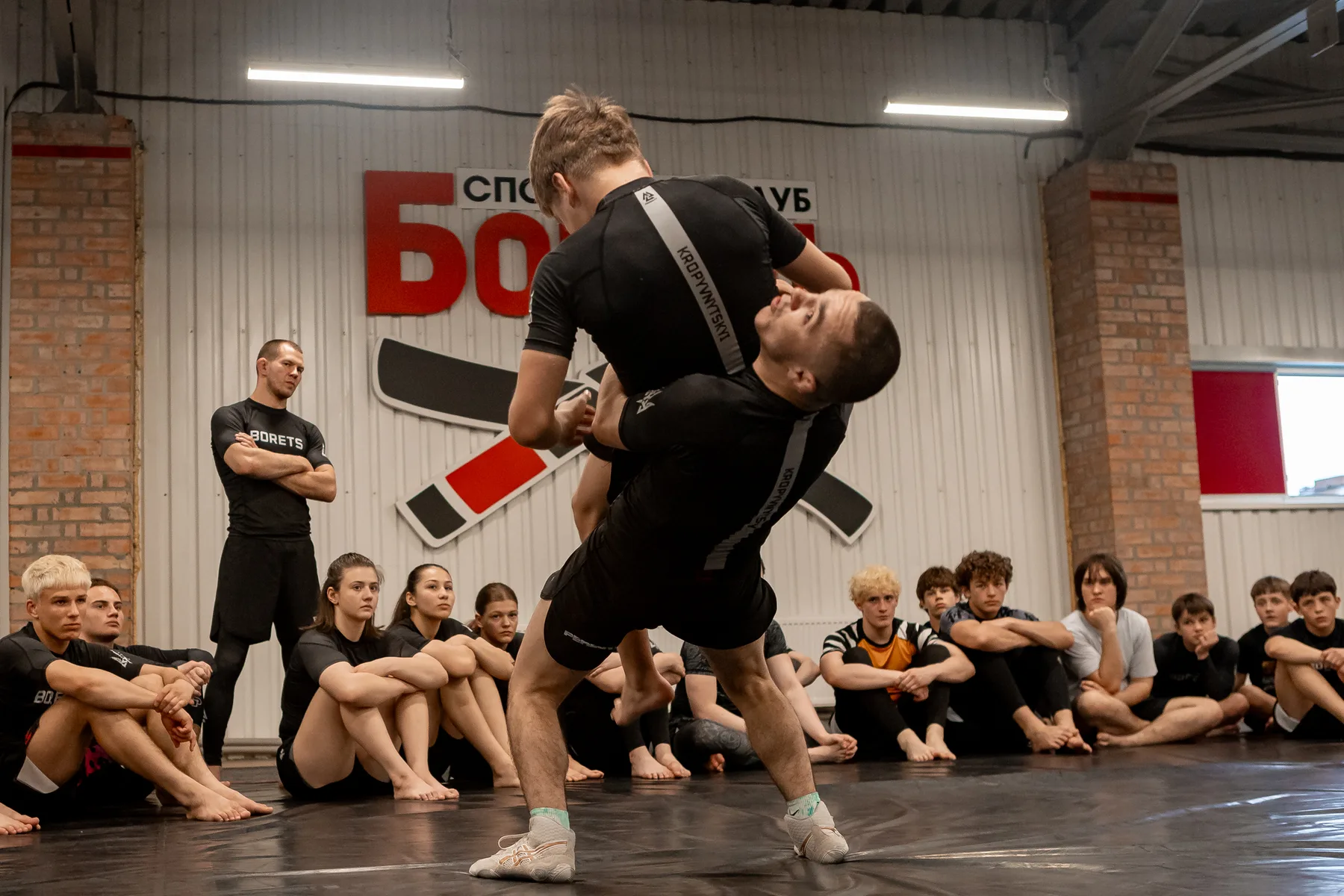
A beginner women's freestyle system needs a connected answer in standing, attack, defense and par terre. Start with a stance that protects the legs and supports level changes, then one route to first contact, one primary leg attack, one finish that controls exposure risk and one reattack after the opponent clears. Defense connects inside hands, hips, angle and a return to offense instead of ending at the sprawl. In par terre, the beginner needs one compact torso-turn access, one legal defensive base and immediate response to official commands; a large catalogue can wait. Teach how the same movement changes value under freestyle scoring and continuation rather than importing folkstyle habits unchanged. Editorial status: reviewed July 27, 2026. Verify the UWW International Wrestling Rules in force on competition day, current USA Wrestling age-group/event materials and, for U.S. collegiate competition, the current NCAA women's wrestling playing rules and championship manual. This guide intentionally avoids point values, period lengths and weight tables that may change. Qualified coaching controls partner safety and rotational work.
01
What to understand
Build stance-to-contact access
The athlete should reach a preferred wrist, inside tie or head-and-arm relationship without crossing feet or extending both arms. Use level feints, short circles and lead-leg changes to make the opponent step. The goal is not contact for its own sake; it is a picture that makes the primary attack shorter and protects against the opponent's immediate shot.
Own one attack with exposure-aware finishes
Choose one leg-attack family and two finishes that answer clearly different hip reactions. The attacker keeps head, spine, hands and feet aligned so the finish can be steered without exposing her own back through careless rotation. Practice the final scoring and continuation picture from current freestyle rules, not from an assumed folkstyle control standard.
Turn defense into a reattack
Early defense uses stance, hands and angle to deny clean access. If the opponent penetrates, align hips and upper-body control, clear the finish and circle to a stable position. Then read whether the opponent remains extended for a go-behind or reattack, recovers square for a reset, or attacks again. Defense is complete when the athlete can make the next decision.
Learn both sides of par terre
On offense, begin with legal top contact, compact lock access and whole-body rotation to one coached turn. On defense, build the exact legal base, deny the shortest hand route and recover after the attacker changes angle. Use partial rotations and stop checkpoints before live turns. The athlete should hear the official throughout the exchange.
Use a current-rules overlay
Maintain a one-page card naming governing body, effective rules version, event, verification date and the practical decisions it changes. Include scoring actions, exposure, continuation, boundary, passivity administration, challenges and par-terre procedure only from official sources. Movement can remain useful across rules cycles while tactical value changes.
02
How to train it
Block 1 · stance, motion and first contact
Use short games where the only score is reaching the preferred contact with posture intact or denying the opponent's access. No shots yet. Add a lead change and one level feint, then reset after a few seconds. This creates high repetition in the phase that determines whether later attacks start from advantage or desperation.
Block 2 · attack and two-finish choice
Begin after a sound setup. The defender alternates between two known hip reactions; the attacker enters the same primary attack and selects the matching finish. Stop at a controlled freestyle continuation checkpoint. Increase resistance only when the athlete recognizes the reaction and protects her own exposure without pausing.
Block 3 · sprawl, clear and reattack
Start as the opponent reaches a controlled leg contact. The defender meets the entry with hips and hands, removes the first finish and circles. The attacker then gives one of three recovery pictures. The defender chooses go-behind, reattack or neutral reset. Score the original defense separately so an ambitious counter cannot hide a conceded finish.
Block 4 · par-terre access and stops
Alternate top and bottom every few repetitions. Top reaches legal contact, hip control and the first turn checkpoint. Bottom reaches legal base, hand-route denial and recovery. A qualified coach calls random rotation stops; both athletes must hold safe alignment and return. Full live turns come only after consistent control.
Block 5 · current-rules match scenarios
Use the event's actual rules card, score, clock and boundary. Run short starts from neutral, attack continuation and par terre, then one complete match simulation. Afterward, tag the first failed phase and one correct decision under pressure. Any disputed rules example goes to the official source or a qualified referee, not room consensus.
Contact must shorten the attack.
Finish while protecting your own exposure.
Defense ends with the next decision.
Par terre starts with compact legal access.
Current rules choose tactical value.
03
Common mistakes
Importing folkstyle control habits unchanged
Folkstyle can provide excellent stance, hand fighting and finishing skills, but exposure, continuation, par terre and tactical incentives change under freestyle. Keep transferable movement and rebuild the scoring checkpoint. Label every situational round by ruleset so the athlete knows which problem she is solving.
Adding attacks before access is reliable
A large technique menu does not help if the athlete reaches from poor distance or accepts the opponent's strongest tie. Track how often the preferred contact and setup appear in live rounds. Repair approach and hand fighting before prescribing another shot. One accessible attack outperforms several imaginary entries.
Treating par terre as an advanced extra
Beginners will encounter top and bottom par terre early, and the rules make those exchanges tactically important. Introduce legal starting pictures, access and defense from the first block without demanding full-force rotations. Frequent short practice builds fluency while keeping load controlled.
Using outdated scoring memory
A coach's competitive experience may come from another rules cycle. Put the source and effective date on every points or procedure card, update before each event and remove older copies. When UWW, USA Wrestling, NCAA or an organizer differs, the document governing that competition controls.
04
Questions athletes ask
01 · Is NCAA women's wrestling the same as UWW freestyle?
Do not assume complete identity. The movement and broad style are closely related, but collegiate playing rules, administration, championship procedures or current interpretations can differ. Use the current NCAA women's rules and event manual for college competition, and current UWW plus organizer documents for international-style events.
02 · How many techniques does a freestyle beginner need?
Enough to answer each phase: one contact route, primary attack, two finish cues, takedown defense, reattack or reset, one par-terre offense and one par-terre defense. Add a branch when film shows a recurring unsolved picture. Completeness comes from connection and recognition, not a fixed count.
03 · Should a beginner compete in both freestyle and folkstyle?
It can support development when the coach clearly separates the rules, tactical checkpoints and preparation calendar. It can also create confusion if every weekend changes style without deliberate teaching. Choose competition based on the athlete's pathway, local opportunities and ability to rehearse the correct rules before the event.
04 · Does this beginner system include weight-class advice?
No. Verify the current official weight table for the athlete's exact age, event and ruleset, but do not use this page for weight loss, dehydration or nutrition decisions. Individual health and eligibility questions belong with governing policies, the coaching team and appropriately qualified healthcare professionals.
05
Sources and further reading
Training needs vary by athlete, schedule and coaching environment. Use these sources as context, then adapt with qualified support. Educational content for athletes and coaches. This guide does not diagnose injury, replace individualized coaching or override event rules. Stop if an activity causes pain, and use an appropriately qualified coach or healthcare professional for your situation.