
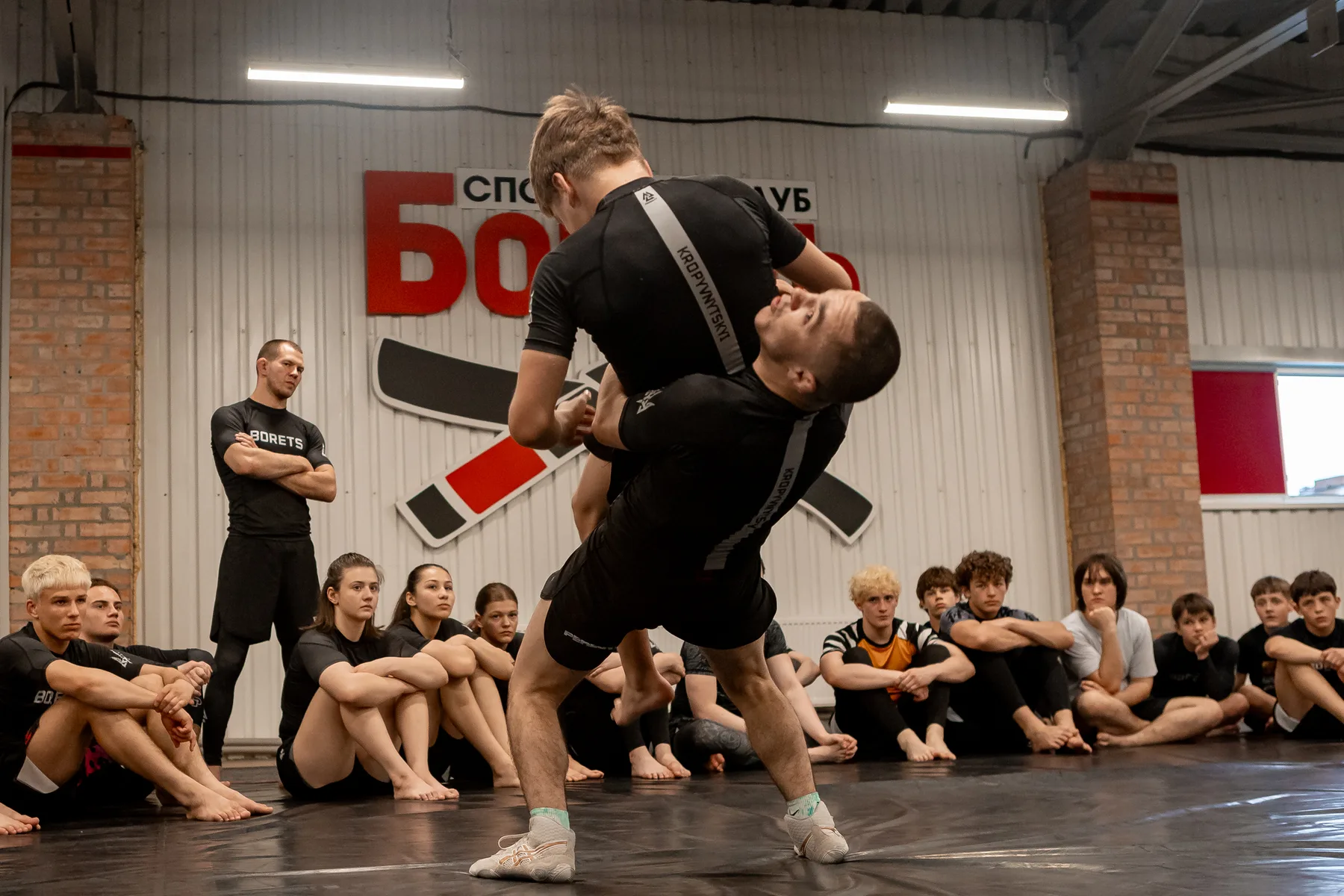
The direct answer
Start with the rule set, then connect stance, first contact and one reliable finish.
A wrestling warm-up should prepare today’s practice, not display every mobility exercise the coach knows. Move from general temperature and rhythm to the joints and positions the session needs, then to stance, level change, penetration or contact and a low-risk partner decision. Keep static holds brief when speed is the immediate priority, and use mobility inside controlled movement rather than chasing extreme range. The athlete should finish warmer, more coordinated and technically oriented—not tired. Twelve to twenty minutes is a useful planning window for many sessions, but room temperature, athlete age, earlier activity and the day’s first task should change the dose.
01
What to understand
Raise temperature without stealing pace
Use easy locomotion, skips, shuffles or simple games that gradually raise breathing and tissue temperature. The athlete should still be able to accelerate later. A warm-up that becomes a conditioning test spends the speed the technical session was meant to train.
Open task-specific ranges
Choose mobility for today’s stance, level change, hip rotation, shoulder contact and ground position. Normal usable range under control matters more than maximal passive range. If an exercise has no connection to the first training block, it may not deserve time today.
Rehearse stance and level change
Warm-up footwork should look like the stance the athlete intends to use. Add forward, backward and angular movement, then level changes that preserve posture. The goal is to arrive at wrestling speed through correct shapes rather than switch suddenly from generic jogging.
Introduce contact progressively
Hand fighting, pummeling and partner pressure should begin with clear intensity and goals. Move from touch and position to a reaction or short exchange. This prepares the neck, shoulders, trunk and attention together without starting with a full collision.
Finish with the session’s first decision
If practice begins with a single leg, finish the warm-up by creating the step and reaching entry position. If the day starts with front headlock defense, finish with the first frame and angle. The transition into teaching should feel continuous.
02
How to train it
Minutes 0–3 · rhythm
Use low-intensity movement in several directions, gradually increasing range and cadence. Coaches observe how athletes move today rather than treating the block as background noise. Adjust space and footwear to the surface.
Minutes 3–7 · usable mobility
Cycle through controlled ankle, hip, thoracic and shoulder movements that match the practice. Use transitions such as squat-to-stance, lunge-and-turn or quadruped shoulder movement. Avoid forcing range or turning mobility into a separate endurance circuit.
Minutes 7–11 · stance and motion
Build from stance holds to short motion bursts, level changes, sprawls or penetration steps selected for the day. Quality criteria are posture, quiet feet, usable head position and the ability to accelerate without an extra reset.
Minutes 11–15 · contact
Use hand-touch games, inside-position pummeling or controlled snap-and-recover exchanges. Keep rounds brief and give each athlete a role. Raise resistance only enough to make posture and footwork honest.
Minutes 15–20 · first decision
Run a constrained entry or defense that directly previews the first technical block. Stop after a clean position, not a full hard scramble. Athletes should begin instruction already recognizing the relationship the coach is about to develop.
Warm up the positions, not only the temperature.
Usable range beats forced range.
Stance motion should look like wrestling.
Contact begins with a task, not a collision.
Finish ready for the first real repetition.
03
Common mistakes
Conditioning before practice
Long hard circuits can reduce shot speed, attention and partner control before technical learning begins. Warmth and readiness do not require exhaustion.
Random mobility menu
A collection of stretches may feel thorough while failing to prepare today’s stance, contact or ground position. Select by task.
Forcing extreme range
The warm-up is not the place to test passive limits. Use controlled range that improves the movement the athlete will immediately perform.
Going from no contact to live shots
The missing hand-fighting and reaction layer makes the first rounds unnecessarily abrupt. Build contact progressively.
04
Questions athletes ask
01 · How long should a wrestling warm-up be?
Twelve to twenty minutes is a useful planning range for many practices, not a rule. Cold rooms, younger athletes, an earlier strength session or a high-speed first block may change the duration and content.
02 · Should wrestlers stretch before practice?
Use controlled mobility that supports the immediate positions. Long passive holds are not automatically harmful, but they may be a poor use of limited time before speed work. Match the method to the next task.
03 · Is drilling shots part of the warm-up?
It can be when intensity and complexity rise progressively. Begin with stance and entry shape, add a predictable step, then stop in a safe position before full finishing or scrambling.
04 · What if mobility work causes pain?
Stop or modify the activity rather than forcing range. A warm-up guide cannot assess an injury or medical readiness. Persistent or concerning symptoms belong with an appropriately qualified healthcare professional.
05
Sources and further reading
Training needs vary by athlete, schedule and coaching environment. Use these sources as context, then adapt with qualified support. Educational content for athletes and coaches. This guide does not diagnose injury, replace individualized coaching or override event rules. Stop if an activity causes pain, and use an appropriately qualified coach or healthcare professional for your situation.